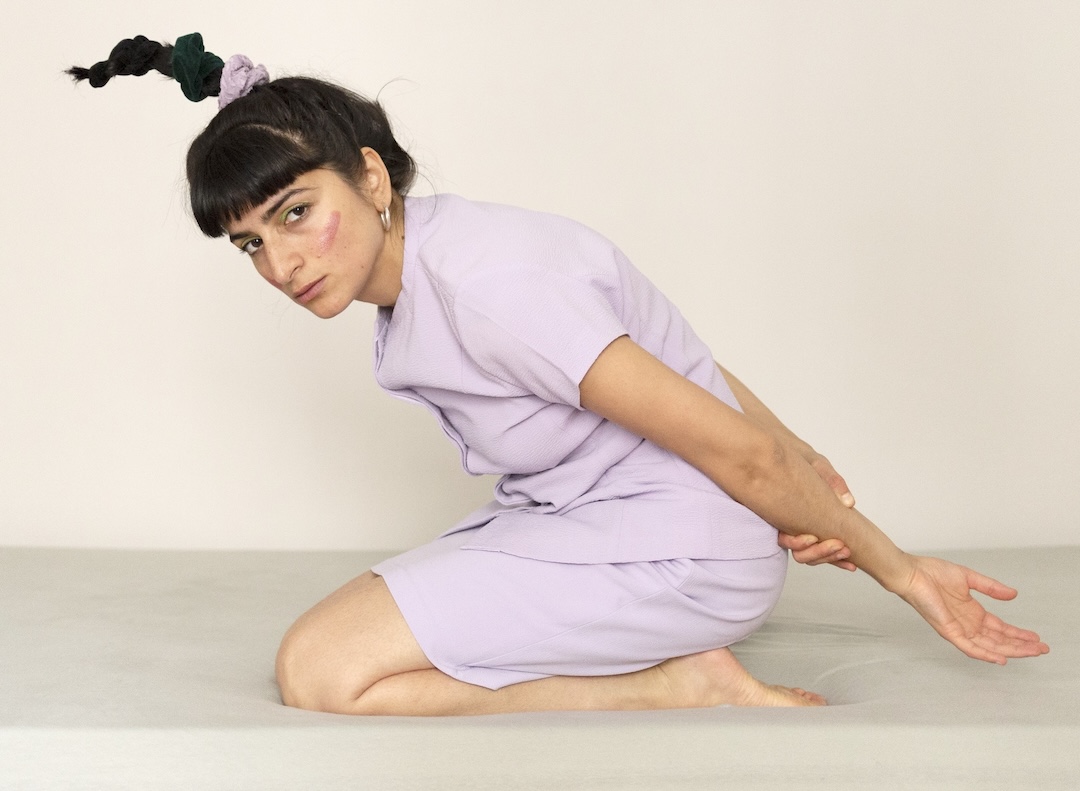
Contemporary Kurdish artist Cihan Çakmak’s solo exhibition Cihan Çakmak like a warrior, curated by Dr. Thekla Zell, opened to the public at Museum Morsbroich in Leverkusen, Germany, on July 12, 2026. The exhibition can be visited until November 8, 2026. Organized as part of the museum’s 75th anniversary programme, the exhibition brings together the artist’s most comprehensive museum presentation to date. Featuring approximately sixty works spanning photography, video, sound, and drawing, the exhibition also presents Çakmak’s drawings produced since 2019 in a museum context on this scale for the first time.
Born in Germany, Cihan Çakmak draws on personal experience to explore questions of identity, belonging, migration, intergenerational trauma, and feminist subject formation through an interdisciplinary practice that brings together photography, video, sound, and drawing. Rather than asking what identity is, Çakmak’s works examine how it is constructed, transformed, and continually reshaped through lived experience. In this context, the artist’s practice approaches the subject not as a fixed and coherent entity, but as a form of existence that is constantly in the making through social relations, historical experiences, and personal ruptures. It is precisely here that Cihan Çakmak like a warrior moves beyond the boundaries of a biographical narrative, posing critical questions about how memory, embodiment, and belonging are constructed.
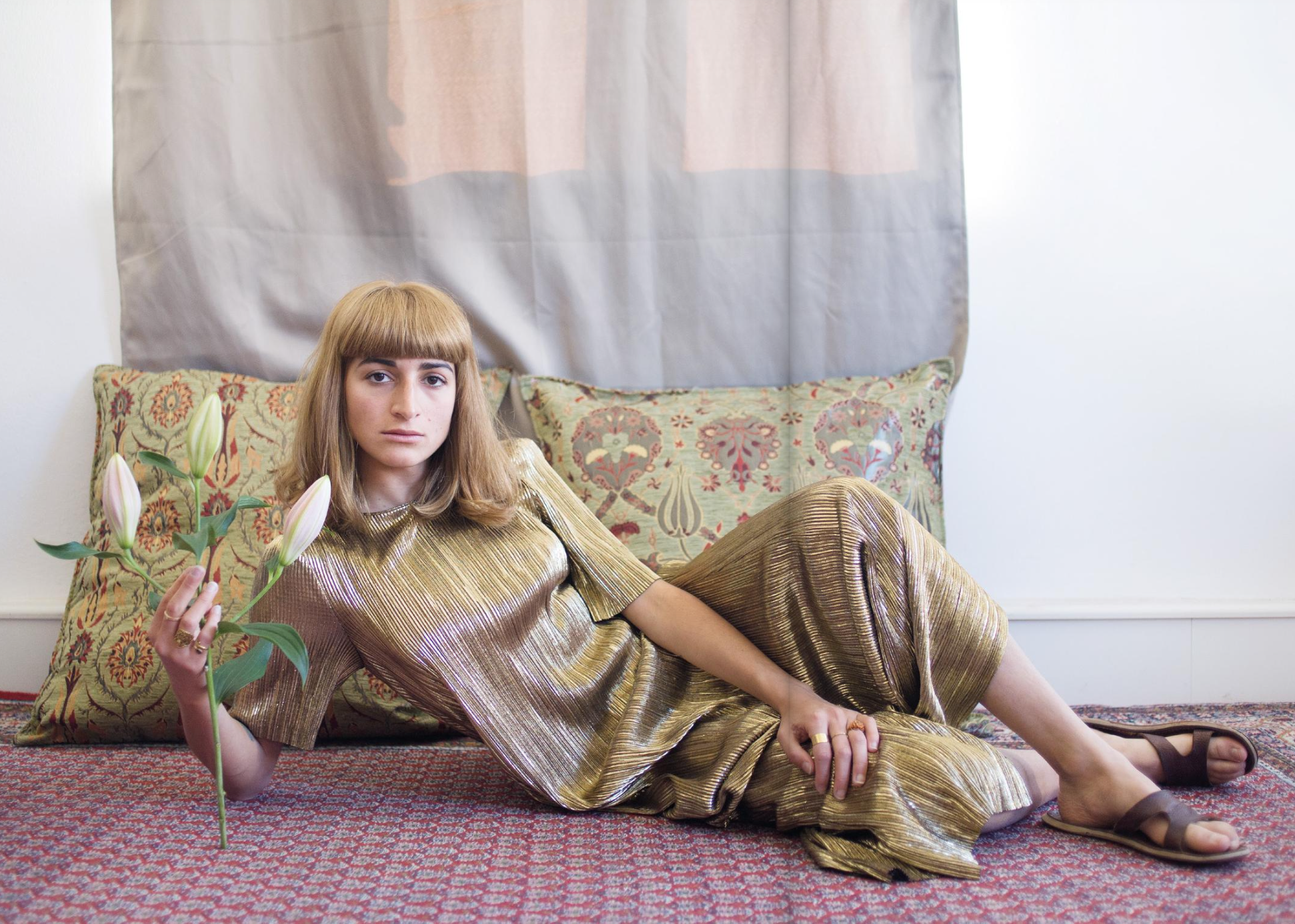
when we leave, 2019
Cihan Çakmak’s when we leave series can be understood as an ongoing visual inquiry in which the artist positions her own body as both subject and medium. Taken across different years, these photographs trace a process of transformation over time. Yet rather than functioning as documentary records, they foreground acts of self-staging and performance. Here, Çakmak does not simply represent herself; she continuously reconstructs herself. Each image serves as a reminder that identity is not fixed, but remains in a state of constant becoming. In the 2019 photograph, the body carries layers of cultural memory through fabrics and patterns, creating a visual field in which Kurdish visual traditions intersect with Western iconography. The rug spread across the floor, the gold-toned textiles, and the lily evoke a simultaneous sense of belonging and estrangement.
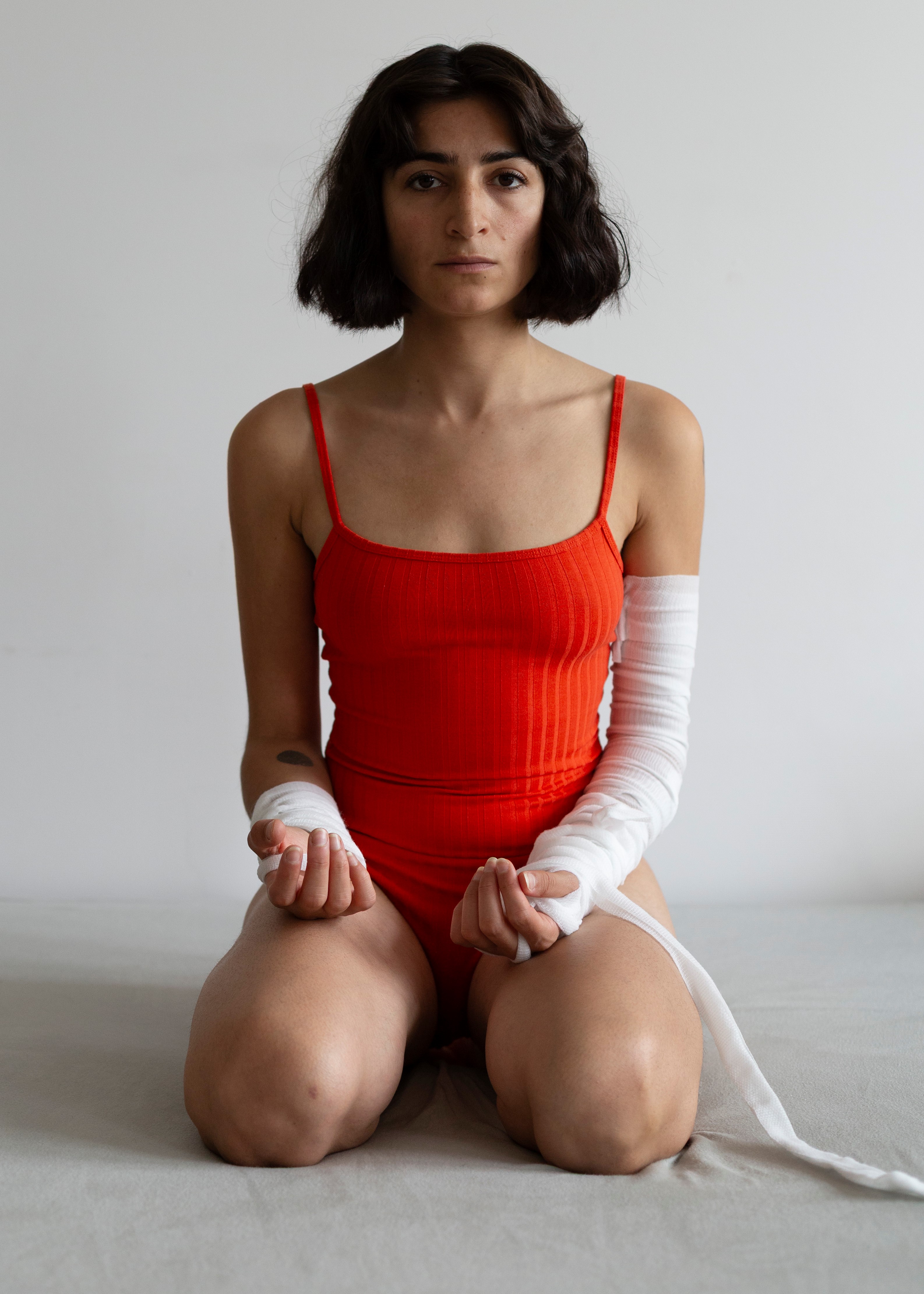
when we leave, 2025
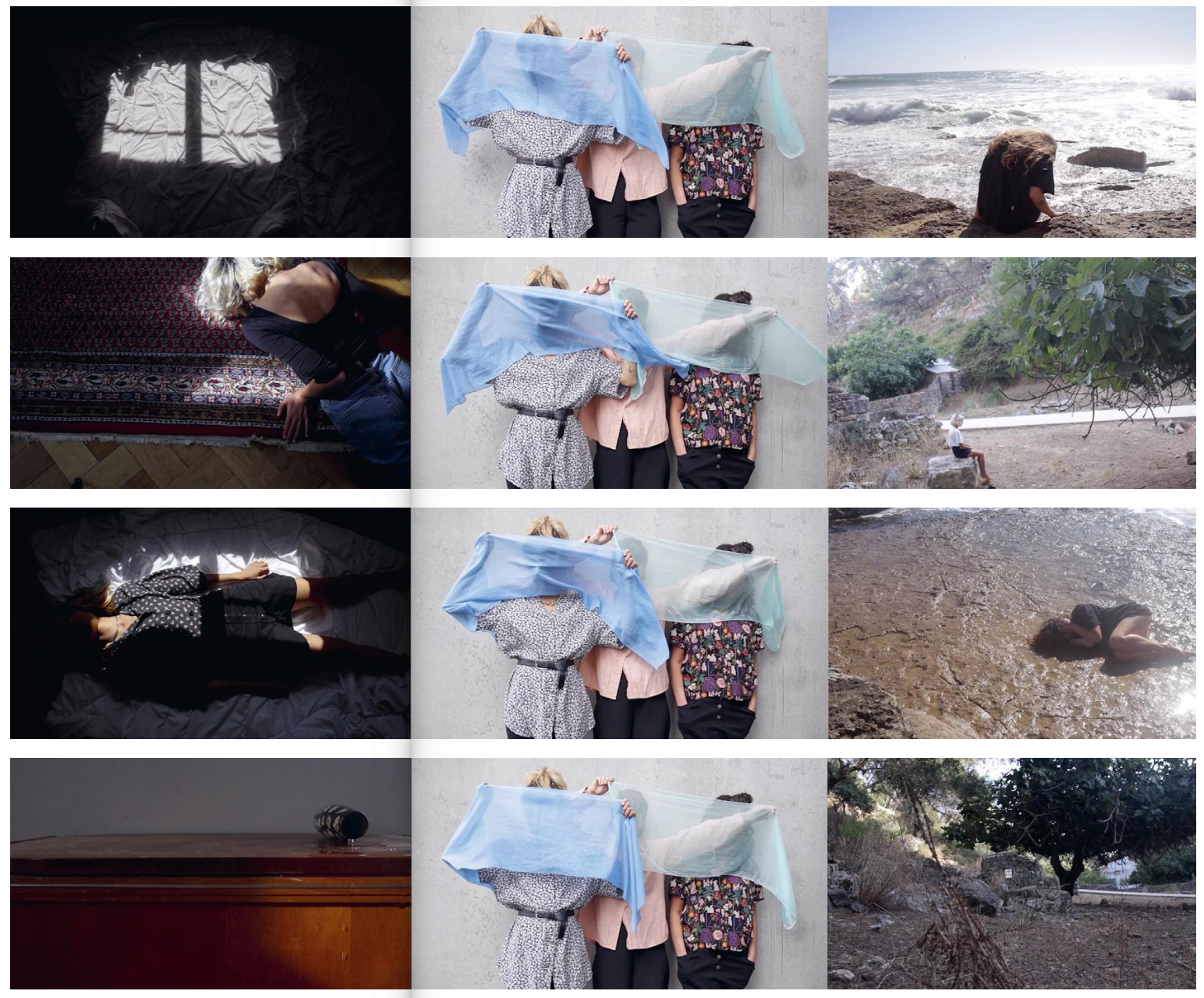
em fraktal_rausgehen, 2021
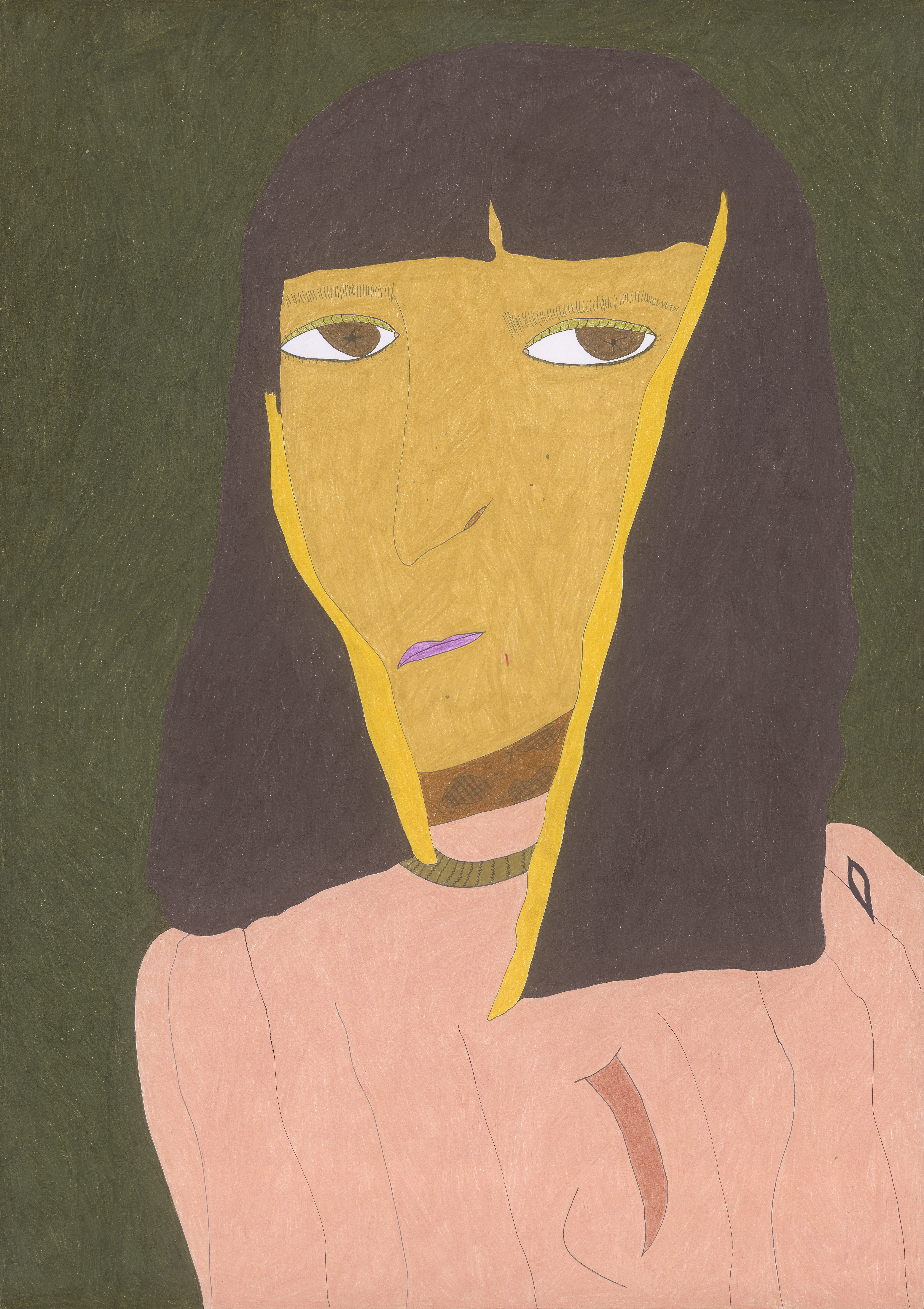
Version vom Selbst, 2026
One of the exhibition’s most compelling sections is devoted to the coloured-pencil drawings on which Çakmak has increasingly focused in recent years. At first glance, versions of the self appears to employ a simple and seemingly naïve visual language, yet the work constitutes a significant part of the artist’s broader reflection on identity. The self-portraits, rendered at different ages and with varying facial features, hairstyles, and colours, do not depict the shifting emotional states of a single individual. Instead, they point to possible selves that have yet to emerge or have remained suppressed. In doing so, the self-portrait moves beyond psychological representation and becomes a space for visual inquiry, proposing identity not as a completed essence but as a process of continual transformation and multiplication.
Çakmak’s drawings are not limited to an exploration of the self. Portraits of family members, friends, and people with whom she grew up extend beyond individual biographies to establish a shared field of experience. The simplified faces, distant gazes, and delicate lines that characterize these portraits make visible not psychological likeness but the traces that memory leaves upon the body. As a result, the boundaries between the personal and the collective become increasingly porous, while the tradition of portraiture itself is transformed into a mode of seeing that fosters relationships rather than merely representing them.
Overall, the photographs, videos, and drawings presented in the exhibition reflect the traces of the past that continue to inhabit bodies, gazes, and silences in the present. Rather than being invited into a single, unified narrative, viewers encounter an open-ended space for reflection, one that allows them to connect the works to their own experiences. Another striking aspect of Çakmak’s practice is her refusal to transform vulnerability into an aesthetic spectacle. Rather than representing trauma directly, the artist investigates the traces it leaves on memory and the body. By foregrounding ambiguity over certainty, and silence and absence over assertive forms of representation, this approach shifts the viewer from the position of a passive observer to that of an active participant in the exhibition’s conceptual framework.
The following lines from the catalogue accompanying Museum Morsbroich’s Cihan Çakmak like a warrior exhibition also encapsulate the artist’s approach to artistic practice:
I make art because I have to.
I should not make art.
My mother says so.
The men in the art world say so.
The art world says so.
But I do. I see.
These words suggest that the exhibition is not structured solely around a personal narrative; they also open up a critical discussion of art institutions, modes of representation, and the gendered and political dimensions of visibility. Rather than offering ready-made answers, Çakmak’s practice invites viewers to ask new questions about identity, memory, and belonging.
One of the artists to have attracted increasing attention within the European contemporary art scene in recent years, Cihan Çakmak presents through this exhibition a powerful artistic approach that rethinks personal experience within the framework of collective memory. As one of the highlights of Museum Morsbroich’s 75th-anniversary programme, this comprehensive presentation not only offers a broad survey of the artist’s work to date, but also makes an important contribution to contemporary debates on identity, the body, and memory.
Cihan Çakmak is a visual artist born in 1993 in Osterholz-Scharmbeck, Germany. Based in Berlin and Lisbon, she develops an interdisciplinary practice that brings together photography, video, sound, drawing, and text. After studying photography at the Dortmund University of Applied Sciences and Arts, she completed her studies at the Academy of Fine Arts Leipzig (HGB Leipzig) as a student of Prof. Tina Bara and was awarded the title of Meisterschülerin in 2023. She also attended the Advanced Studies Program at the International Center of Photography in New York.
Çakmak’s artistic practice is shaped by themes of identity, belonging, migration, intergenerational trauma, body politics, and feminist subject formation. Using photography and self-portraiture as critical tools through which to question the social gaze and modes of representation, she investigates the relationship between personal and collective memory. Both poetic and political, her work seeks to reveal the points at which personal experience and social history intersect.
Recipient of the Paula Modersohn-Becker Emerging Artist Award in 2020, the Rössing Prize in 2021, and the Ein-blicke-Preis in 2023 for her film where I left you at the blicke – film festival of the ruhr area (Bochum), an award presented to films with biographical or thematic connections, Çakmak is regarded as one of the notable emerging voices in the European contemporary art scene. Her works are held in major public and private collections, including Museum der bildenden Künste Leipzig, Galerie für Zeitgenössische Kunst Leipzig, Museum Kunstpalast Düsseldorf, Staatliche Kunstsammlungen Dresden, and the Arendt Collection Luxembourg. Through a practice that brings personal narratives into dialogue with collective memory and identity politics, Çakmak continues to present her work in international exhibitions and events.


Comments
00