
Body As The Initiator of Event
Before starting I find it productive to provide the reader with a few headers. This article is an objectively critical reflection on an artwork by Ranj Hikmat titled 24 Hours of Performance which took place between 5 PM on the 26th of September 2026 until 5 PM 27th of September 2026 on one of the rooftops of the Culture Factory - the rooftop of the Directorate of Culture. This article objectively approaches the artwork on an aspectual basis, matching the same multi-aspectual nature of the artwork itself, attempts to bring the reader closer to the different aspects of the artwork. Of course this will be a perspective unique to me, away from what the artist has wanted to convey to the recipients. That is why no questions about the artwork have been asked from the artist, before any discourse about the artwork, this article has been developed based on the perceived philosophical and artistic dimensions of the performance by being present for the duration of the artwork.
Photographers: Hemn Kakeiy, Sangar Abdullah, Naz Hakim Photo
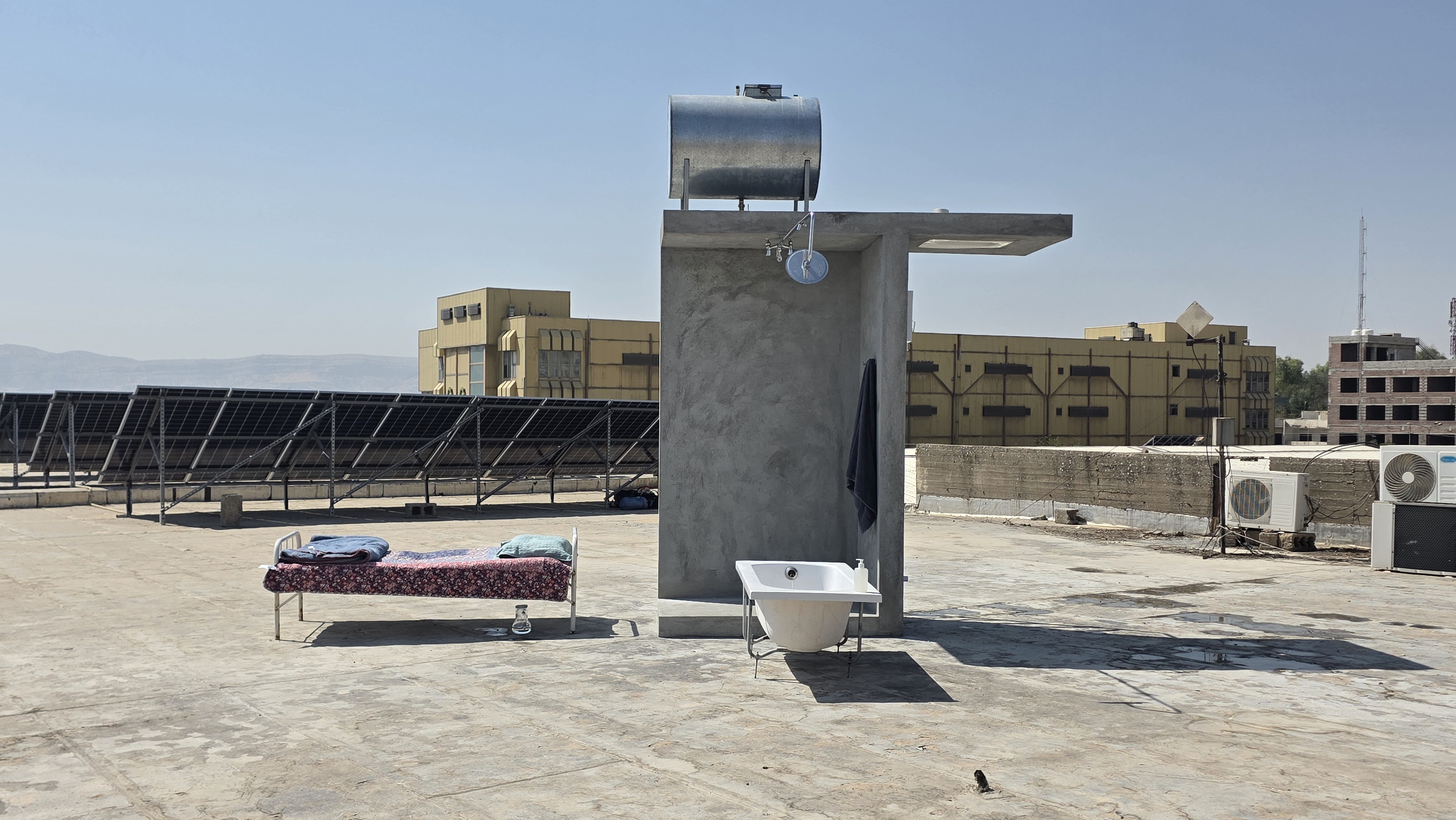
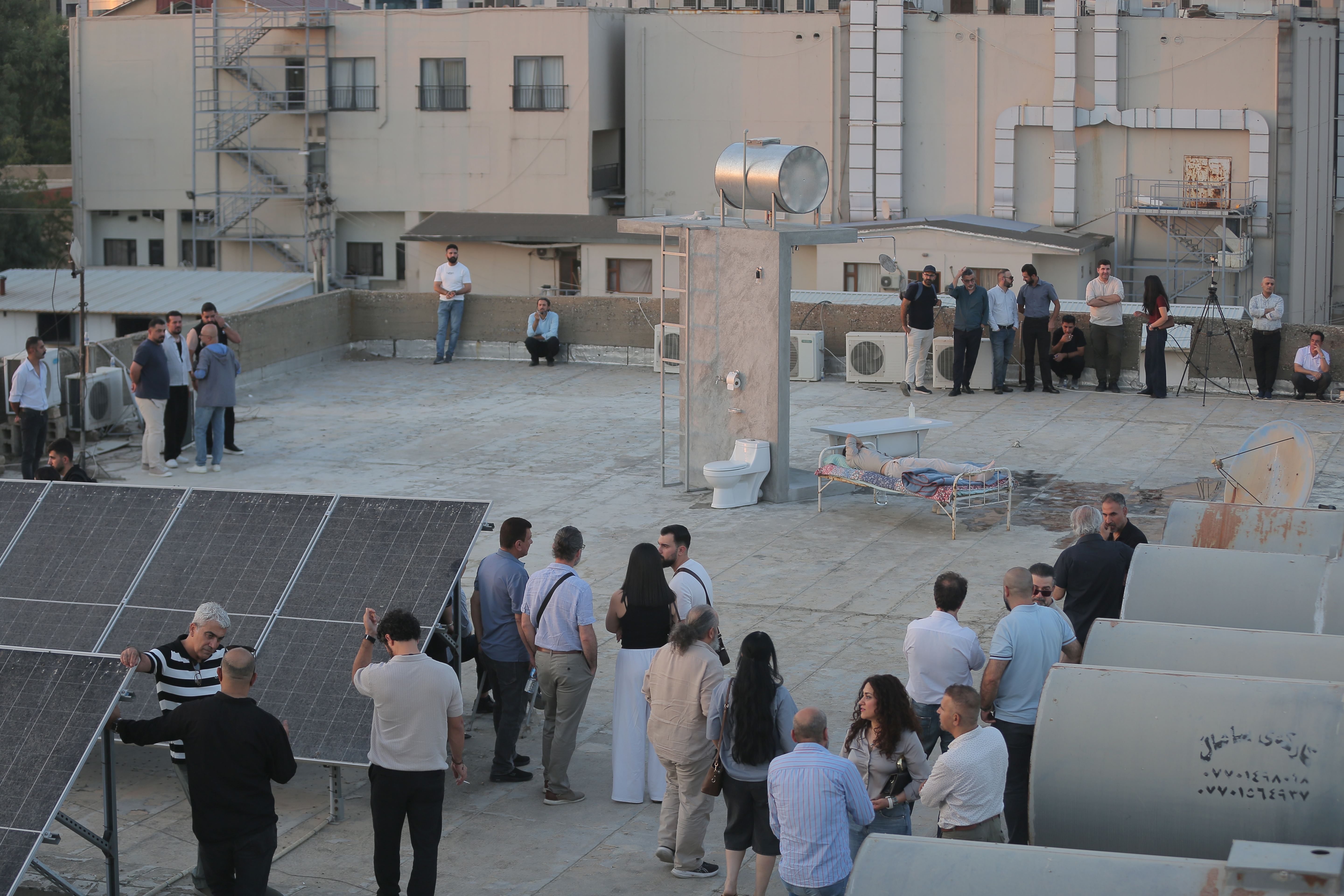
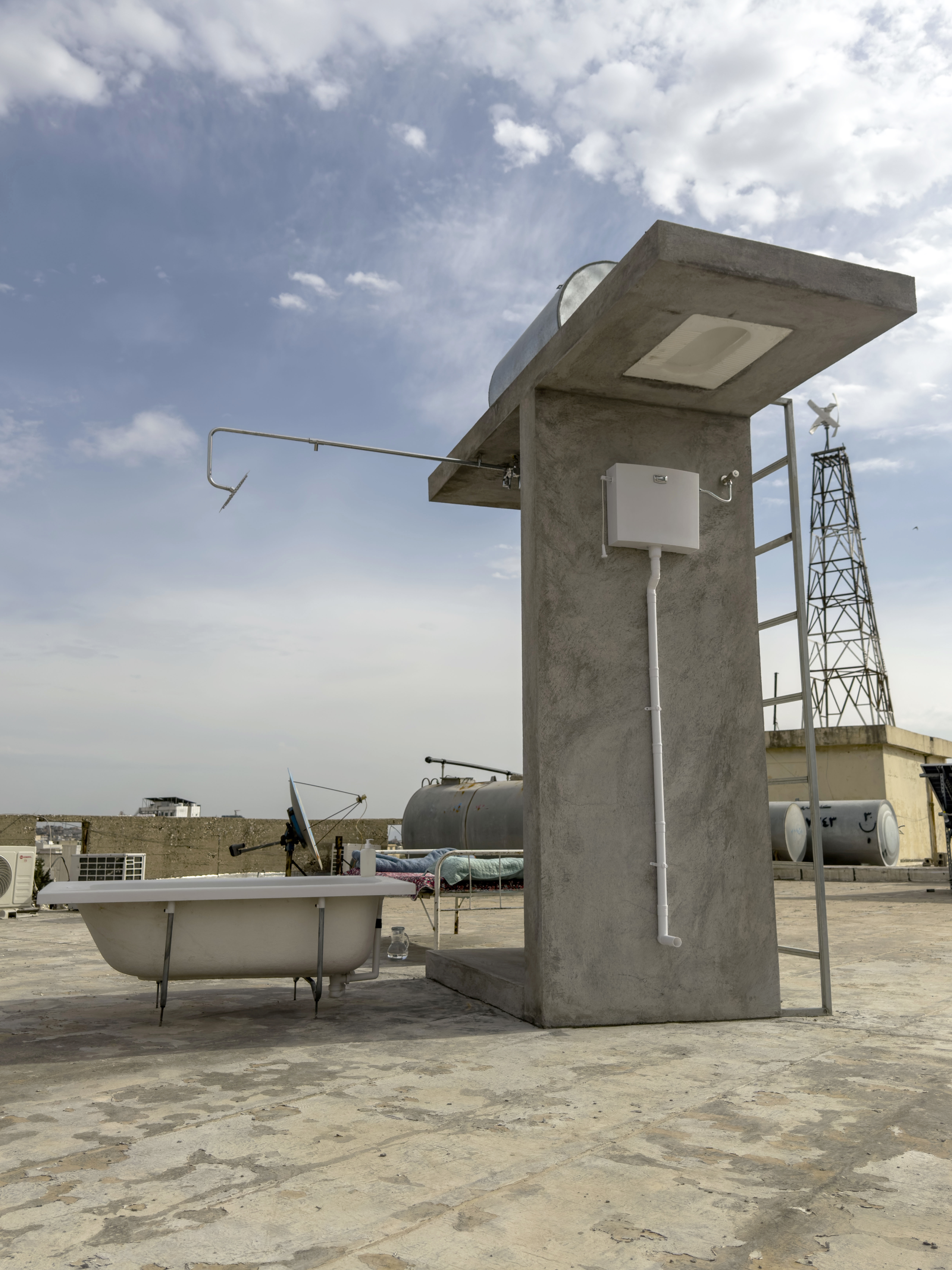
To better the imagination of the reader about the form of the artwork, I will put in a statement by the artist before attempting to cover the general atmosphere and events in the form of words. From the artist’s description of the form of the artwork: “I, Ranj Hikmat, tend to do a performance for 24 hours. I will stay on the rooftop of the culture factory, The rooftop of the ministry of culture - directorate of culture to be exact. On this rooftop, a rollaway bed, a toilet, a bathtub and douche are present. I will not be contacting my visitors, only engage instinctively with the activities that are appropriate with the tools I named [...] My performance stays open for the public during that time.”
Photographers: Hemn Kakeiy, Sangar Abdullah, Naz Hakim Photo
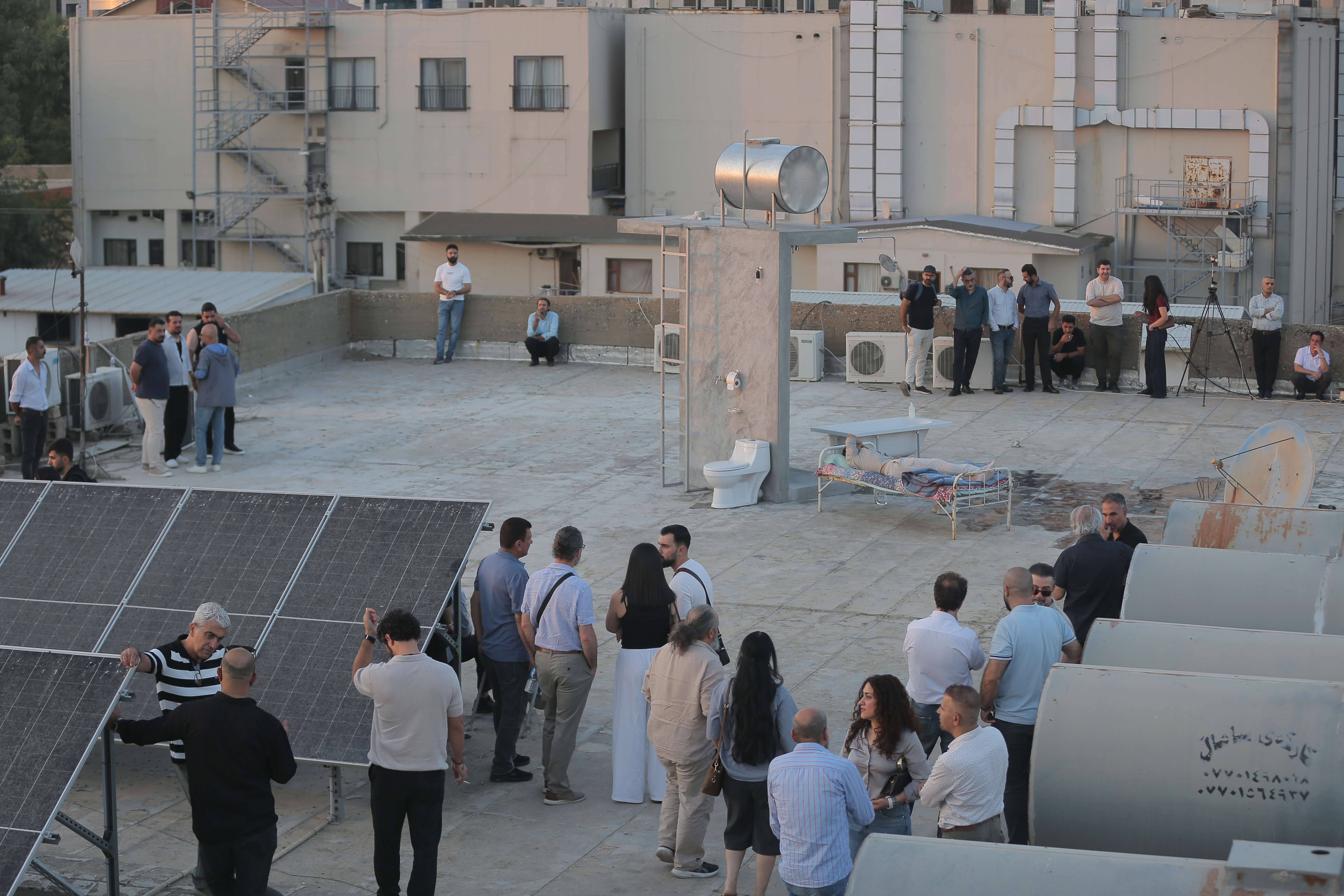
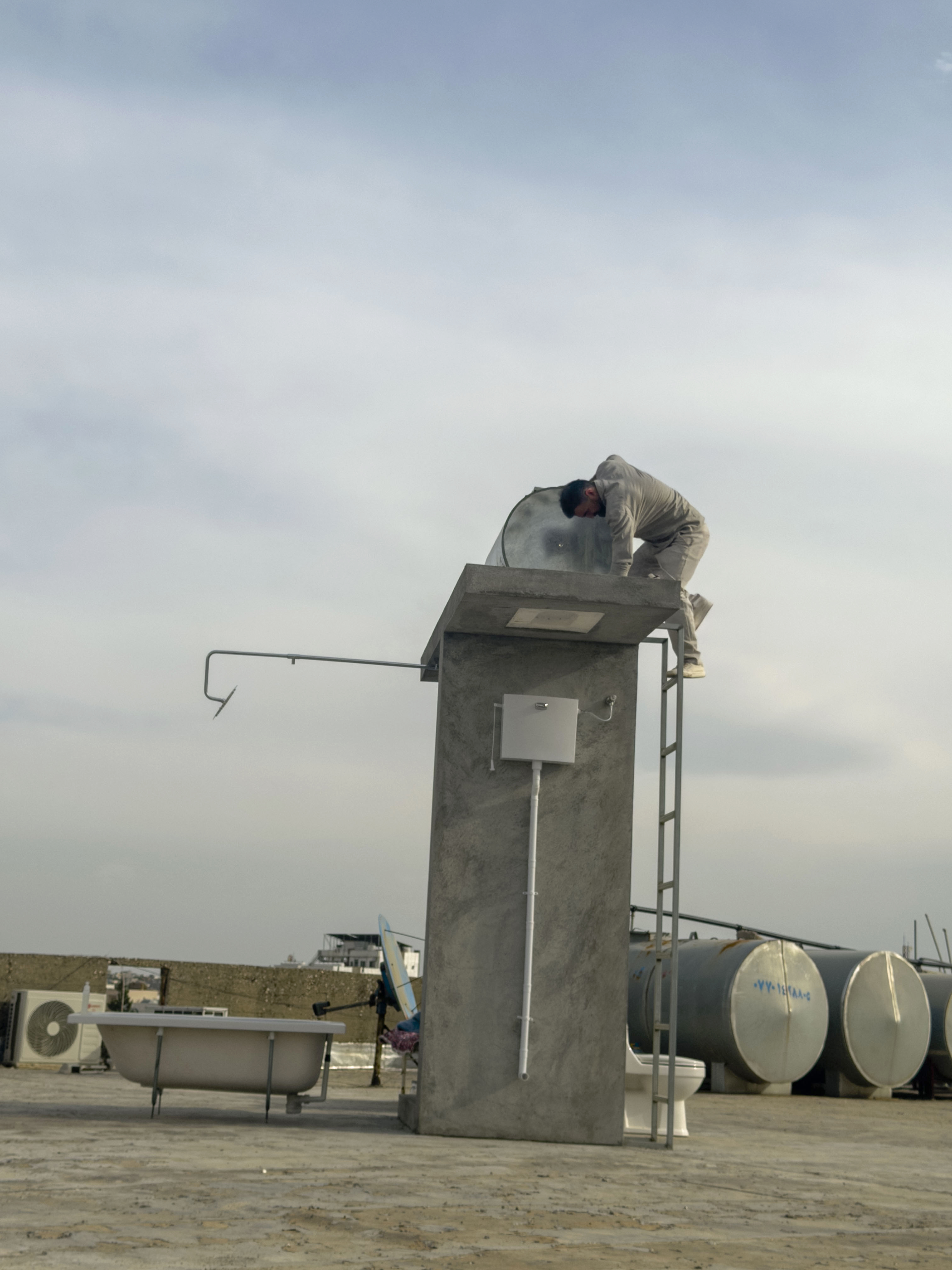
When the recipients step on the rooftop, it is 5 PM. The artist is laying on the rollaway bed, facing his back to the recipients. The movement on the rooftop is reserved to the recipients who are arriving and choosing a corner or an angle to see the artwork, this and the artist moving the direction he is facing. Their only connection is limited to seeing them naturally without any specified gaze. The rollaway bed, just like any other bed, holds a bedsheet, a pillow and a blanket. The distance between the recipients and the artwork is merely a few meters, in the middle and a little bit further, of the rooftop, there is an unfamiliar architectural form, which has three sides with a smaller ceiling resting on it, holding a tank of water with an attached ladder. On one side of the wall there is a shower douche that has been attached with the valves to the ceiling. In a way that requires one to climb the ladder to open the valves in order to get water. This order applies to shutting the valves as well. The aim of the douche leads to a shower tub that has been positioned under it. On the other side, there is a western style toilet and a light bulb for illumination during nights. And another tap for hand washing. On the third side of the object there is a flush box and an eastern style toilet hanging upside down to the small ceiling that protrudes about a meter away from the wall.

Photographers: Hemn Kakeiy, Sangar Abdullah, Naz Hakim Photo
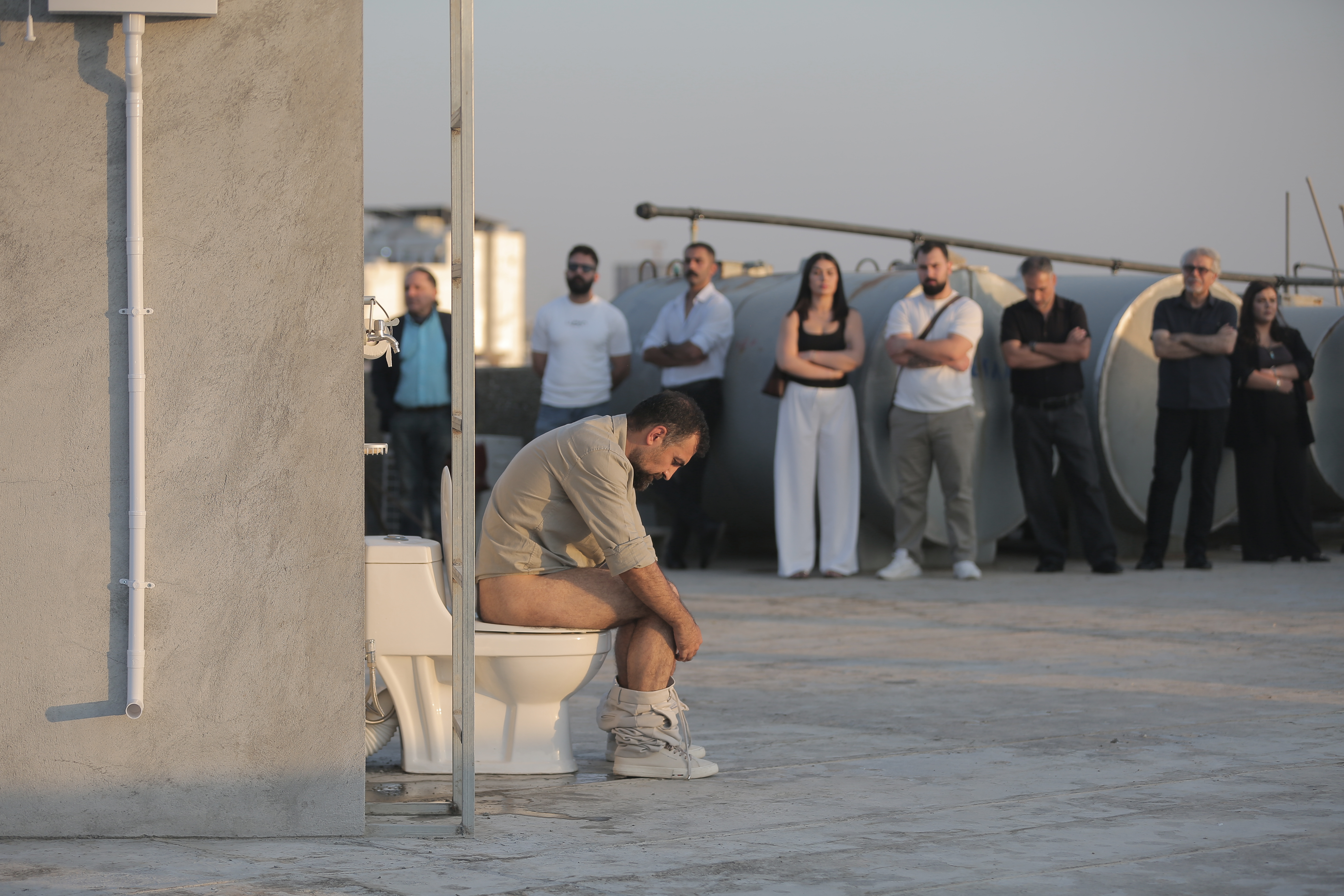
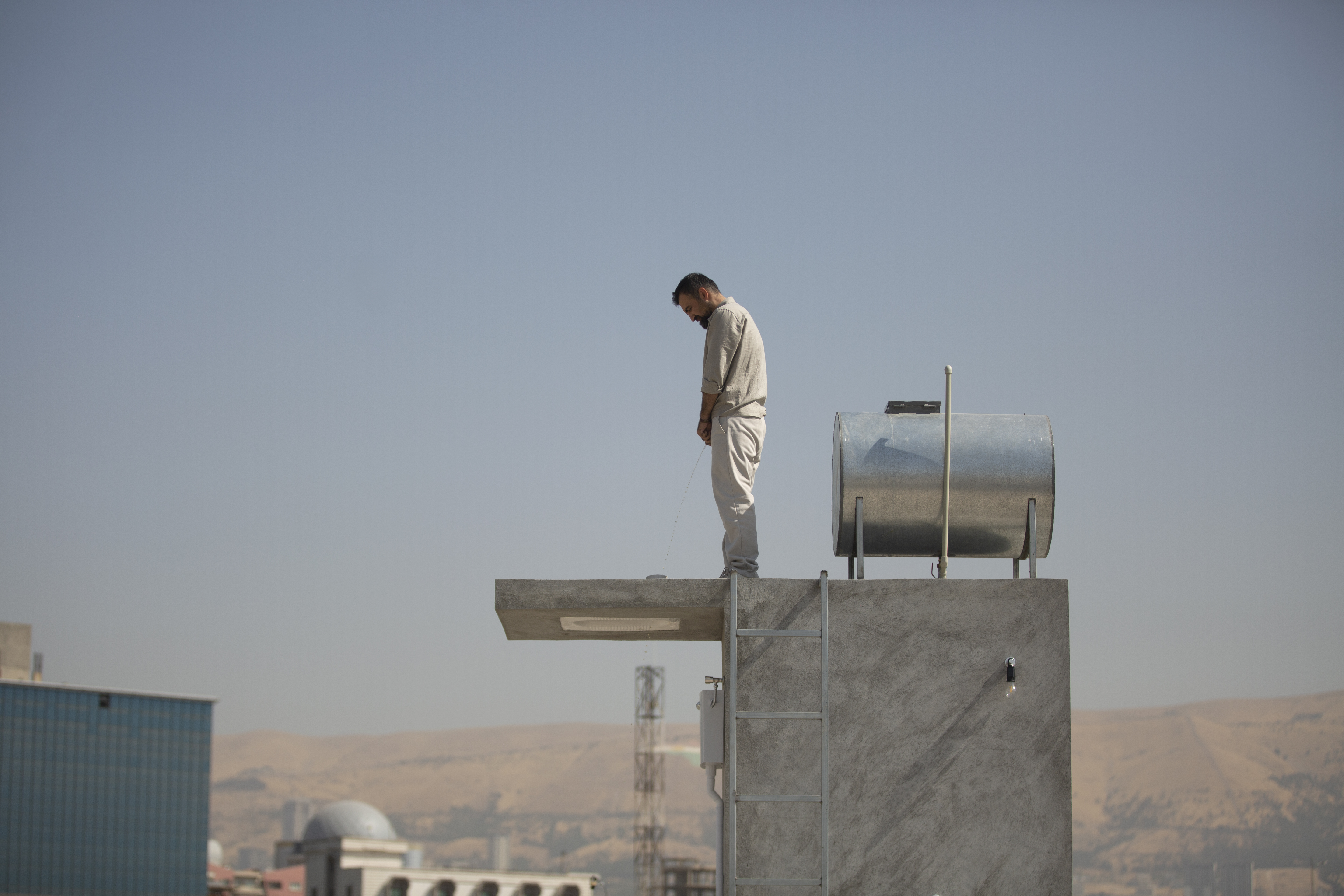
The first noticeable action is when the artist gets up and sits on the bed. Then climbs the ladder onto the top of the object, opening the valves for the douche. Climbing down he stands and starts stripping down in front of the recipients until the level of complete bareness. Then steps into the tub to take a shower while standing. Afterwards with a towel that was resting on that side of the wall dries himself while climbing back up with the towel and a short on to shut the valves. After this shower, for most of the time he was laying on the bed in front of the recipients without making any contact. When the time of the need to urinate comes, he goes to the roof of the object, and from the whole of the upside down toilet throws the urine to the rooftop of the Directorate of Culture, or the rooftop where the artwork is taking place. Then with water from the flushbox he waters the urine away to clean the rooftop. Hours pass, then the need to use the western toilet arises, in which the artist sits and defecates in front of the recipients. During the 24 hours period these and based on necessity, instinctively these tools are used. During this period, the recipients can come and go, and are free to be present to the extent of staying for the entire duration of the artwork.
From here we will step into a multi-aspectual analytical reading. As an introductory we shall articulate aspects of the artwork phenomenologically. Before the artist’s body was present on the rooftop of the Culture Factory/the Rooftop of the Directorate of Culture, the objects were mere still and silent materials. On a phenomenological aspect the objects themselves don’t have any predetermined or fundamental value. They await the presence and perception of an experiential subject to gain value. A tub, a bed or a toilet are mere tools in a space. A subject can reveal the phenomenological aspects through using and experiencing them (as in how they experiencing them appears to us, not of what they fundamentally are). Of course with the artwork finishing and the subject - Ranj - leaving, the tools used in the artwork then return to being lifeless utility. This highlights the importance of the artist’s body for giving value to the tools used in the artwork. Aside from the presence of the audience, the artwork’s initiating moment is the moment the artist’s body becomes the center of the experience; when the body entangles the object with movements and acts. In the Merleau-Ponty perspective: body is the actual medium that the world is manifested through. Because to Ponty, we are present within the world through our bodies. Within this angle, we can say that the recipients are experiencing the artwork via Ranj’s body, realizing the duty of the tools.
Photographers: Hemn Kakeiy, Sangar Abdullah, Naz Hakim Photo
This paves the way into the anthropological aspect of the artwork in highlighting the humans are self-perceiving creatures in the sense that the self becomes the subject to itself. In another expression, the way humans have the ability to ask about the whats of self and Being among the other beings, including the details of that self to become a subject of thinking and question. And in an artwork such as this, humans have the power to experience its own subjects and even challenge the physiological state of its own body.
In these 24 hours of the artwork, the body doesn’t represent anything else as much as it becomes the artistic subject and the giver of meaning to the tools around it. Through this uninterrupted presence, the artist’s body changes from a passive or imaginary object of seeing to a medium that attempt to invoke events.
Another question that can take us to another dimension of the artwork is the aspect of the artwork becoming the “dissector of routine”. Within this expression, the question is; Do we continuously notice the simple and routine-oriented acts of our daily life? Do they halt us and create questions, in the sense that it becomes a focus point in this artwork does?
Photographers: Hemn Kakeiy, Sangar Abdullah, Naz Hakim Photo
The hours of the lives of humans have a lot of repeating routines that are done continuously. In a general sense those actions don’t become a subject of thinking and don’t invoke questions. Ranj intellectually gives value to these routine acts, just as if he is saying: Within us, self-propagated things happen, when noticed could become subjects of thought or understanding how they protect our body and minds from external shock and trauma as a defense mechanism. It is clear that the present’s capitalistic society has made daily life a series of partitioned acts remote to each other. The self within those routines becomes blind to consciousness, losing control of the fundamental acts of human life. I want to use the help of an expression about re-alarming routine or better said deconstructing routine which is the expression of importance of moments. A moment is the split-second that a simple daily act or event takes place through awareness, is interrupted from being a passing routine and becomes experience.
For me, the fundamental paradoxes of the artwork is one of the most important aspects to be highlighted, to be considered as the core of the artwork. This artwork carries more than a paradox within itself, which are undergoing a challenging behavior of the fundamental contradictions. In doing so it gives the act a dynamic that I name the fundamental energy of the artwork.
Photographers: Hemn Kakeiy, Sangar Abdullah, Naz Hakim Photo
The rooftop on which the artwork took place became the arena of engagement and impact of many paradoxes. Within these impacts the recipients experiences the receival of the artist’s radical message. The paradox of increasing and decreasing adrenaline within the calm acts of taking a shower or sleeping versus the stressful acts of baring naked in front of an audience. Here, the rooftop of the Directorate of Culture becomes the arena of impact for opposing polars that keep attracting the lines of experience to themselves.
On another hand the paradox between privacy and publicity. Vitality acts such as sleeping, showering and defecation which commonly happen beyond a shut door and away from sights, become the direct center stage of the recipients’ gaze of the artwork. Not to forget bringing such hidden body acts to the public space and in front of the gaze of others, is distorting the systems of control within the body. An obedient body is a body that the system has taught to take the private acts of urination, sleeping, bareness and shower behind closed doors and curtains. So it may appear as a programmed, obedient and productive body outside. Ranj in this artwork is in another struggle with himself. In other words the Id inside his consciousness is in struggle with his Super Ego. With this act, and besides himself facing this challenging and battling mental state, he brings the recipients to the same mental struggle, whether this is done willingly or unwillingly.
Another paradox is active versus passive. The act of sleeping is the most inactive state of the human body from a physiological standpoint. Here it becomes an active and radical artistic act. While Ranj sleeps he loses control over his body, but right within this unawareness forces the audience into this realization of the place and then the experience of the presence of that body that instead of creating artistic work, becomes the artwork.
Photographers: Hemn Kakeiy, Sangar Abdullah, Naz Hakim Photo
In this artwork Ranj deliberately decides to not be in contact with the recipients. This becomes another aspect of the artwork which I would like to define as depersonalization - the destruction of the social character. This could be an asset to lower stress levels in doing his natural acts in front of his recipients. The deliberate disconnect in contacting the recipients, strips Ranj from his social status and changes him into an absolute artist. This positions him within the artwork to not be just the familiar Ranj anymore, he is no more a friend, teacher, brother or relative to any of the recipients. He is only an artist that is busy doing an artwork which is a performance that takes 24 hours on the rooftop of Culture Factory. This creates an aura - one that is illusory and with no physical being of course - however creates an easier acceptance of the unfamiliar acts for the audience. I find the deliberate disconnect with the recipients a smart choice, because, if during the performance he was in contact with them, it would break the ritual of the artwork. The reactions of the recipients of private acts such bareness - which is still a taboo in society - was much simpler than I anticipated. I relate this to the power of artistic context, when the recipients of different backgrounds of ideology and religion were aware that this is an act happening within a frame of an artwork with an artistic context. So no matter how uncommon it is, they were ready to accept it as is.
The critique as an aspect of the artwork should also be considered. For me the artwork is heavily critical; I can’t ignore the details of events that happen during the performance which state their own critique. As said, the devil is in the details. I ask why does the artist urinate directly on the roof of one of the official Directorates of Culture? This act is using details of the body as a weapon; not only to critique but to the extent of urination. Of course I ask the reader to accept this statement: the physiological and sexological dimensions aside in many societies - or even most of them - urination is considered the utmost humiliation, the utmost dissatisfaction expressed towards a thing, individual or place. Maybe Ranj wasn’t deliberately aiming for this outcome. But this still doesn’t make reading that aspect of the act entirely wrong. This is a stance against the Culture Industry. This term is named by Adorno and Horkheimer in their book the Dialectic of Enlightenment. They state that within the systems of Culture Industry it redefines art from an cultivating, event creating experience to a numbing product that produces absolute pleasure. I would like to think that urinating on a building that is an official directorate within an institution called Culture Factory is a statement of rebellion to the extent of urination - But where does it originate from? From the center of an artwork that instead of inviting recipients to pleasure, he gathers them to witness events such as urinating on the Culture Industry.
Photographers: Hemn Kakeiy, Sangar Abdullah, Naz Hakim Photo
On another hand it is clear that the events and shows within the systems of Culture Industry always work for illusionary excitement and provocation, raising the levels of adrenaline of recipients to a higher dose, so they may stay within states of consumerism. On the contrary, Ranj deliberately cuts ties to the connecting absolute pleasures. His artwork within time and space context abrupts the normative exhibition facade, because exhibitions within its own modern fundamental place of displayed finalized products. However, in this performance, when the recipients reach the rooftop, not only is there no complete thing, nothing has even happened yet. In that instance an event is to take place after a while. Instead of an artistic product that has sellability or pleasurable sight, the artwork becomes a lived process in which time, body and the place, together, bring an event within the present to existence.
Another side for me that completely clicks with the critical aspect of the artwork, is the autonomy of the financial cost of the project. The independence of critical thinking of the artist alongside artistic articulation and the choice of place reflects truthfulness towards his own principle. While the current art world is over-filled by artists that use art as a machine of creating financial gains, Ranj decides that the entire artwork should be carried out by his own financial effort. The rejection and diseffort of securing funds within political, governmental or institutional entities, guarantees the authority of independence in his decisions within the artwork. Not to forget, in a general sense, that conservation to the financial wealth of institutions becomes the fundamental condition of protecting autonomy within artistic context. By deciding to complete the artwork within his own financial means, doesn’t allow for any authority to draw censoring lines or affecting agenda to be imposed on the radically critical goals of the artwork. This truthfulness in relation to his own principles makes the critique hard hitting and clear of any compromises.
Photographers: Hemn Kakeiy, Sangar Abdullah, Naz Hakim Photo
In conclusion, what I want to say about this artwork is after the 24 hours on the rooftop, understanding the performance arts within the Kurdish contemporary art context faces a fundamental turning point. If before this artwork using body in art was a symbol of expression, conservation hints, and brave forms, then in this artwork, the artist baring naked in front of the direct gaze of the audience, becomes the disruptor of that calm space by deciding to directly break limits. Afterall, breaking a taboo can only be realized when its limits are broken. If you may accept my unexaggerating and unpraising claims of this artwork, I believe this artwork will elevate the ability of art within Kurdistan from a locality to an international arena of competing arts and within that arena the performance arts.
This artistic act burdens the duty of artworks that comes after dramatically harder. Because it redefines the level of awareness and demand from the recipient on a fundamental level. Any performance that takes place after this increase of the level of radicality and braveness to come forward, undertakes a responsibility that it must not remain a symbolic expression alone. Body not to be an instrument of the symbols of the artwork but rather the ability of itself becoming the artwork and to give life to the used place and materials, to an extent where the history of this performance medium of art will never be the same before and after this artwork.
Editing: Bnar Tahir.

Comments
00