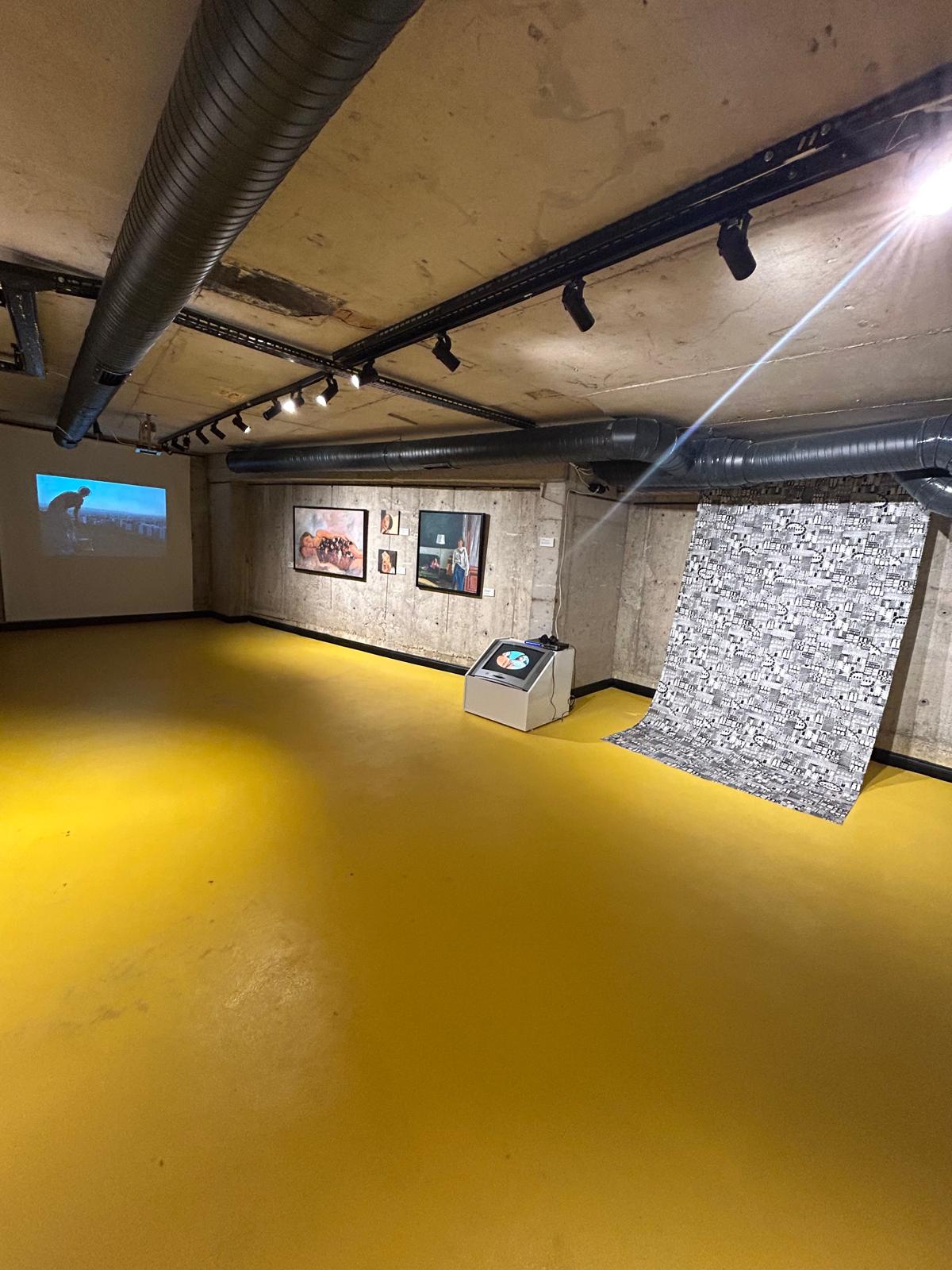
Ya duyemîn / İkincisi / The Second One, the second exhibition at subSPACE, under the umbrella of avesta | CULTURE in the Sur district of Diyarbakır, opened on October 18 and will remain on view until February 28, 2027. Curated by Gül Hür and Şener Özmen, the exhibition brings together, in a single space, works produced at different times by Fikret Atay, Mahmut Celayir, Murat Gök, Sidar Alışık, Şener Özmen, and Zeynep Uruç. Taking its title from a line in Hiner Saleem’s novel Ez û Ez (Jiyana min a piştî mirinê), the exhibition asks what becomes of an artwork after its first presentation.
Ya duyemîn, subSPACE, avesta | CULTURE, Diyarbakır, 2026.
In this interview, the Editorial Collective speaks with the curators about the exhibition’s underlying rationale: What does it mean for a work to be presented again, years later, alongside other works? How does this approach position itself in relation to the contemporary art system’s emphasis on the value of the “first time”? How do a Kurdish title and an exhibition space that also houses books shape the exhibition? The questions are framed around the thinkers and contemporary art precedents that inform these discussions.
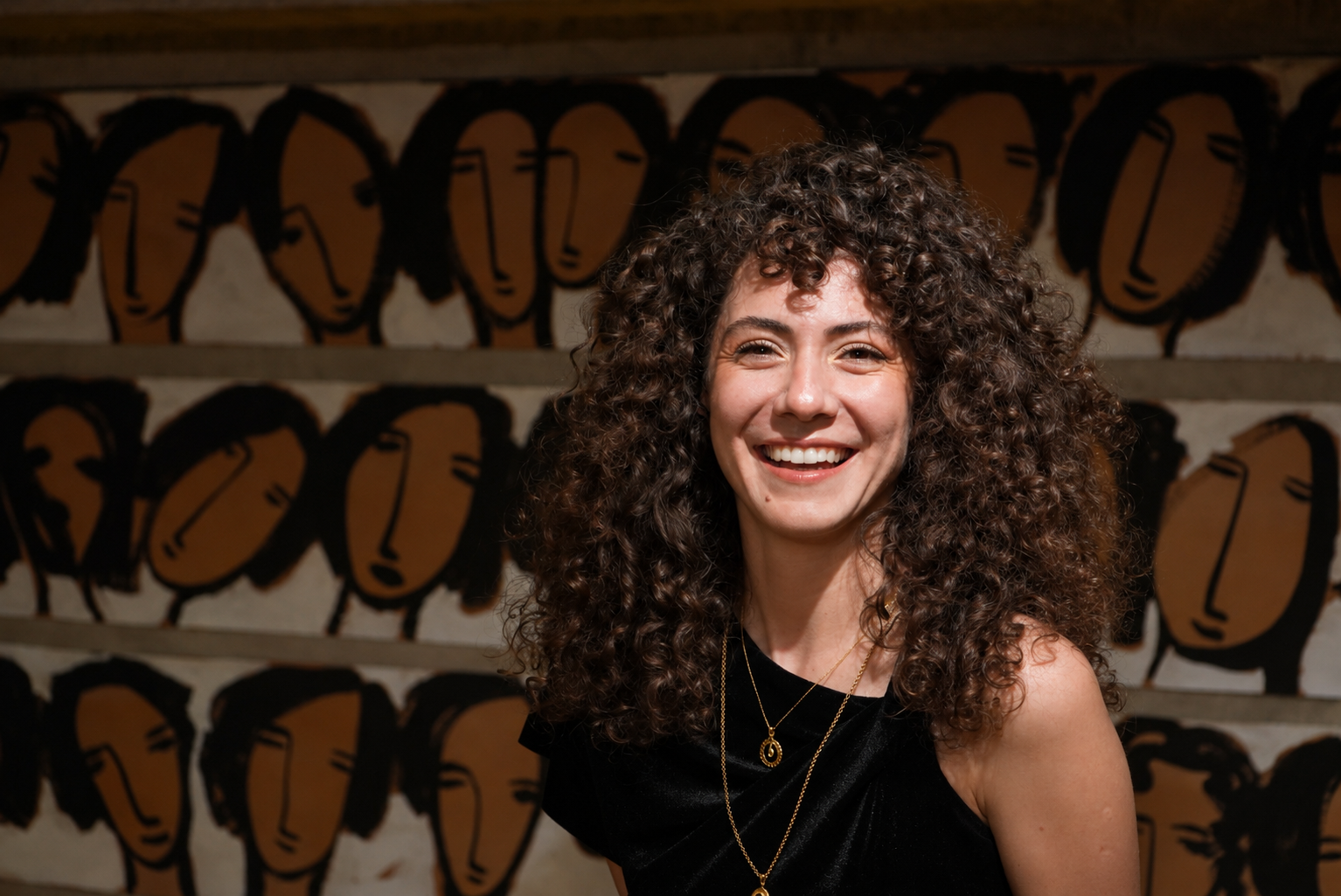
Gül Hür
Editorial Collective – The exhibition takes as its point of departure a sentence from Hiner Saleem’s novel Ez û Ez: “When I learned that I had only one life, my second one began.” This sentence suggests that a subject who perceives life as something that “repeats” comes to recognize—and perhaps distinguish—that very repetition. As Gilles Deleuze writes in Difference and Repetition: “What returns is not the same; what returns is not the similar. Rather, it is the return of the Same in what returns—that is, the Different—and the return of the Similar in what returns—that is, the Dissimilar” (Deleuze, 2017, p. 389). In short, Deleuze argues that the Same is not the same as the Similar, but rather emerges through the reconstitution of difference. If we consider this reconstitution as a practice within the context of contemporary art, one example that comes to mind is Marina Abramović’s Seven Easy Pieces, presented at the Guggenheim Museum in New York in November 2005. Over seven consecutive nights, Abramović performed for seven hours each evening, from 5 p.m. until midnight, re-enacting seven performances, including earlier works by other artists such as Bruce Nauman, Vito Acconci, VALIE EXPORT, Gina Pane, and Joseph Beuys. Each re-enactment was understood not merely as a repetition of the original performance, but as a distinct work in its own right. Against this backdrop, was Ya duyemîn conceived simply as an institution’s second exhibition, or was it oriented towards the kind of difference within repetition explored by Deleuze and Abramović? How did the idea of framing the exhibition as a proposition on a “second life” emerge? In other words, beyond providing a title and a motto, how did Saleem’s sentence shape your approach to exhibition-making? Furthermore, in preparing the exhibition, was your decision not to explicitly define this idea as a thesis or a methodology a deliberate one?
Gül Hür – Since this is a multi-layered question, let me try to approach it by going back to the process of establishing subSPACE. When Abdullah (Keskin) and I first saw the building that now houses avesta | CULTURE in the summer of 2025, we knew we had stepped into a world where we could bring everything we had imagined to life. Today, avesta | CULTURE, which also houses subSPACE, brings together Avesta Publishing, the Celadet Alî Bedirxan Kurdology Library, and the Avesta Culture Foundation. When designing the space, we never regarded these as separate entities, each enclosed within its own thick walls. On the contrary, we conceived them as interconnected spaces that engage in dialogue with one another and, indeed, overlap. This is also why subSPACE, which shares a floor with the library, has no door. Throughout my career, which began in academia, I have come to understand that fields such as literature, art, history, sociology, theatre, philosophy, and music should not be rigidly separated by disciplinary boundaries; a theatre production and a doctoral dissertation can very well be two different media directed towards the same destination. My experiences and readings across a range of settings, including universities, research institutes, non-governmental organizations, and publishing, have undoubtedly contributed to this understanding.
We are shaping subSPACE along these lines. We have never treated the idea of “putting on an exhibition” as something to be written in capital letters and placed on an untouchable pedestal, laden with solemn significance. Here, it is worth mentioning the renowned Swiss curator Harald Szeemann. Inspired by his approach to the exhibition not merely as a space in which artworks are brought together, but as a mode of thinking and expression in its own right, we see the exhibition as a living, evolving structure, open to change and new encounters. Accordingly, we attach greater significance to the idea, the project, the concept, and the process itself. The act of “exhibiting” is only one part of a much longer journey. Our gatherings during the preparation process, our exchanges of ideas, our discussions around the works, and all the events we organize after the exhibition opens are what inspire us.
I can explain the inspiration we drew from the opening sentence of Hiner’s (Saleem) latest novel from a similar perspective. The idea and concept came from Şener (Özmen). He brought it up while we were planning how to move forward following the highly successful Bîra Rû exhibition by Sakar (Sleman), which he had been unable to attend because he was in Chicago at the time. Our close friendship with Hiner, as well as the fact that I had edited the Turkish translation of his latest novel, played a significant role in shaping this starting point. We are both quite familiar with Hiner’s intimate and mischievous world. We decided to follow the idea of a “second life”, which runs throughout his novel, in subSPACE’s second exhibition, this time by tracing the second lives of artworks. We were particularly keen to organize a group exhibition. We brought together works by Kurdish artists, including Şener himself, who have shaped not only Kurdish art but also the history of contemporary art in Turkey through their artistic practices and contributions. These included works that had been exhibited in national and international contexts since the early 2000s, alongside more recent productions. The only work created specifically for the exhibition was Sidar’s (Alışık) Urbs, inspired by Diyarbakır and produced for Ya duyemîn. All the other works had previously been exhibited in various contexts and venues.
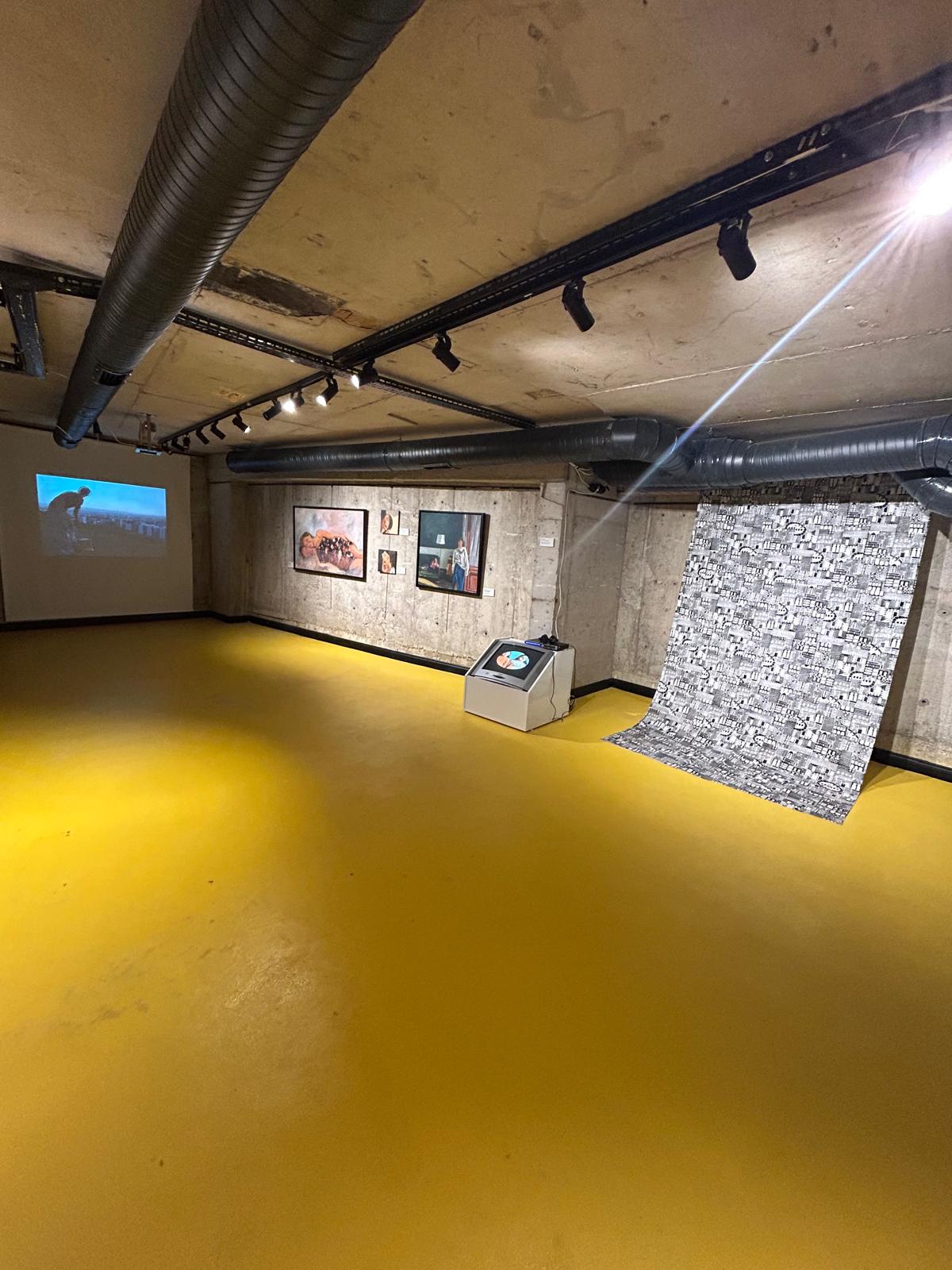
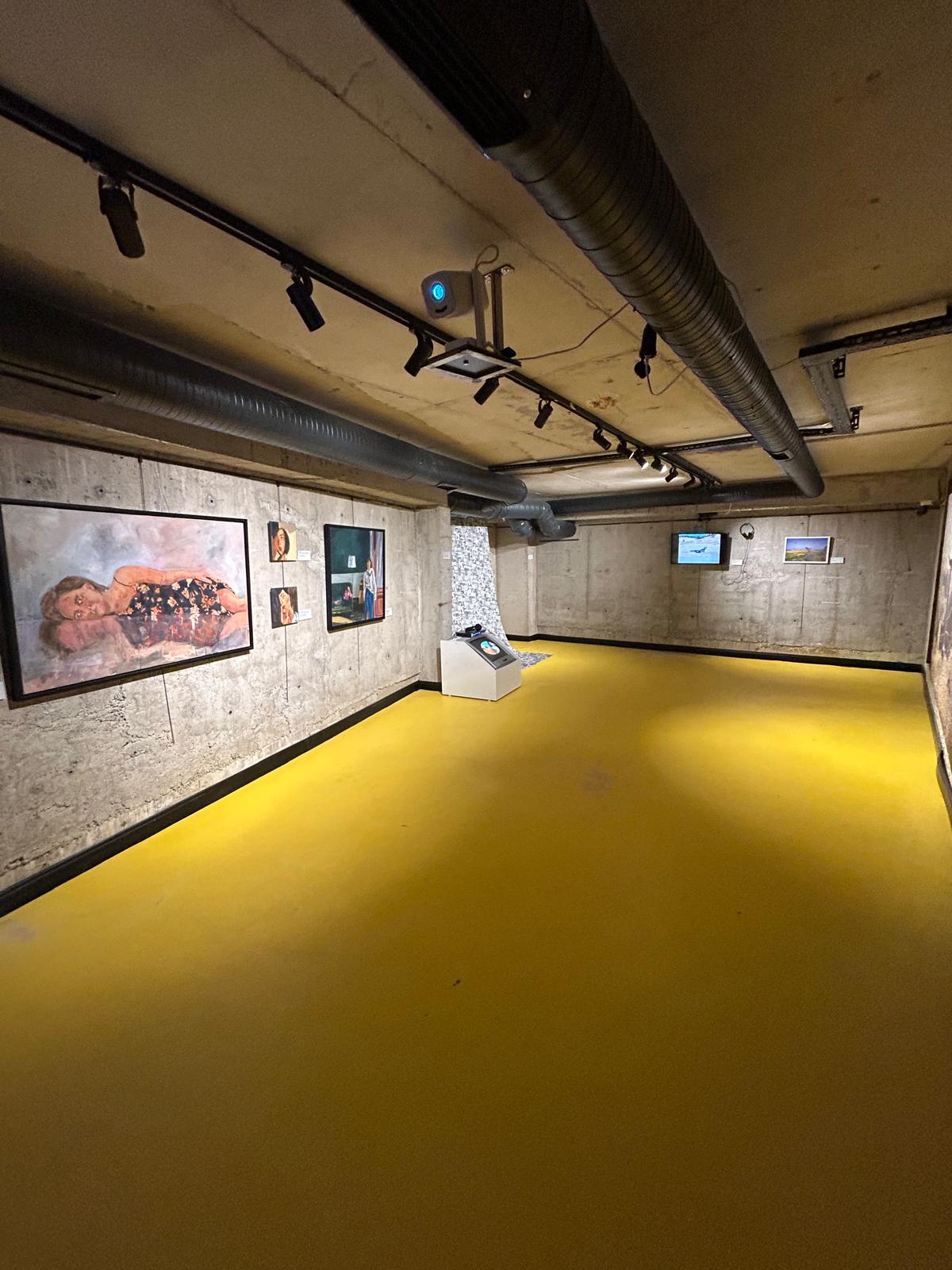
Ya duyemîn, subSPACE, avesta | CULTURE, Diyarbakır, 2026.
I believe that bringing all these works together in Sur in 2026, removing them from the periods and contexts in which they were produced, gives them a different significance. I think it would be a valuable exercise for all of us to reflect on what it means today for the individual artistic sensibilities of Mahmut Celayir and Zeynep Uruç to face one another and exchange knowing glances; for Sidar Alışık’s landscapes of Diyarbakır to be juxtaposed with Murat Gök’s skies over Diyarbakır, filled with low-flying jets; to revisit, from the perspective of today, Şener Özmen’s children who are beaten for speaking Kurdish; and to consider the meaning, in the present, of hearing the sound of Fikret Atay’s child, who makes music despite impossible circumstances, filling the entire gallery before finally giving up and throwing his “instrument” down from above. For instance, Şener’s beaten children remind me of the different forms of punishment we continue to face today for speaking Kurdish: postgraduate theses that are subjected to self-censorship, books that are banned, or the sudden turning of heads when Kurdish is spoken in public spaces… Thus, although the wounds touched upon by that video when it was first exhibited in 2004 belonged to a different context, the work acquires new meaning each time it is exhibited, in relation to the time and place in which it is encountered.
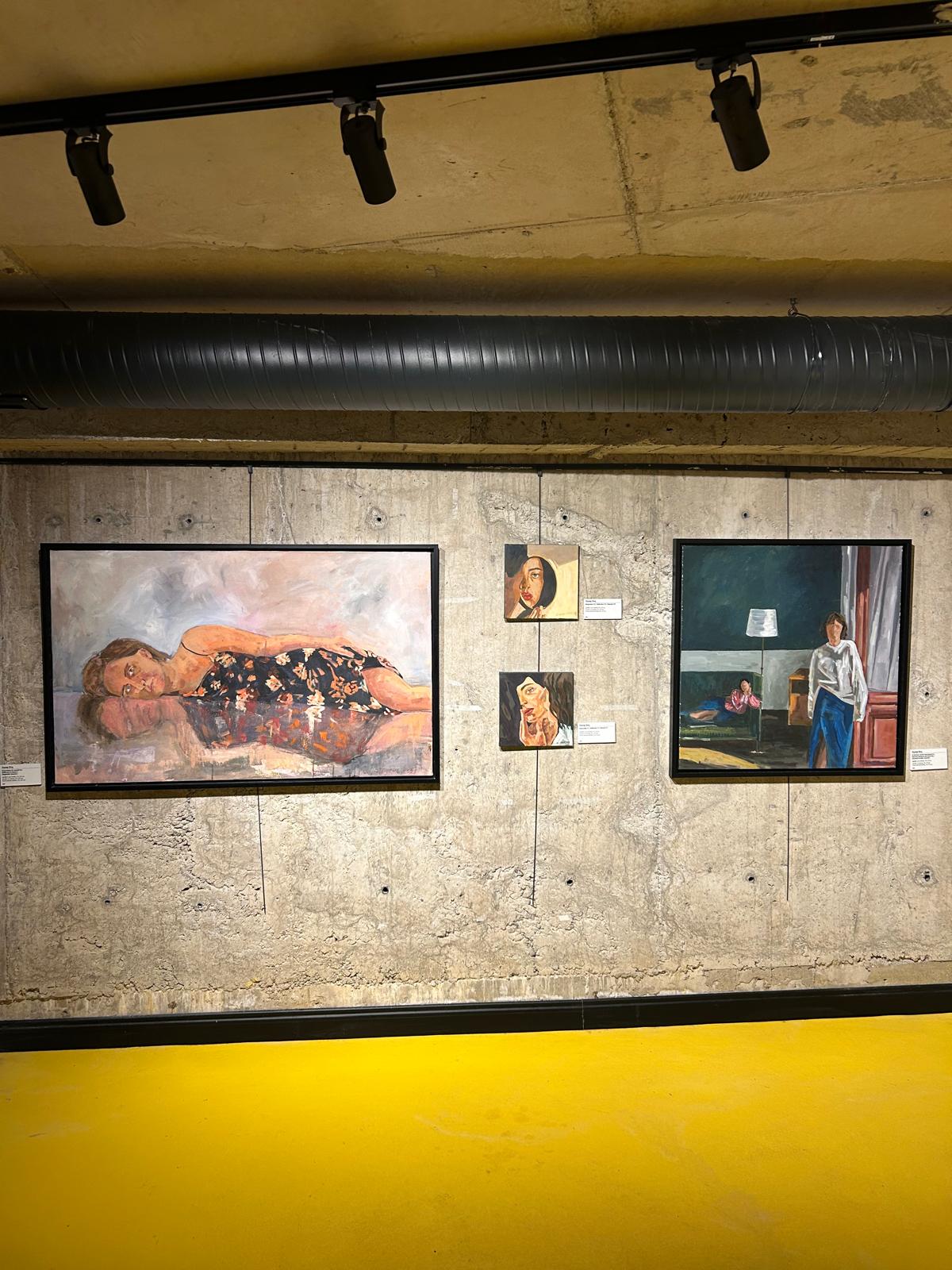 Zeynep Uruç, Reflection in Stillness, 2024, acrylic on canvas · 75 × 122 cm. Reflection VI, 2025, acrylic on canvas · 25 × 25 cm. Reflection VII, 2025, acrylic on canvas · 25 × 25 cm. Between Darkness and Doorway, 2025, acrylic on canvas · 76 × 76 cm.
It would be fitting to conclude my answer by reiterating one of our central concerns: as I mentioned earlier, contemporary art is a field in which establishing a presence and maintaining a foothold are considerably more difficult than in certain other artistic disciplines. Bringing together, on occasions such as this, Kurdish artists who have not only sustained their presence in this demanding field over many years but have also helped shape it is one of our foremost concerns. In this regard, we attach great importance to bringing together different expressions of Kurdishness, as well as diverse artistic perspectives and practices. This principle, of course, does not exclude other cultural groups or works and artists from other parts of the world. As we frequently emphasize in our texts, subSPACE prioritizes artistic practices engaging with themes such as memory, gender, geography, and living spaces, while also placing particular emphasis on the intersections that connect these fields.
E.C. – In the introduction to Anywhere or Not at All: Philosophy of Contemporary Art, Peter Osborne approaches the contemporary not simply as the sum of everything produced in the recent past, but as a critical and selective concept. He argues that the “now” in contemporary art is not a straightforward notion, but one that must be considered in relation to the philosophy of time (Osborne, 2021, p. 13). The contemporary art system, however, largely attributes value to works shown for the “first time” through its biennials, art fairs, and gallery programmes. Second, third, and fourth presentations often remain little more than entries on an artist’s CV or records of a work’s circulation. Felix Gonzalez-Torres’s 1991 candy-spill work Untitled (Portrait of Ross in L.A.), for instance, is reinstalled and replenished for each exhibition, changing as it encounters a different audience each time. As curators seeking to establish the exhibition as an institutional practice, how have you developed an approach to aesthetic experience that challenges this logic—one that sidelines works not being shown for the “first time” or, conversely, privileges the premiere?
G.H. – We do not establish a hierarchy between works presented for the “first time” and those shown “multiple times”. The artistic perspective we seek to cultivate is specific to Kurdistan, and more particularly to Diyarbakır. Drawing on the idea developed by Pontus Hultén, particularly during his time at Moderna Museet in Stockholm in the 1960s and later in the course of establishing the Centre Pompidou in Paris in the 1970s—that an art institution should not simply offer programmes to an existing audience, but should create its own public—we see subSPACE as a structure that understands itself in relation to its location and develops, over time, its relationship with local artists, audiences, and cultural memory. In this regard, we recognise that Diyarbakır has its own distinct audience, a community of people who follow the arts, and an art scene that is still in its early stages. We take this into consideration in all the projects we have carried out and those we are planning. We have observed different levels of engagement: people who are curious about art, those who follow it, research and write about it, and those who engage more directly with the works themselves. One of our foremost goals is to strengthen this last group. In other words, we believe that art is the outcome of a process involving considerable labour, culminating in the creation of a work of value, and that different groups need to contribute to this field to ensure its continuity. We actively seek to encourage this. Ultimately, one of our long-term goals is to demonstrate that artists need a sustainable support structure, and that collecting is one of its most vital components. This is why we attach great importance to the middle class, which is only beginning to find its way into the art world. If we succeed in cultivating collectors from within this class, it will undoubtedly be one of our most significant achievements.
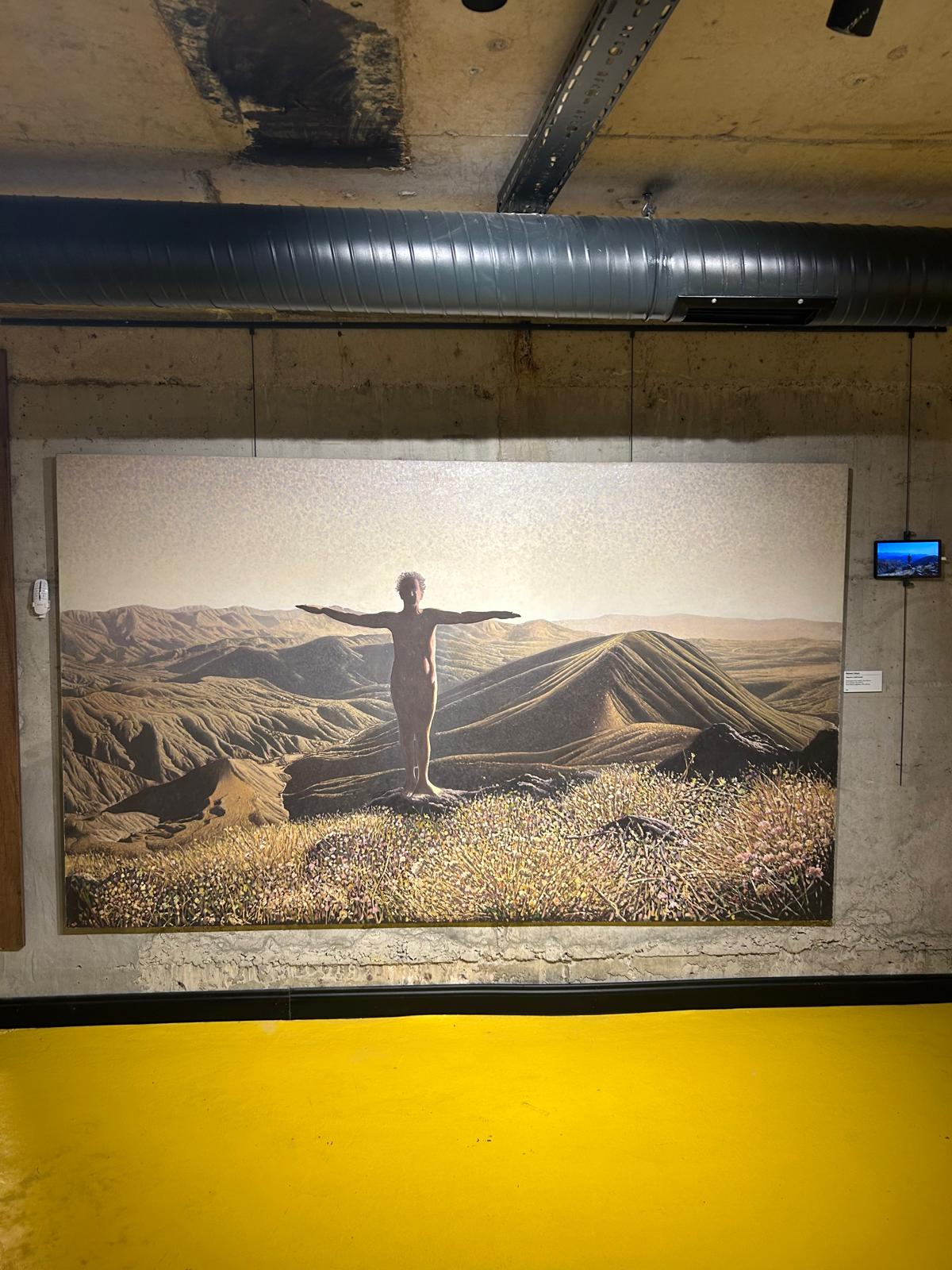 Mahmut Celayir, Self-Portrait, 2015, oil on canvas · 150 × 250 cm. Self-Portrait, 2020, video · 5 min 33 sec.
Another objective is to foster an art environment that engages with and remains in dialogue with the wider world, rather than an insular, narrowly defined notion of “Kurdish art” that speaks only to itself. I see no need to reiterate here the difficulties we have faced for years as a sphere of Kurdish cultural production and thought. With this history of challenges in mind, I find it far more meaningful to pursue our work within the specific conditions of Kurdishness and in the spaces where we are active. For this reason, we need to use art as a means of re-examining concepts such as resistance, war, conflict, and colonialism—concepts that we have been confined to for years, that have also held an academic fascination for me, and that I believe our intellectual world needs to problematise (and perhaps begin to distance itself from, at least to some extent). Of course, the meaning, historical significance, and necessity of these concepts cannot be denied. Yet I believe we need to approach Kurdish artists and their work in ways that recognise they cannot be reduced to “conflict” and “colonialism” alone. We must also take into account their individuality, personal intellectual interests and interpretations, the people and institutions with which they engage, the sources of capital and support available to them, and the networks through which their work circulates internationally. From a similar perspective, it is equally clear that assessing an artist solely through their personal narrative and body of work, while detaching them from the context in which they operate, would offer an incomplete perspective. I believe this expansive field of artistic practice can be contained neither within national borders nor within narrow academic definitions. Diyarbakır offers us a unique historical and spatial opportunity to rethink all these questions and, more importantly, to think through them together. It is precisely at this point that the role assumed by subSPACE takes on its full significance.
E.C. – The exhibition title is presented in Kurdish, Turkish, and English, with the Kurdish phrase coming first: Ya duyemîn / İkincisi / The Second One. Read in this order, Kurdish stands as the primary utterance, while Turkish and English follow as its accompanying translations. At this very point, Şener Özmen’s video Our Village (2004) comes to mind. In the work, two children, who appear to be standing within the rings of a target board, sing a song in Kurdish, only to have their singing interrupted as their faces gradually turn purple. The work evokes an experience in which Kurdish is lived as an interrupted continuity, placing it at the very centre of this discussion. In the exhibition title, however, Kurdish is not interrupted: it precedes the translations and occupies the first position. Moreover, the same work is being presented again, years later, under a title in which Kurdish takes precedence. This contrast suggests that the title may be more than a label; it may constitute a position that needs to be read in conjunction with the works’ second presentation. Did you consider how a trilingual title for an exhibition featuring this work might resonate differently with audiences in Diyarbakır and with visitors coming from elsewhere? Furthermore, was placing the Kurdish phrase first in this context simply a matter of translation, or was it a deliberate choice?
G.H. – Placing Kurdish first is, of course, always a conscious choice. At this point, I cannot overlook the fact that we are an “idea” built upon Avesta’s legacy of more than thirty years. Approaching its thirty-second year, Avesta has, since its foundation, grown beyond the role of a publishing house, becoming a means through which Kurds working across different fields of creative and intellectual production can rethink—and perhaps even reconstruct—their Kurdish identities. In doing so, it has remained conscious of both the diversity of Kurdish languages and the plurality of Kurdish identities, striving to exclude none and to make room for all on equal terms. Today, shaped around these different expressions of Kurdishness, Avesta has become a living institution that finds its direction organically through the readers, writers, translators, and editors who are part of it.
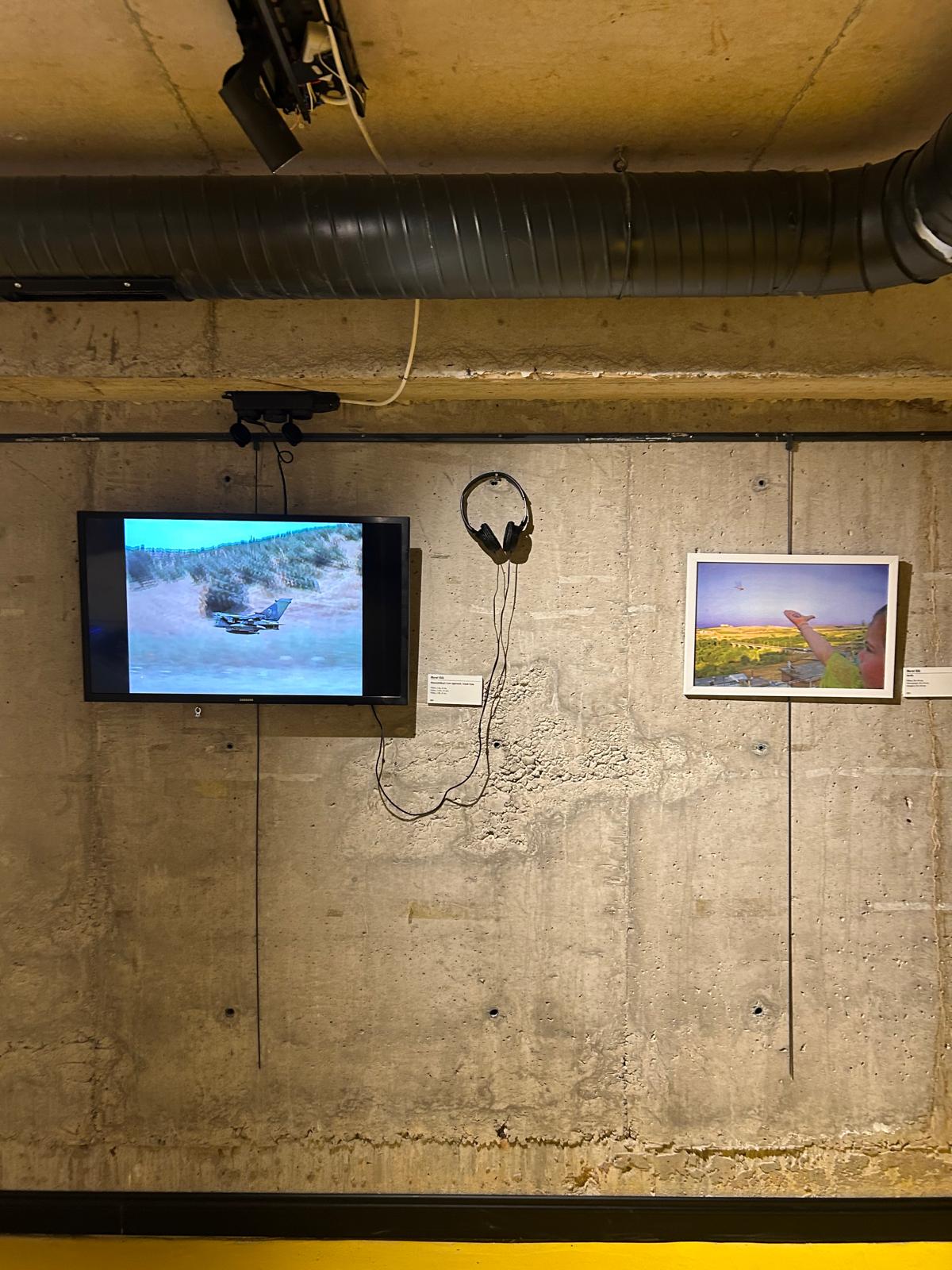 Murat Gök, Low Approach, 2009, video · 1 min 21 sec. Berfîn, 2010, photograph · 30 × 45 cm.
The example I would give in relation to Kurdish comes from our first exhibition, from the time we spent with Sakar. Sakar is Sorani, and I am Zazaki. We sometimes communicated in Kurmanji (as Sakar also spoke Kurmanji quite well), but most of the time we used English. Since Turkish has no place in Sakar’s life or work, we decided to publish some of our announcements and texts in Kurdish and English only. We also experienced some rather unusual and enjoyable moments during the exhibition. For instance, I delivered the opening speech in Zazaki. At the artist talk with Sakar, I began in Zazaki and continued in English, while Sakar responded sometimes in Sorani, sometimes in Kurmanji, and at times even in Sormanci! At this point in the evolution of an institution that has devoted many years to the valuable principle of advancing Kurdish language and culture, Kurdish will naturally always come first.
The languages accompanying Kurdish, however, may vary according to the context. For example, since each of the six artists featured in Ya duyemîn has a different relationship with Kurdish, and their audiences differ accordingly, we consistently included Turkish alongside English. It is also worth emphasising that the art world is an international sphere, and one of our aims is to strengthen the engagement of Kurdish art with this wider context. This is a field in which it is difficult to imagine operating without English. In short, Kurdish and English are always present, while the other languages included alongside them vary according to the artists, the exhibition, and the context. For instance, in the case of some international collaborations we hope to pursue in the medium term, the language of the country from which the participating artist comes will also be included in the exhibition as a third language. In this sense, both avesta | CULTURE and subSPACE will continue to uphold their multilingual approach.
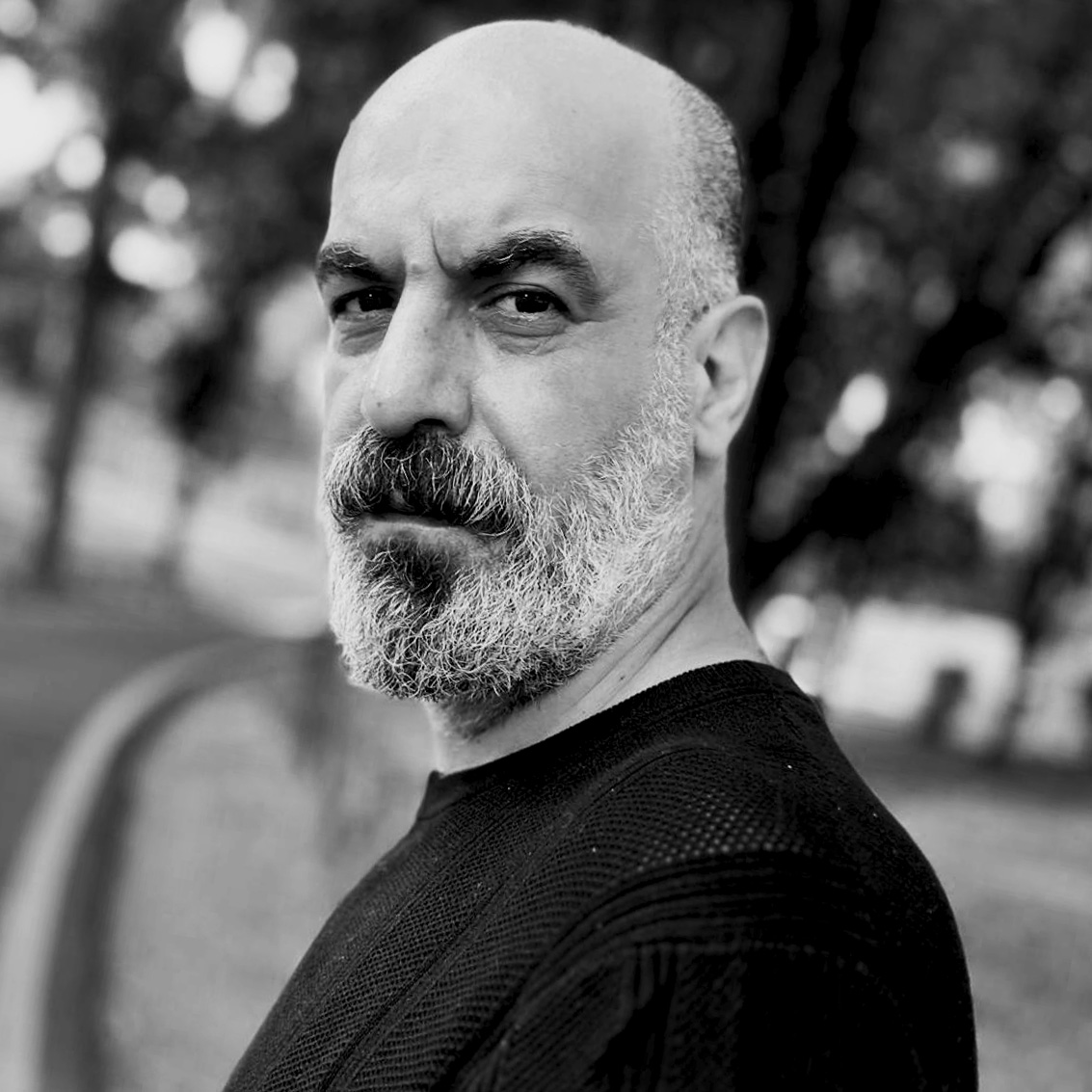
Şener Özmen
Editorial Collective – In his book Art Power, Boris Groys does not treat exhibition-making as an administrative procedure external to the artwork; rather, he understands it as an act that establishes the work’s public existence (Groys, 2014, pp. 25–26). From this perspective, where a work is shown, which other works it is placed alongside, and the framework within which it is presented all help determine what that work is. Ya duyemîn opened at subSPACE, on the lower floor of a building in Diyarbakır’s Sur district that also houses a bookshop and the Celadet Alî Bedirxan Library. You are both one of the exhibition’s curators and one of its participating artists. What was it like to place your own work alongside works from different periods in a space situated beneath a bookshop and a library—to select it as a curator while also encountering it anew as the artist who made it? Did Sur’s historical weight, and the library’s presence as a site of Kurdish memory, change your relationship with your work and the way you read it?
Şener Özmen – Groys’s argument resembles a reiteration of Marxist discourse: that the mode of production of material life also determines the political, intellectual, and cultural processes of life. Even if this is not a matter of simple determinism, one could still argue that what determines these processes also creates new conditions. To follow the sequence of your question: does where a work is shown, which other works it is shown alongside, and the framework within which it is presented determine what that work is? My answer is no! The question of where began to open up new areas of debate in the international art world, particularly after the 2000s. For instance, the relocation of artworks into commercial spaces—as though galleries themselves were not commercial spaces—brought to the fore debates about the redrawing of boundaries between museums, public space, consumer culture, and everyday life. Opened in Shanghai in 2013, K11 Art Mall[1] was the world’s first museum-retail concept, a hybrid model combining art and commerce. This initiative, which absorbed contemporary art into the temple of consumer frenzy, set out, among other things, to “enhance the overall quality of public spaces”. Its exhibitions were largely confined to political critique that avoided any real confrontation with the regime. If you are looking for a critical analysis, you can consult Natalia Grincheva’s article on Springer Nature Link.[2] Taking K11 Art Mall as its case study, the article examines how hybrid art-retail spaces are strategically used to stage a depoliticised form of international engagement, revealing how commercial and diplomatic objectives are negotiated. Fashion Outlets of Chicago[3] (Rosemont, US) is another prominent example in this field. Within the shopping centre, visitors can encounter temporary exhibitions, site-specific installations, and artists’ videos, accompanied by QR-code guides. There are also permanent artworks. In Europe, a somewhat different approach is currently in evidence, although this is not to say that it will remain unchanged. For now, temporary exhibitions and public art programmes are being organised to bring artists’ works into commercial spaces. Jason Lazarus’s installation A Century of Dissent: Miami![4] (2018) was presented at Mana Contemporary, which operates in a former shopping mall in Miami. Lazarus invited visitors to reproduce banners from the city’s century-long history of protest and to take part in the process themselves. Ultimately, the question is whether contemporary art will critique the very corporations that finance it.
Since you began with Groys, let me continue along those lines. One of the central arguments his book brings into question is the supposed dogma of pluralism attributed to modern and contemporary art. Groys observes that while some artists insist on the autonomy of art, others engage in political action, and he offers an intriguing example:
“Malevich once said that he struggled with the artist’s honesty. Broodthaers, on the other hand, when he first began his artistic practice, declared that he wanted to make something insincere. In this context, insincerity means producing art beyond all tastes—even beyond one’s own.”[5]
We must therefore also question the subjective conditions under which a work comes into being, a question that takes us back to a longstanding debate. This brings to mind Maurice Merleau-Ponty, and his proposition that the artist’s way of perceiving the world is reflected in the work’s lines, colours, spatial qualities, and modes of expression. In the context of debates around colonialism, postcolonialism, assimilation, language policies, cultural domination, and historical violence, it also brings to mind Frantz Fanon, Edward Said, Spivak, Homi K. Bhabha, and Walter Mignolo.
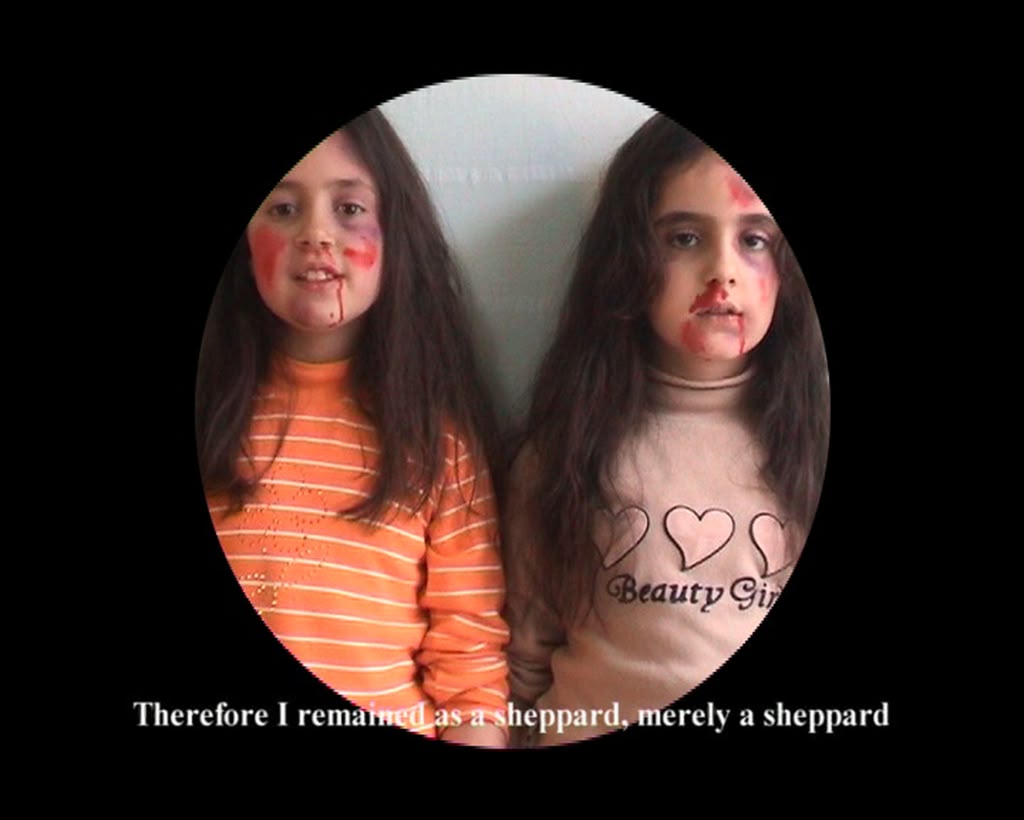 Our Village, 2004, single-channel video, PAL DV · 7 min 9 sec.
And yet, exhibitions are not put together in this way. Nor do I think that artists produce their work through these concepts—not only in the context of Ya duyemîn, but more generally. To put it more plainly, if there is a connection, it is the work itself that establishes it. A work from a particular period in a single artist’s practice can trigger a new—and different—conception of an exhibition, with all the other contexts becoming connected to the impact generated by that work’s first presentation. The reverse is also possible. For instance, a group of artists’ “bad” works (here, “bad” should be understood as works distinguished from “good” ones through curatorial selection, not as works inherently possessing some form of badness) were brought together in Halil Altındere’s 2002 exhibition I’m bad, and I am proud[6], held at Refika in Istanbul, a seafood restaurant owned by food activist and chef Defne Koryürek (Vasıf Kortun’s wife). The exhibition itself, along with its curator, also became part of the story.[7] Kortun’s exhibition Look Again (Yeniden Bak)[8], held at Proje4L Istanbul Contemporary Art Centre in 2001, is another important example. It is worth looking at the interview Cem İleri conducted with Kortun for Sanat Dünyamız.[9] We were supposed to look again—but at what? At the audience that did not come to see something hanging on the walls? At the curator’s determination to pursue an open-plan approach? Or at works that were exhibited over and over again? One of my earliest handmade notebook works, Schizo-Notebook(Şizo-Defter), was included in Kortun’s 1999 exhibition A Special Day (Özel Bir Gün).[10] Apparently, it had not been looked at enough, because it went on view again in Look Again, alongside my other works. I remember it as if it were yesterday: Schizo-Notebook, together with my other text- and drawing-based works, had been acquired by a collector. Since it was a unique work, I put on a pair of gloves and spent a long time examining the very notebook I had made, at the art centre Kortun directed—then known as Platform Contemporary Art Centre, and now a focal point in its own right. Those were very strange moments. Perhaps this question of a “second life” came knocking at my door through precisely this kind of alienation. What was I actually looking at? Because, also in 2001, I had applied for a passport for the first time in order to take part in the exhibition Short Stories (La Fabbrica del Vapore, Milan, 2001), curated by Roberto Pinto, with Kortun curating the section on Turkey. I was detained by the Anti-Terrorism Branch at the police headquarters. The manuscripts and printouts of The Story of Tracey Emin were lying on my desk. All those men in the artist’s 1995 installation Everyone I Have Ever Slept With 1963–1995 could have posed a problem. In other words, I did not produce The Story of Tracey Emin[11] under particularly favourable circumstances. I did not know what the conditions of artistic production were supposed to be, nor, to be honest, did I give them much thought. When The Story of Tracey Emin was exhibited for a second time, this time as numbered copies laid out on a table, I barely visited its location in the vast exhibition space (there was a photograph of me seated at the table, taken by Serkan Özkaya at La Fabbrica del Vapore). Instead, I spent most of my time looking at Wim Delvoye’s works in the exhibition.
Now, when thinking about Kurdish literature and contemporary art, I find it far more important to consider the fact that a modest exhibition drew inspiration from a novel—or, let us say, a single sentence—by a contemporary Kurdish filmmaker and writer, without venturing into the long-standing enigma of “firstness”, or even referring to Ali Akay’s exhibitions in Diyarbakır, The Power of Language I and The Power of Language II – Becoming-Minor (Dilin Gücü I ve Dilin Gücü II – Minör-oluş, 2003–2004). What matters to me is that this exhibition took place in subSPACE, a small venue with an entrance on the left as one descends the steps towards the Celadet Alî Bedirxan Library, housed within Avesta, a publishing house that has broken new ground in Kurdish publishing and intellectual life. Ya duyemîn was also subSPACE’s second exhibition, and Gül Hür and I agreed that, rather than presenting a solo show this time, we wanted to organise a group exhibition. Although the fact that The Second One was also the venue’s second exhibition was not entirely coincidental, I would say that its conceptual framework took shape through the discovery of the idea of a second life in Hiner Saleem’s Ez û Ez. Gül had already interviewed Hiner,[12] and had also edited the Turkish translation of Ez û Ez, published under the title Küllerim, Golda ve Diğerleri. We had read and discussed Saleem’s work across different media, but we had no intention of creating an exhibition based on the novel. That idea emerged much later. We had been drawn to the way he established connections between hope, humour, despair, tragedy, nostalgia, and exile. In a jointly authored text titled The World Is Yours (Dünya Senin), included in the catalogue of the 9th Istanbul Biennial, its curators Charles Esche and Vasıf Kortun write: “It will probably never be possible to define the conditions of the relationship between art and political change in terms of a cause-and-effect relationship, and even those who are prompted to think differently on a personal level will not be fully aware of these origins.”[13] Hiner, for instance, drew a clear distinction between being an immigrant and being a political exile. He also prompted us to question whether humour could still be a creative space. In this sense, yes, Ya duyemîn did not become an exhibition built around a thesis. In other words, we managed, to some extent, to move beyond the overbearing curatorial gaze that overinterprets the world and everything in it, adopts oppositional political positions, makes grand claims about the future of contemporary art, and seeks to construct an exhibition as a manifesto.
In our context—in Northern Kurdistan—art historiography began long after the practices of pioneering artists had emerged. As a result, the belated conflicts between artistic pioneering, institutional legitimacy, and cultural power can be read as though they had been present from the very beginning. This historical delay also affects art itself and the way it is understood today. Kurdish contemporary art, too, is trying to develop within an understanding of contemporaneity in which multiple modernities, different historical temporalities, and global inequalities coexist. There is something else worth saying, or perhaps recalling. We held our first exhibition in Diyarbakır, [Art and the City][14], in 2001, at the Fine Arts Gallery (Güzel Sanatlar Galerisi) in Dağkapı. That was twenty-five years ago. I developed the exhibition’s conceptual framework and wrote the accompanying text. In 2002, the Diyarbakır Arts Center (DSM) was established through the initiatives of Osman Kavala. The contemporary art clusters, initiatives, collectives, and spaces that emerged in Diyarbakır and neighbouring cities during the first half of the 2000s, as well as the academic debates that followed, were all products of this momentum. This also includes the exhibitions organised by the Diyarbakır Metropolitan Municipality.
subSPACE is one of the most recent additions to the circle. I do not call it a gallery, because it is not one. I find it more useful to think of it as a subspace within a larger space, much like a subheading. Whether it is sustainable, frankly, I do not know. That depends on a great many factors. Sustainability in Diyarbakır—when it comes to anything in this field—cannot be attributed solely to the pace of artists’ production or their seemingly inexhaustible desires. For the time being, clusters and initiatives are aligning themselves with central political power in order to preserve their own spheres of influence, functioning more as event-driven structures than as spaces for debate. Urban aesthetics, meanwhile, is being shaped under the direction of politics. In this respect, the situation recalls the institutionalisation of contemporary art practices in the Balkans during the 1990s and 2000s. The Soros Center for Contemporary Art (SCCA) in Sarajevo, for example, was established in 1996. The exhibitions Meeting Point (1997), Beyond the Mirror (1998), and Under Construction (1999) played an important role in the development of new exhibition-making and public-space practices in Bosnia and Herzegovina. The Tirana Biennial connected regional art scenes to international exhibition networks. Formations such as the Belgrade-based Škart collective developed alternative forms of intervention amid the conditions of war and nationalism in the 1990s. There was, however, one significant difference: while the Balkans were engaged in a post-socialist search for new directions, Kurdish artists began forming cliques with remarkable speed, almost as though they were living in a late-socialist system. This is hardly surprising. We had some very good relationships with contemporary artists and curators from the Balkans. The much-discussed Balkan encounter, which began in 2003 with René Block’s exhibition In den Schluchten des Balkan (Kunsthalle Fridericianum, Kassel, Germany), continued in the following years through group exhibitions in Tirana, Kosovo, Belgrade, Zagreb, and Ljubljana. A key figure in In den Schluchten des Balkan[15] was the German writer Karl May. Let us recall his adventure novel Durchs wilde Kurdistan(Through Wild Kurdistan), published in 1892.[16] In the case of Ya duyemîn, it was the novel Ez û Ez by Kurdish writer and filmmaker Hiner Saleem that provided the point of departure. I think this is a perfectly understandable choice. For the first time, Hiner Saleem’s work had provided the imagery for a contemporary art exhibition. While developing the exhibition, we spent a great deal of time discussing the repeated presentation of artworks—showing them again, and again, and again. This was not intended as a response to the obsession of curators and galleries with “new work”. Rather, in precisely the sense you describe, we set aside an approach that privileges a work simply because it is being shown for the first time, and made it possible to ask how it would be read now—not how it should be read. At a time when the project of “fortifying the home front” was under way (what extraordinary times!), we wanted to bring together works produced at different moments and open up a minoritarian debate.
Gundê Me (titled Our Village in the video, 2004) is being shown in Diyarbakır for the first time. It had previously been screened at the Cologne Biennial of Best Art Films in 2005, at the 52nd International Short Film Festival Oberhausen in 2006, and again in 2007 at Istanbul Modern, as part of the Cologne Biennial of Best Art Films selection. In 2009, it was shown at Hacettepe University Art Museum as part of Word-Tale, Mixed Narrations: A Video Parade from Different Viewpoints, an exhibition curated by Ferhat Özgür, alongside works by Halil Altındere, Yael Bartana, Marie-Laure Cazin, Tracey Emin, Aernout Mik, Ayşe Erkmen, Ferhat Özgür, Adrian Paci, Anri Sala, Erzen Shkololli, and Silke Witzsch. Apart from the ultranationalist reactions on the opening night, it was an extremely successful exhibition.
There is another aspect to this story. The video was donated to the museum in the town of Lidice following its inclusion in a group exhibition, Remember Lidice (Lidice Gallery, Czech Republic, 2017, Edition Block), organised in memory of Lidice, a Czech village razed to the ground by Nazi forces on 10 June 1942 in a brutal act of reprisal during the Second World War. The collection included works by renowned artists such as Gerhard Richter, Joseph Beuys, Wolf Vostell, KP Brehmer, Konrad Lueg, Sigmar Polke, Dagmar Demming, Rosemarie Trockel, Thomas Ruff, Imi Knoebel, Lawrence Weiner, Rosa Barba, Sunah Choi, VALIE EXPORT, Alfredo Jaar, and Sarkis.[17] The Nazis murdered 82 children from Lidice, most of them at the Chełmno extermination camp. Nearly 60 women were also killed: seven were shot, while 53 died in the Nazi concentration camp system, including Ravensbrück. And Our Village, too, featured children.
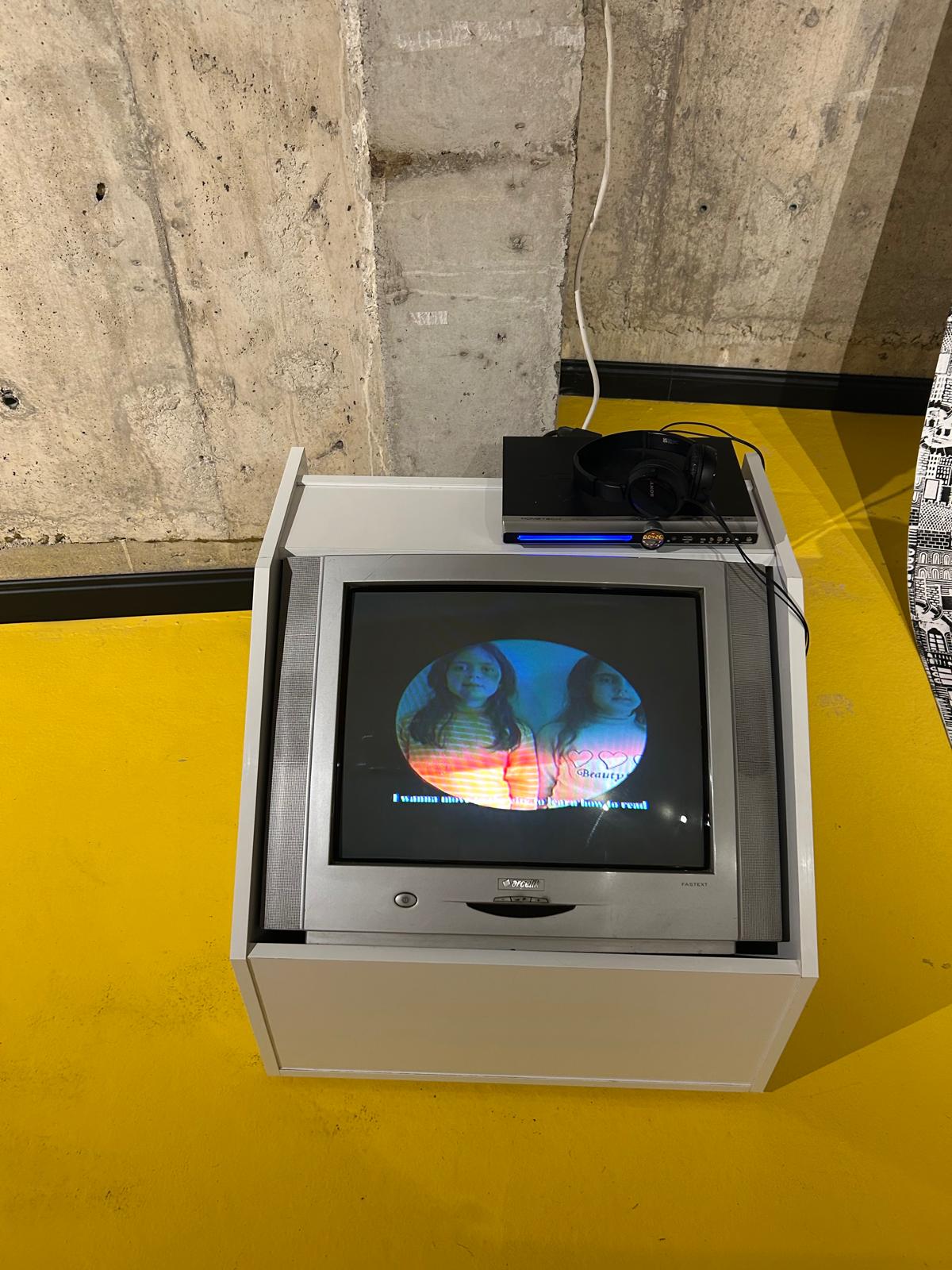 Our Village, 2004, Single-channel video, PAL DV, 7 min 09 sec.
Both the lyrics and the music were written by the artist Rotînda. I was deeply moved when I first heard the song, and I still listen to it with the same feelings. The album on which the track appears, Zarokên Agirî, was performed by the NÇM Children’s Choir. The girls lip-synced, since they were already singing the song throughout the day, as much as they knew it. Gundê Me was their favourite Kurdish song. The video was also, in part, about the continuity of hope and how quickly it spreads. There was a constant need to start over from scratch, much like in our own history. In the context you also touched upon, what had been interrupted here was the mother tongue. The video grew darker as the visible bruises on the girls’ faces and the bloodied areas that appeared towards the end (like hastily applied children’s make-up) converged with a series of other ambiguities. In all its initial screenings, the circle in the original video remained untouched: it was neither stretched nor distorted, but shown exactly as it was. At subSPACE, however, the incompatible aspect ratio bent the circle at the top and bottom, transforming it into an eye. I felt no need to correct this. Our Village was exhibited on the floor, inside a white wooden box. Older technologies—DVDs, a DVD player and a CRT television—were brought back into use. The seven-minute-and-nine-second video consisted of three parts. At the time, this kind of video was considered excessively narrative in Turkey and did not meet Istanbul’s expectations of Diyarbakır.
E.C. – In The Return of the Real, Hal Foster argues, through the concept of “deferred action”, that the meaning of an artwork is not fully realised in its own time, but is constructed retrospectively through subsequent works and perspectives (Foster, 2009, p. 15). Consider, in this light, Christian Marclay’s 2010 work The Clock, in which the artist transforms films from different periods into a single, simultaneous flow. Ya duyemîn similarly brings together works from different periods and conditions of production, bringing different generations into the same space. Yet the exhibition does not appear to follow a chronological or thematic arrangement. What criteria guided your decisions when bringing these works together? For instance, how did you decide between placing works from different periods and in different media in relation to one another—as with Fikret Atay’s Tinica (2004) and Sidar Alışık’s Urbs (2026), which are separated by roughly twenty years—and placing works from the same period side by side, such as the works you and Atay produced in 2004? During the installation, did you experience a moment when placing one work alongside another gave it an unexpected meaning, or even reconfigured its meaning in retrospect?
Ş.Ö. – The ways of thinking and working across generations of Kurdish contemporary art have always interested me. But first, there are a few things I want to say. My generation grew up, produced work and exhibited within an Istanbul-centred curatorial straitjacket, characterised by rigid polarities, aggression and hypersensitivity. I say “my generation” because my own early work was also produced in Istanbul. The 18th Istanbul Exhibition of Contemporary Artists dates back to 1997. My participation in the 1996 exhibition Young Event 2: Homeland–Placelessness, Deterritorialisation (Genç Etkinlik 2, Yurt-Yersiz Yurtsuzlaşma) came about through a collaborative work with Halil Altındere in Adana. My membership of DAGS (Interdisciplinary Young Artists Association) also dates from those years, as does my membership of UPSD (International Association of Plastic Arts). The following was written about the exhibitions:
First organised in 1995 with the aim of creating a meeting place for our young fellow artists, the Young Event exhibitions established a platform where many artists—including Taner Ceylan, Genco Gülan, Nuri Bilge Ceylan, Temur Köran, Halil Altındere, Yiğit Yazıcı, Vedat Özdemiroğlu, Nesren Jake, Ferhat Özgür, Melis Buyruk, Şener Özmen and Ertuğrul Akyüz—were able to make their work known.
This is true, because we were generally in Istanbul for both the Young Event exhibitions and the Performance Daysorganised by DAGS.
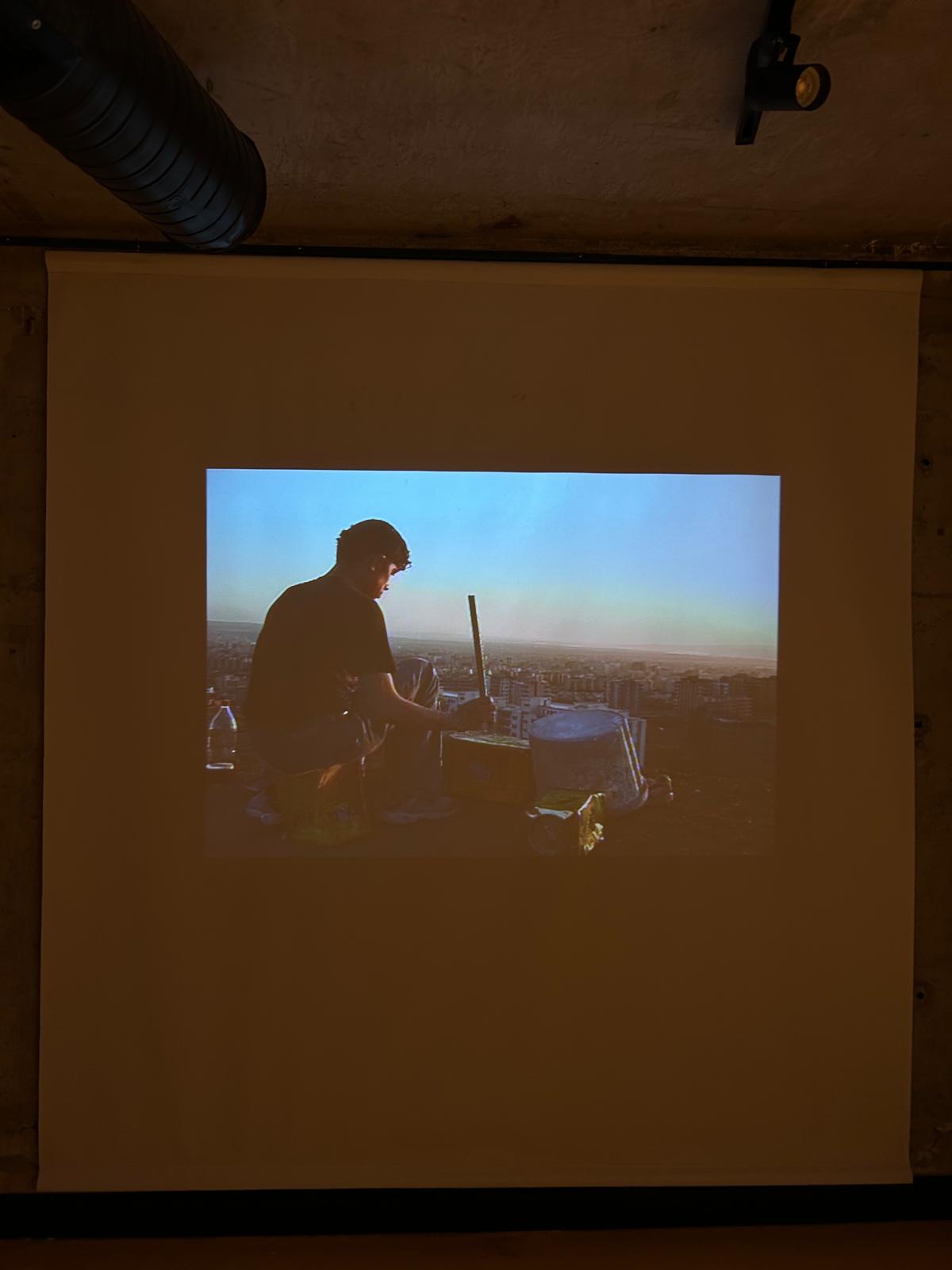 Tinica, 2004, Single-channel video, 7 min 59 sec.
My return to Diyarbakır, meanwhile, took place in 1998. If we set aside the works I produced and the exhibitions I took part in towards the end of my time at Çukurova University’s Department of Art Education, Faculty of Education, this date can also be considered a starting point for contemporary art practices in Diyarbakır. When I met Vasıf Kortun in 1999, on the occasion of the exhibition A Special Day (Özel Bir Gün), my handmade notebook Schizo-Notebook (Şizo-Defter, Diyarbakır, 1999) was exhibited. In other words, my first media were neither an Hi8 video camera nor a still camera. Writing always seemed to me a fairer field in which to work. This, of course, had strong ties to literature, since I had begun writing in Kurdish again [from the first quarter of the 1990s onwards], without knowing where it would lead, how it might be interrupted—or even whether it would be interrupted at all. Another point is that, since 1996, I had already been taking part in generational exhibitions, both in Turkey and abroad, alongside my own generation, earlier generations and those that came before them. I was following the changes taking place in Kurdistan in this respect, while also knowing how difficult this would always be. If those in power had achieved anything, it was the tense atmosphere they created among Kurdish intellectuals, artists and writers, and the great distances they imposed between them. Even so, taking the production dates of works as a point of departure and organising the exhibition around generations does not seem particularly plausible to me. Even if you were to do so, I would still approach the matter from a different perspective. In Ya duyemîn, where Fikret Atay’s Tinica (2004), Sidar Alışık’s Urbs (2026), Zeynep Uruç’s canvases (Between Darkness and Threshold and the Reflection series), Murat Gök’s Berfîn and Low Approach, and Mahmut Celayir’s Self-Portrait—both the painting and the video—are brought together, the question of what Our Village (2004) says now, whether it says anything at all, or whether it will be able to say anything, also opened up new encounters for me. Looking at the exhibition’s conceptual map, the city (or cities) occupied the initial position, adults (the body) came in the middle, and children appeared further along. What kind of connection were we drawing between Alışık’s reflections on the changing appearances of cities and the urban motifs in Atay’s and Gök’s work? Had ruptures emerged between generations (!) just as they had in the mother tongue and in politics? In other words, I was also anticipating a tense reading encounter between a generation of contemporary artists looking for their precursors outside themselves and another that engages with influence from within.
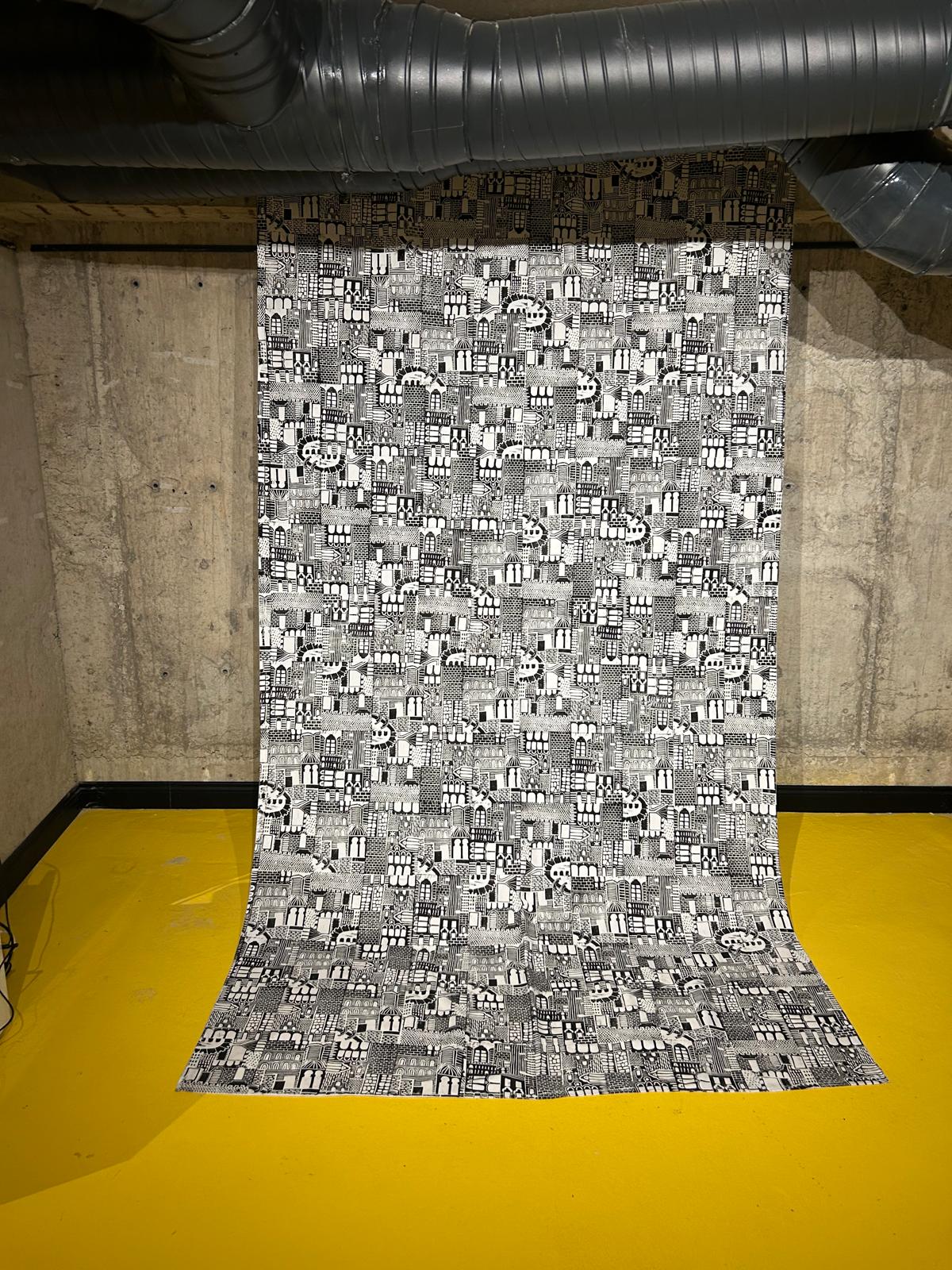 Sidar Alışık, Urbs, 2026, Linocut print on fabric · 150 × 300 cm
In Mardin, there was at least a figure like Nasra Şimmes who could offer material inspiration—through moulds, natural dyes, fabrics and so on. In Diyarbakır and Batman, there was nothing of the kind! The same was true of Bingöl. Besides, exhibitions are not always organised around a theme, nor is a thematic approach necessarily productive. Having grappled extensively with these organising mechanisms, we preferred to take a step back. As I said, Ya duyemîn is an exhibition that offers much stronger possibilities for encounters and collisions. Harald Szeemann, one of the key proponents of this approach, made artists’ production processes, attitudes and ways of working visible in his 1969 exhibition When Attitudes Become Form, rather than bringing works together around a particular visual theme. Halil Altındere’s exhibition When Ideas Become Crime (Fikirler Suça Dönüşünce, Depo, 2010), for instance, also drew on this approach. Incidentally, I had crossed paths with Szeemann at the 1st International Biennial of Contemporary Art of Seville (Spain) in 2004.
E.C. – Issues such as identity, belonging, displacement and memory are part of everyday life for artists and audiences in Diyarbakır. In this context, Ya duyemîn seems to approach these issues not as themes imposed from outside, but through an experience of time. By bringing works back into the exhibition space, the exhibition focuses on the conditions under which a work produced in the past acquires new meaning today: under what circumstances, before whom and in response to which questions. This approach brings to mind Michael Rakowitz’s The Invisible Enemy Should Not Exist. An ongoing project that the artist has been developing since 2007, it recreates objects looted from or lost by the Iraq Museum in 2003, using food packaging and newspaper pages drawn from everyday life in the Middle East. Here, recreation becomes a way of continuing to reckon with loss and carrying it into the present. The artist treats each work as part of an ongoing process, sustained through every new presentation. In this light, should we read the works re-exhibited in Ya duyemîn as records of a loss belonging to the past, or as witnesses to a condition that continues into the present? As curators, how would you describe the moment at which it is decided whether a work belongs to the past, the present or the future? Or, when it comes to individual works, is there such a clearly defined temporal framework at all?
Ş.Ö. – What happens if an editor responds by saying, “These poems are old!”? I don’t think anything particularly good would come of it. At best, you carry on writing poetry; at worst, right there at the editor’s desk, you intervene in the dates on the poems, adding 2026 next to 1990, with an en dash in between: 1990–2026. This is to indicate both the date the poem was written and the length of time that has elapsed since then! Although political policies may change, our problem persists in historical terms. Yes, we have suffered far too many losses, and this is true in every field. There are no works that have actually been reproduced in Ya duyemîn. Rather, the exhibition brings together works that emerged in different periods and geographies, and which can be re-read with the exhibition space as a point of reference. We did not adopt a chronological classification, nor did we construct an exhibition dramaturgy. Is the past, as we call it, the twenty-odd years that the work—or works—have left behind? We need to look at what has changed, and what has not changed at all, in Kurdish politics and the social structure of the Kurds over those twenty-odd years. I cannot predict the future, but I can say this much: we will not be in it. We will not be there as generations that resist the pluralistic structure of contemporary art.
Gül Hür was born in Dersim in 1991. She graduated from the Department of Political Science and Public Administration at Hacettepe University and completed her MA in History at Istanbul Bilgi University in 2019. Between 2020 and 2023, she pursued doctoral studies in the History PhD programme at Sabancı University, where she also worked as a research assistant. She worked as a project assistant on Istanbul Bilgi University’s Establishing a Cultural Plurality Platform in Turkey project and was part of the research teams for the exhibitions Turkey’s Other Media (2017) and In Pursuit of a Language (2018), which focused on alternative media and the struggle for mother-tongue rights. She also served as project coordinator for the Swedish Research Institute in Istanbul’s Rememberings project. Her academic research and writing focus on Kurdish contemporary art, art history and cultural production. She works as a writer and video content producer at Doğruluk Payı. Together with Şener Özmen, she co-edited the monographs Walid Siti: In the Shadow of Babylon, In Pursuit of the Mountains and Mahmut Celayir: On the Trail of the Shadow, published in the avestART book series by Avesta Publishing. She is the director of subSPACE, the contemporary art space established within avesta | CULTURE in Diyarbekir. There, together with Şener Özmen, she curated Sakar Sleman’s solo exhibition Bîra Rû (The Memory of the Face) and the group exhibition Ya duyemîn (The Second One), bringing together six artists.
Şener Özmen was born in İdil in 1971 and graduated from the Department of Art Education at Çukurova University’s Faculty of Education in 1998. He lives and works in Chicago. Alongside his practice as a visual artist, he works as a writer, translator, editor, curator and art critic. His books of poetry, novels and short stories have been published in Kurdish and Turkish. A member of PEN International, Özmen was awarded the Prix Meuly by Kunstmuseum Thun in Switzerland in 2005. His works have been exhibited at institutions including the Centre Pompidou, Stedelijk Museum, Istanbul Modern and Kunsthalle Fridericianum, as well as in the Worldly House section of dOCUMENTA (13). He has also participated in the 9th and 13th Istanbul Biennials. His solo exhibitions include presentations at Galerie Schleicher+Lange in Paris (2005), Künstlerhaus in Stuttgart (2011), Pilot Gallery in Istanbul (2012) and Arter in Istanbul (2016). He is known for works that question prevailing conditions, authoritarian structures and taboos through irony, humour and a critical stance.
Notes:
[2]
Searching for the agora at K11: apolitical spaces of non-state cultural diplomacy, Natalia Grincheva
https://link.springer.com/article/10.1057/s41254-026-00437-5
[3]
https://www.fashionoutletsofchicago.com/TheCollection
[4]
https://jasonlazarus.com/projects/a-century-of-dissent-miami/
[5]
Art Power, Boris Groys, translated by F. Candil Erdoğan, Hayalperest Yayınevi, 2014.
[6]
https://halilaltindere.com/about/
[7]
https://www.artfulliving.com.tr/sanat/bazen-hayat-sanattan-daha-guclu-oluyor-i-7041
[8]
https://archives.saltresearch.org/handle/123456789/10249
[9]
https://vasifkortun.com/2002/11/21/cem-ileri-ile-soylesi-i/
[10]
https://archives.saltresearch.org/handle/123456789/8771
[11]
https://senerozmen.com/artist-books
[12]
https://www.rudaw.net/turkish/categories/interview/858107
[13]
https://bienal.iksv.org/i/assets/bienal/document/9B_CHARLES-ESCHE-VASIF-KORTUN_TR.pdf
[14]
See Art and The City: Diyarbakır Güncelleri Nasıl Karşıladı?, Şener Özmen, Artist Skala, Issue 3, June 2001, pp. 70–71. Also see Art and The City: Diyarbakır Güncelleri Nasıl Karşıladı? and Travma ve Islahat, Şener Özmen, pp. 102–104, Lîs Yayınları, second edition, November 2016.
[15]
https://aaa.org.hk/en/collections/search/library/in-the-gorges-of-the-balkans-a-report
[16]
https://www.pandora.com.tr/kitap/vahsi-kurdistan-iclerinde/743511
[17]
https://www.mutualart.com/Exhibition/Remember-Lidice/DF33CD013567CD4E
-
Deleuze, Gilles, Difference and Repetition (Fark ve Tekrar), translated by Burcu Yalım and Emre Koyuncu, Istanbul: Norgunk Yayınları, 2017.
-
Foster, Hal, The Return of the Real (Gerçeğin Geri Dönüşü), translated by Esin Hoşsucu, Istanbul: Ayrıntı Yayınları, 2009.
-
Groys, Boris, Art Power (Sanatın Gücü), translated by F. Candil Erdoğan, Istanbul: Hayalperest Yayınları, 2014.
-
Osborne, Peter, Anywhere or Not at All: Philosophy of Contemporary Art (Kavramdan Sonra: Çağdaş Sanatın Felsefesi), translated by Nüvit Bingöl, Istanbul: Tellekt Yayınları, 2021.

Comments
00