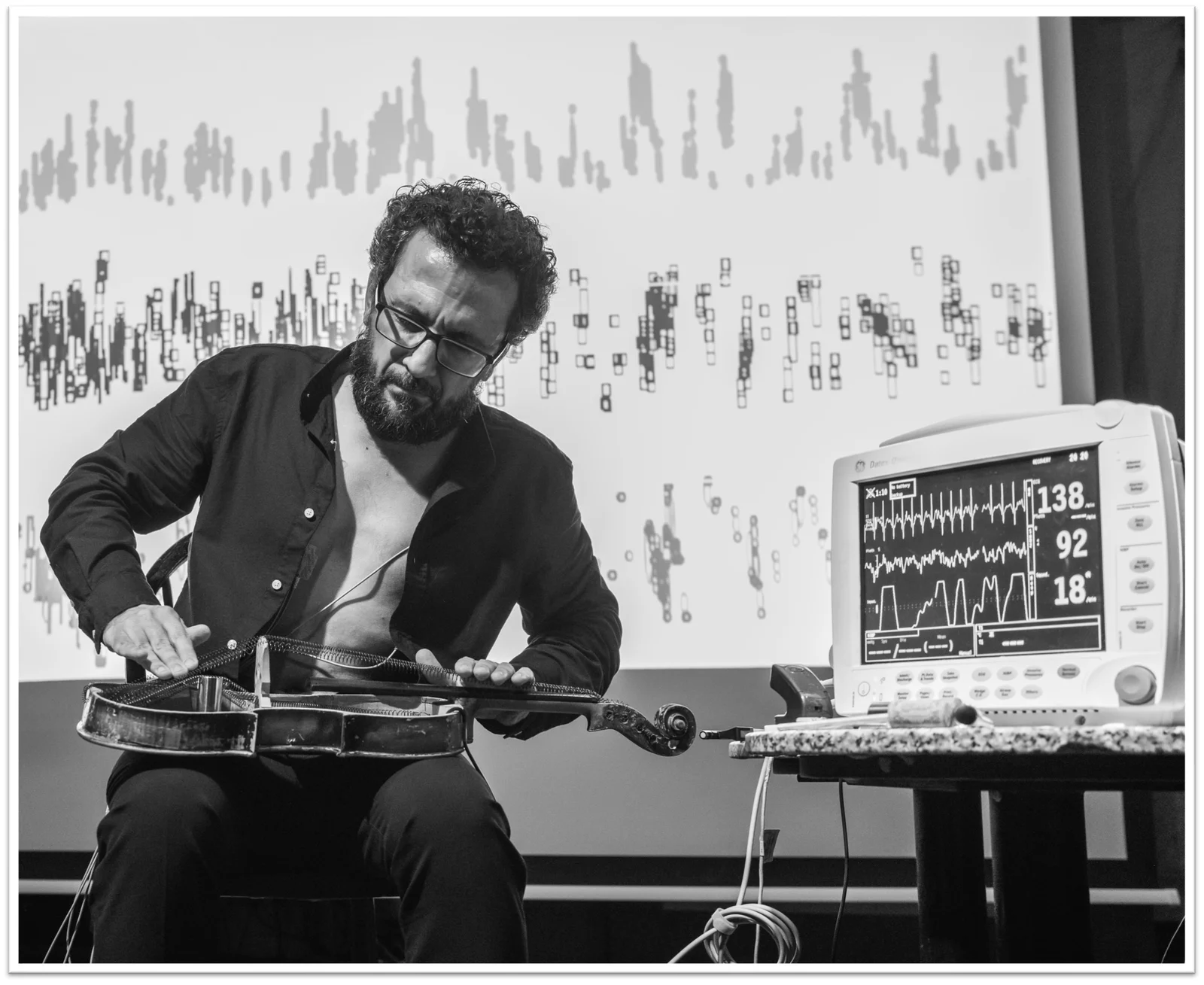
Scheduled to take place in Utrecht, the Netherlands, from 9 to 13 September 2026, Gaudeamus Festival 2026 brings together diverse forms of contemporary and experimental music. Spanning multiple locations across the city, with TivoliVredenburg serving as one of its principal cultural and musical venues, the festival brings together new compositions, electronic music, performances, sound installations, and interdisciplinary works within a single programme. In the 2026 edition, Hardi Kurda will participate as both a composer and sound artist with two interactive works, while also serving as a member of the Gaudeamus Award 2026 jury. As part of the festival, Kurda will present two sound installations, Sounding Carpet and Your Resonance. The works are scheduled to be presented on 9 September at the TivoliVredenburg Pandora Foyer, on 12 September again at the Pandora Foyer, and on 13 September at Park 6. This part of the festival foregrounds Kurda's artistic practice, which explores the boundaries between composition, improvisation, performance, and installation.
Gaudeamus's inclusion of Kurda in its programme is significant in that it situates his practice not only within a compositional context but also within the broader fields of contemporary sound art and experimental music. In his work, Kurda investigates overlooked, fragmented, and invisible sonic worlds, while addressing issues such as borders, displacement, questions of legality, and the politics of listening through sound. This approach positions his work, which is also informed by personal experiences of migration, within the fluid space between music and contemporary art. Alongside Kurda's installations, the festival programme features artists from diverse disciplines and geographical backgrounds, including Peni Candra Rini, New European Ensemble, Andy McGraw, Mivos Quartet, Nick Dunston & PULSE, Ragazze Quartet, and Katharine Dain. Gaudeamus 2026 creates a broad platform for artistic production that does not confine music to the concert hall, but instead explores the relationships between sound, performance, the body, technology, and space.
 Sounding Carpet
Hardi Kurda’s Sound Practice and Two Interactive Works
Hardi Kurda’s practice constitutes an interdisciplinary field of artistic production that explores the boundaries between composition, improvisation, sound art, performance, and installation. Describing himself as a “sound artist, composer, improviser, violinist and researcher,” Kurda transforms everyday objects, bodies, spaces, archives, and technological data into musical material, particularly through the concept of the “found score.” Within this approach, notation ceases to be a system composed solely of the symbols of traditional music writing; the pattern of a carpet, a newspaper, a map, a health diary, or even the electrical signals generated by the body can become a readable and transformable score. Kurda’s work also engages with questions of borders, displacement, legality, and the politics of listening. Gaudeamus describes his practice as an exploration of “overlooked, fragmented, and invisible sound worlds.”
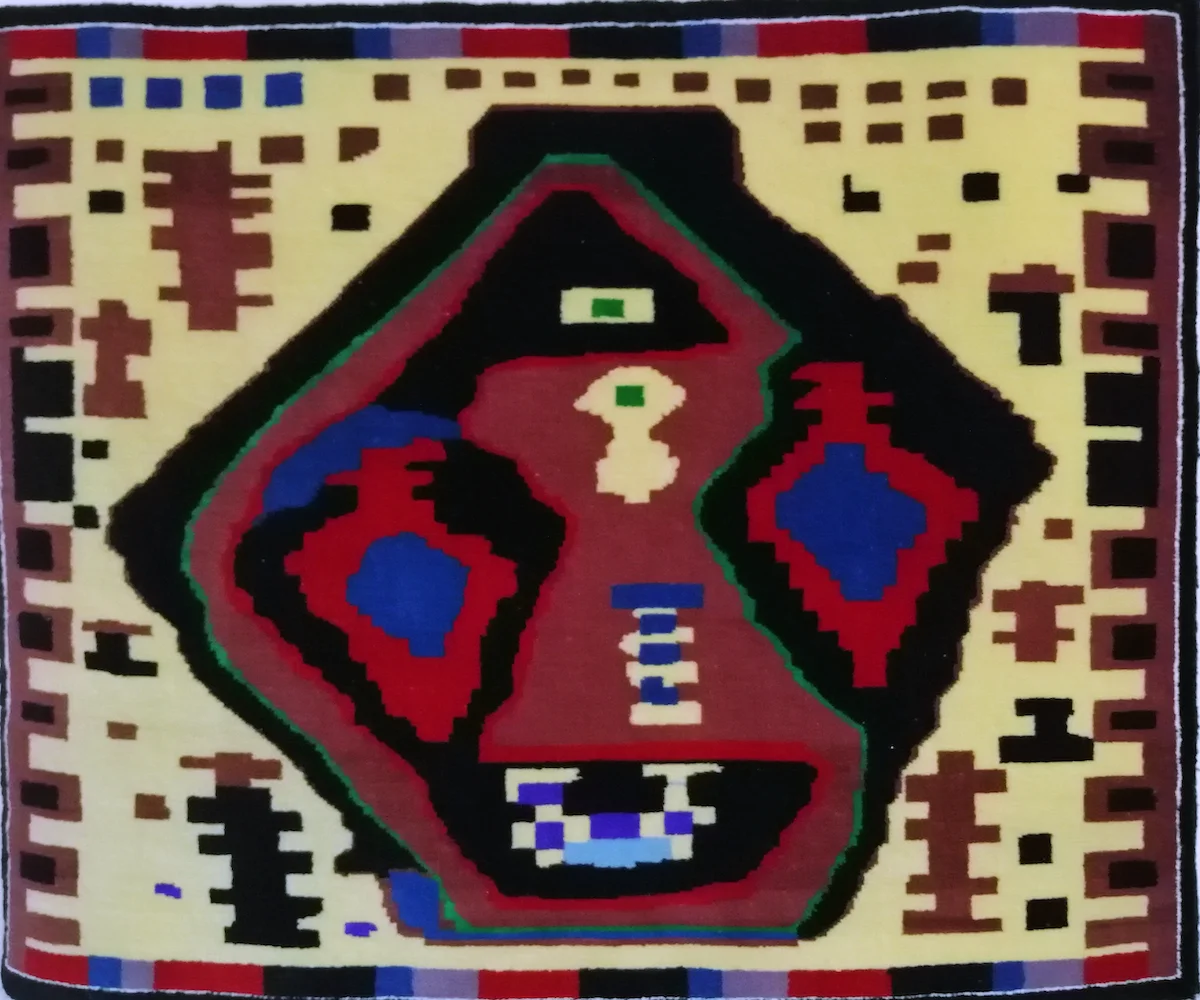
Two distinct examples of this approach can be seen in the interactive sound installations Sounding Carpet and Your Resonance. Sounding Carpet treats a traditional handmade Kurdish carpet as a “found score.” The symbols and textures woven into the carpet become a source of sound through the physical interaction of the audience. As visitors press and move their fingers across the carpet’s surface, different layers of noise and sound embedded within the work are activated, reconnecting the symbols carried from the past with the present through the act of listening. In Kurda’s own description, the work is conceived as the transformation of a textile into a found score. An earlier version of the piece was presented as part of the SPACE21 Sound Art and Experimental Music Festival held in Erbil and Sulaymaniyah in 2018. The version presented at Gaudeamus 2026 is based on a commission by Kulturbryggan and the Swedish Arts Grants Committee, with software development and coding by Carlo Cattano.
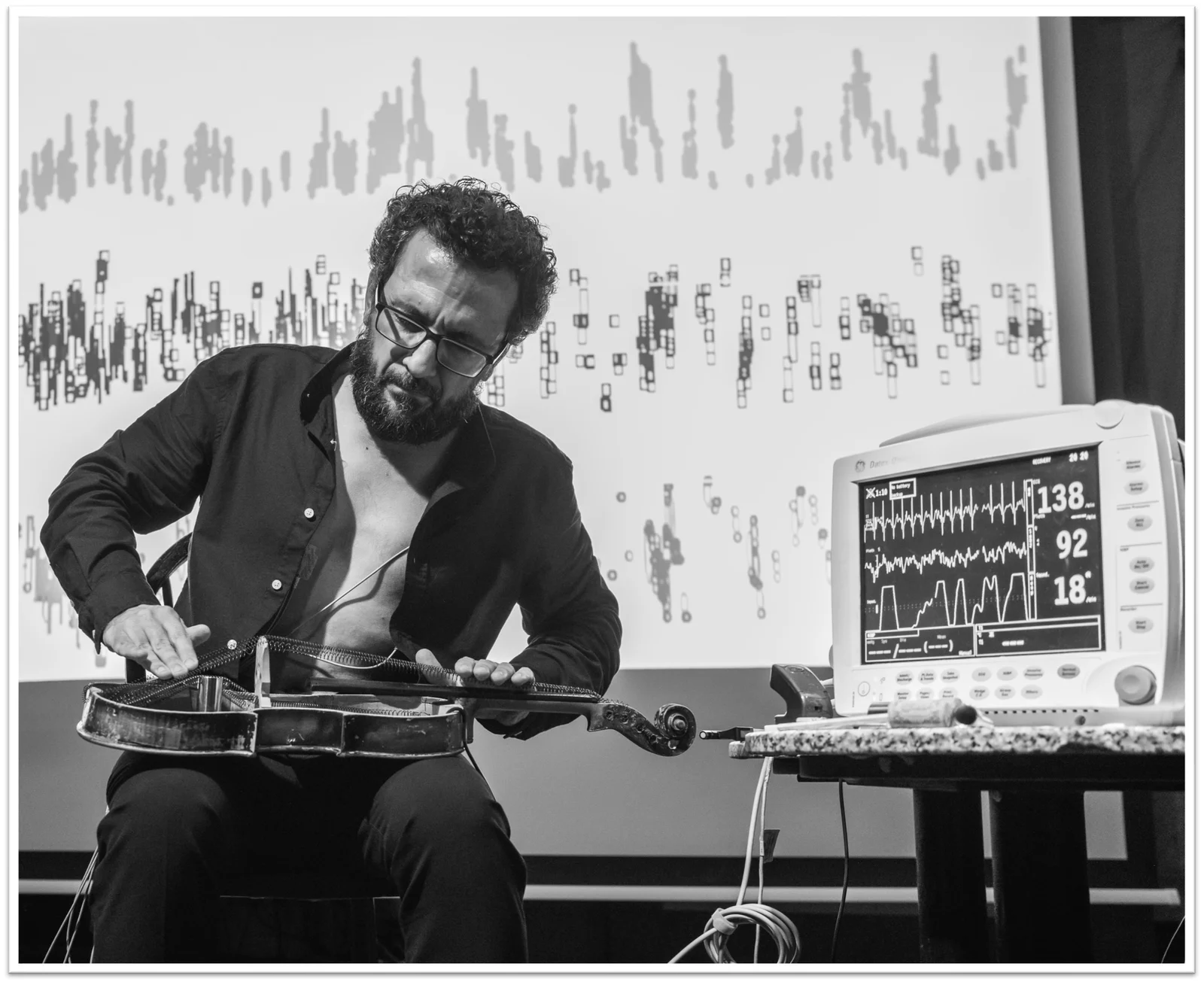
Your Resonance, by contrast, shifts the source of sound production from a cultural object to the human body. The work originates from a diary kept by Kurda’s mother during her medical examinations. Created in dedication to her following her passing in 2019, the work approaches the diary as another “found score.” Rather than leaving the traces recorded in the diary as memories to be read, Kurda reanimates them through the interplay of sound and performance. The interactive structure of the piece uses ECG (electrocardiogram) data: the electrical activity of the heart is read in real time and transformed through a range of sound manipulations. In this way, the body’s electrical signals become musical material, establishing a direct feedback system between the participant’s body and the sounds generated by the work. The project was originally commissioned by the Public Art Agency of the Västra Götaland Region between 2015 and 2019.
Considered together, the two works demonstrate how Kurda’s “found score” approach operates across two distinct material domains. While Sounding Carpet explores cultural memory through a textile surface and its symbolic patterns, Your Resonance translates personal memory into the electrical rhythms of the body. In one, the pattern of a carpet is read as a source for sound production; in the other, the electrical activity of the heart becomes material for musical composition. Through this process, Kurda renders the boundaries between object, body, memory, and sound increasingly permeable, transforming music from something that is merely heard into something that can also be touched, read, and physically experienced.
Hardi Kurda’s Unique Position in Kurdish Contemporary Music
Hardi Kurda occupies a position within Kurdish music that extends beyond that of a composer who simply reinterprets traditional repertoire through contemporary musical techniques. The distinctiveness of his practice lies in transforming Kurdish sound culture itself into a field of research, archiving, and experimental artistic production. The SPACE21 Sound Gallery, which he founded in Sulaymaniyah, demonstrates that this approach extends well beyond his individual artistic output. Through SPACE21, Kurda has been developing experimental music and sound art festivals, workshops, research projects, publications, and a record label since 2017, contributing to the creation of an independent infrastructure for contemporary sonic practice in the Kurdistan Region.
In this respect, Kurda’s work is significant in two ways. First, it opens up an alternative space for contemporary artistic production beyond the representation of Kurdish music solely through its traditional repertoire. He connects practices such as free improvisation, electroacoustic music, electronic sound, radio, noise, interactive technologies, and sound installation with Kurdish experience. Duo Moment, formed together with Khabat Abas, is an early example of this approach. On Broken Resonance, an album based on improvisational performances presented in Berlin and London between 2016 and 2020, Abas performs on cello while Kurda works with open radio circuits and live electronics.
The second, and perhaps more significant, aspect concerns the question of the sound archive. Kurda’s Archive Khanah project does not regard Kurdish musical history simply as a repertoire of completed works to be preserved. Instead, it seeks to reactivate and recirculate sounds recorded in Kurdistan and Iraq, particularly between the 1920s and the 1970s, that have been forgotten or have remained outside institutional archives, through a community-based and interactive methodology. Introduced as part of the Beyond 1932 research project at King’s College London, Archive Khanah raises questions about who constructs archives, which sounds are considered “worthy of archiving,” and which sounds are left outside historical narratives.
Therefore, Kurda’s work places the questions of “What is Kurdish music, who records it, how is it preserved, and how is it listened to?” at the centre of his musical practice. The 2025 presentation of Archive Khanah by the Center for the Interdisciplinary Study of Music at UC Santa Barbara likewise situated the project within the contexts of Kurdish cassette culture, diasporic memory, and community-based archiving.
Kurda’s use of radio is equally significant in this context. His engagement with radio frequencies, which began during his childhood in his older brother’s radio repair shop in Sulaymaniyah, later reappears throughout his artistic practice. In particular, he transforms radio interference and frequencies associated with his experience of an irregular journey to Europe into sonic material. In this way, radio becomes a medium through which questions of borders, migration, communication, legality, and access are articulated.
Within this framework, it is perhaps most accurate to understand Kurda simultaneously as a composer, sound artist, archivist, and curator within Kurdish contemporary music. Just as he does not separate composition from experimental sound art in his own practice, he also does not separate artistic production from the work of building institutions and archives for contemporary sonic culture in Kurdistan. For this reason, SPACE21 and Archive Khanah should be understood as integral components of Kurda’s wider artistic practice and of his broader intervention in the field of Kurdish contemporary music.
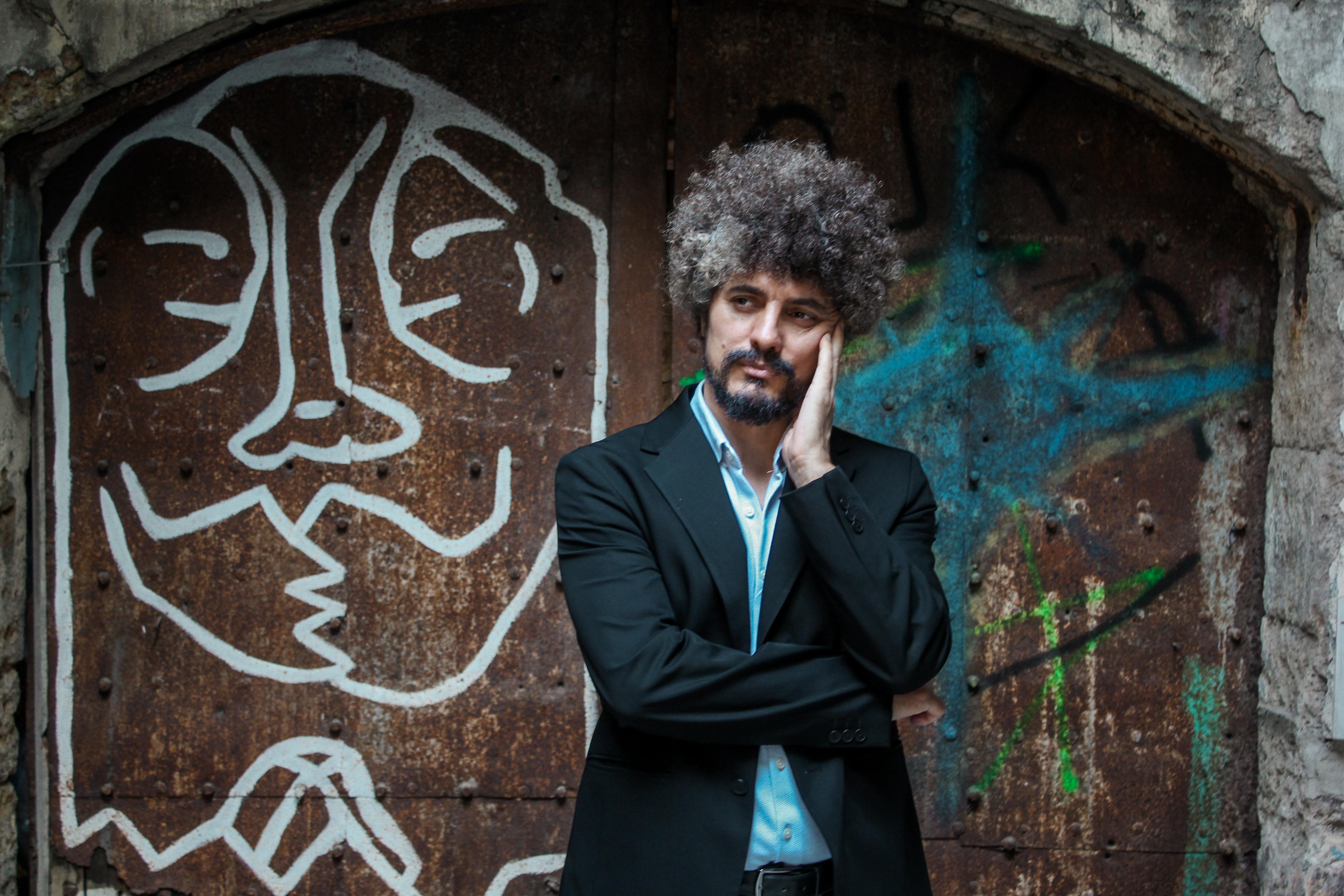
Hardi Kurda
Hardi Kurda is a composer, sound artist, improviser, violinist, and researcher. He is the founder and curator of SPACE21 Sound Gallery, based in Sulaymaniyah in the Kurdistan Region. Since 2017, through SPACE21, he has developed experimental music and sound art festivals, workshops, research projects, publications, and international collaborations across the Kurdistan Region. He is also the founder of Archive Khanah, an interactive sound archive project.
Kurda studied music at the Sulaymaniyah Fine Arts Institute before completing both his BA and MA in Music Composition at the Gothenburg Academy of Music and Drama. He completed his doctoral studies at Goldsmiths, University of London. In 2025, he submitted his doctoral thesis, Found Scores: Listening in a Time of Crisis, at Goldsmiths.
His artistic practice brings together composition, improvisation, electroacoustic music, sound installation, radio, and performance. Through his Found Scores approach, he transforms everyday and functional objects, including carpets, ECG devices, books, maps, and radio circuits, into alternative musical scores. Selected works include Sounding Carpet, Your Resonance, Illegal Frequencies, Radiola Springs, Illegal Score – Dukan Dam, Vibration of Books, and Voice Notes.
Kurda’s work has been presented at international festivals and institutions including Sonorities Festival (Belfast), Borderline Festival (Athens), MaerzMusik (Berlin), Café OTO (London), Irtijal Festival (Beirut), Le Guess Who? (Utrecht), and the New Music Biennial at Southbank Centre (London). He has also undertaken artist residencies through programmes including Radio Art Residency (Halle), Beyond 1932 (King’s College London), and Le Guess Who? / Reproduction (Goa).
Kurda is also a member of the jury for the Gaudeamus Award 2026. In September 2026, he will present two interactive sound installations, Sounding Carpet and Your Resonance, as part of Gaudeamus Festival 2026 in Utrecht.
As a co-founder of Duo Moment with cellist Khabat Abas, Kurda has released the albums Broken Resonance and Illegal Performance. His solo album Radiola Springs was released in 2022.
info@firezz.com


Comments
00