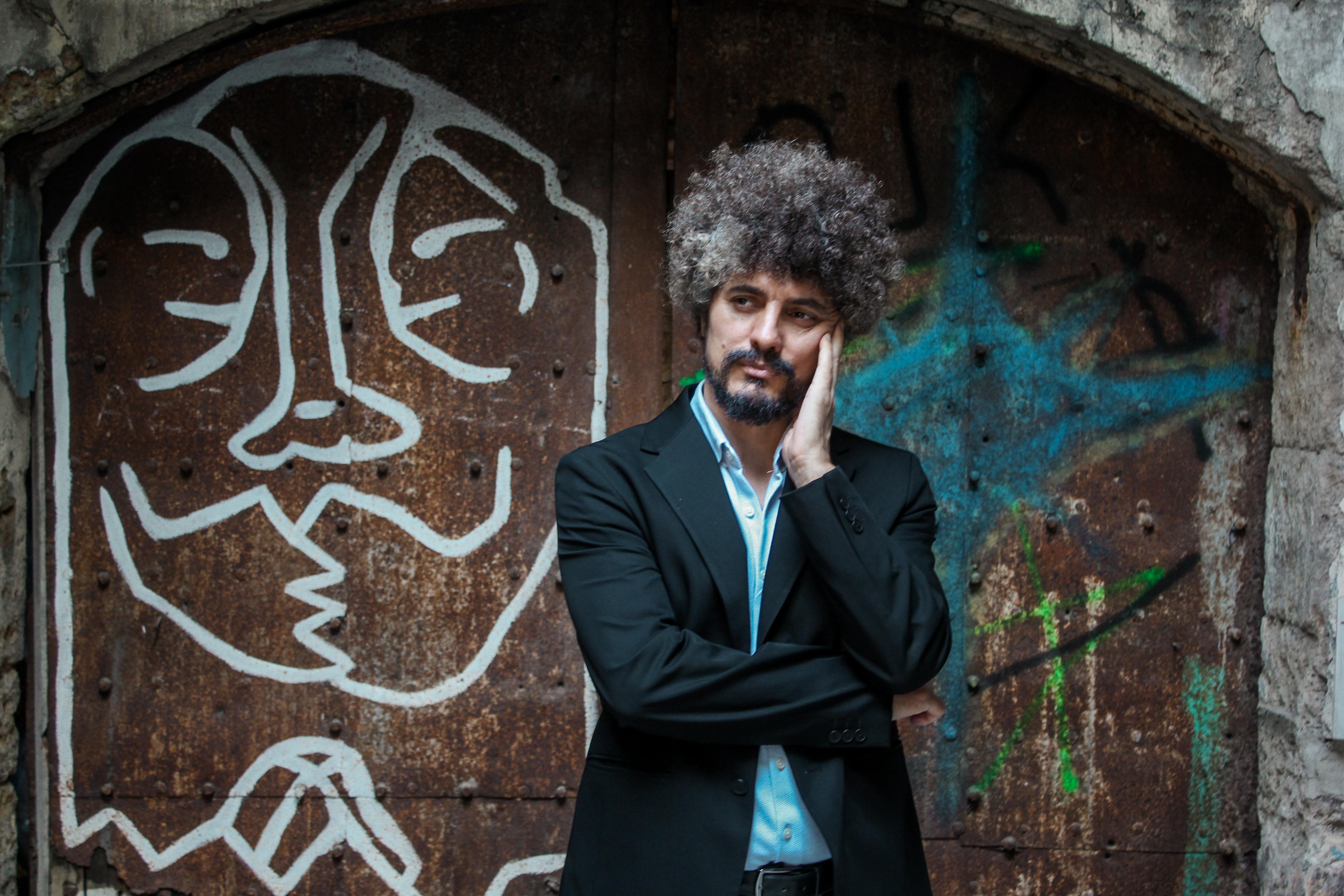
The sound of a guitar, the intimacy of a voice, ten new songs... Sîmir Rûdan’s third album, Ez û Gîtara Xwe (Me and My Guitar), will be released on October 9. Featuring lyrics, music, and arrangements entirely written by Rûdan, the album brings together ten songs through stripped-back arrangements centered on guitar and voice. By placing both at the forefront, Rûdan creates space for the songs’ melodic structures, lyrical content, and emotional nuances to unfold.
The album marks a distinct moment of reduction in Rûdan’s discography. Following a succession of singles and projects released over the past two years, this record presents its material in the most direct form possible, using the fewest means available. The fact that the production was largely handled by Rûdan himself further reinforces this immediacy: the person writing, playing, and singing the songs is also the one guiding the recording process.
The album’s production process also explains the character of its sound. Handling most of the recording and production himself, Rûdan chose to preserve naturalness rather than pursue perfection, allowing small imperfections to remain whenever possible. Nearly half of the tracks were recorded without a metronome, following a freer flow that allowed the tempo to develop according to each song’s own internal movement. The album’s mixing and mastering were completed by Hakan Kurşun. Leaving these small imperfections intact is a decision that aligns with what the album seeks to express: rather than attempting to fill what is missing, it opens a space in which absence can speak in its own voice. This approach also forms the basis of the album’s aspiration to be otherwise.
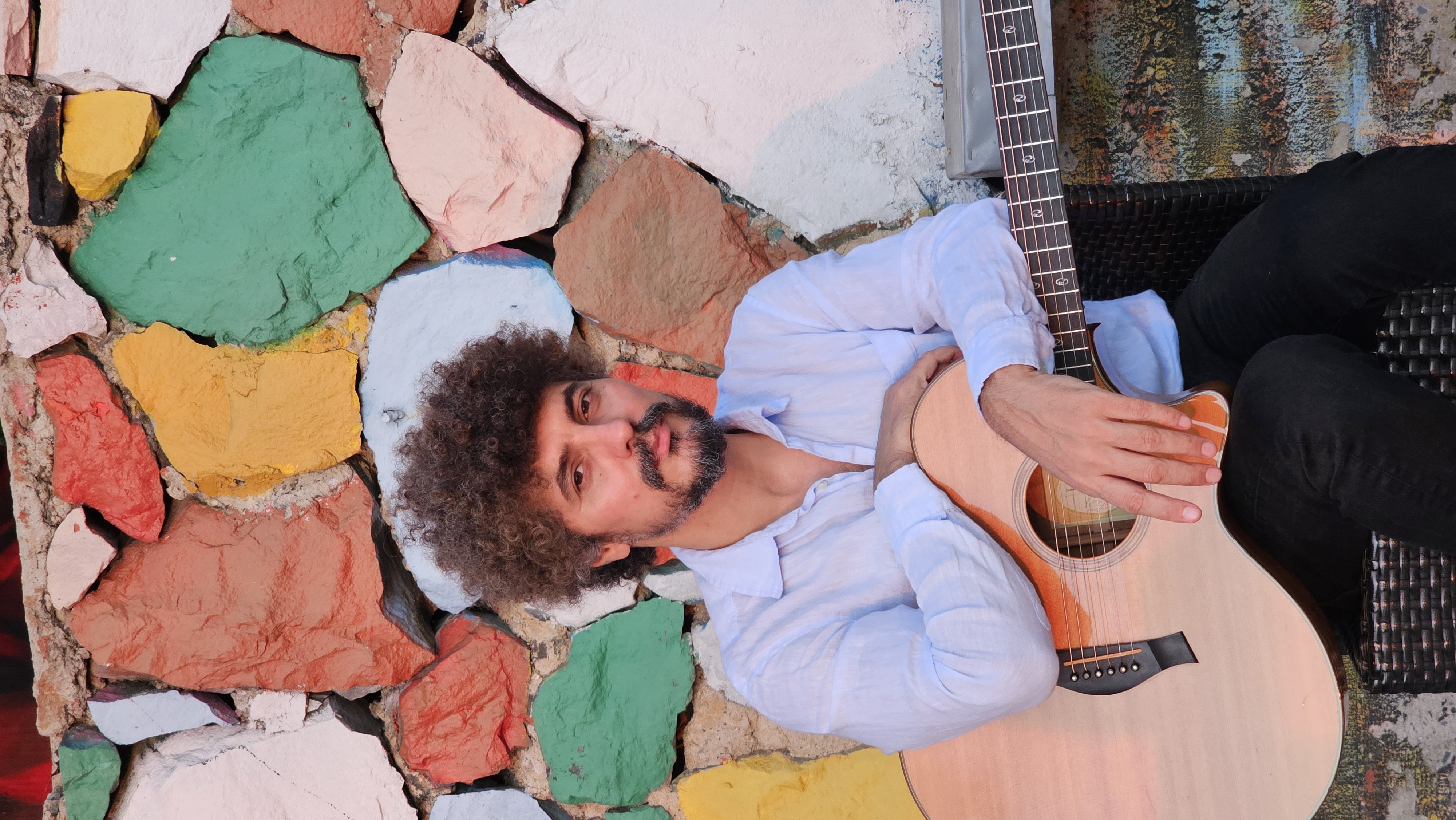
In this album, the guitar is more than an instrument accompanying the voice. It becomes a companion that responds to the musician and, at times, takes over the role of narration. The polyphonic textures embedded in the arrangements point back to Rûdan’s classical guitar background, revealing the deep-rooted bond he has formed with the instrument over time. In this sense, the pairing of “me” and “guitar” in the album’s title becomes more than a name; it becomes the defining relationship at the heart of the record itself. This is also where the notion of being “otherwise” gains its meaning: the stripped-down form carried by a single guitar and a single voice meets lyrics shaped around loss and absence. The capacity of a single instrument to function as accompaniment and response, as both silence and speech, also reveals the labour behind the musical writing. What appears simple on the surface ultimately rests upon arrangements that have been crafted with meticulous care.
The album’s overall minimalism also brings to mind the English folk musician Nick Drake. The intimacy between voice and acoustic guitar, the understated mode of expression, and the fragile atmosphere, particularly associated with Pink Moon, invite comparison with Rûdan’s work. Although the two musicians emerged from very different musical worlds and circumstances, they share a commitment to placing the voice, the guitar, and personal storytelling at the centre of the song. In both cases, minimalism ceases to function as a limitation that diminishes expression and instead becomes a form through which emotion can be communicated directly. In Ez û Gîtara Xwe, the closeness between guitar and voice does not position the listener before a grand musical construction; rather, it feels as though one is sitting beside the person singing.
The decision not to conceal imperfections in the recordings also resonates with the thematic backbone of the lyrics. The album begins from a sense of absence born of an inability to reunite, a feeling that gradually gives way to a solitary form of acceptance. The opening track, Tu Dûr î (You Are Far Away), initiates this atmosphere of hopeless waiting with the line, “one side of me is exposed, I am always cold.” Kendalên Bêbinî (Bottomless Cliffs), Rosa, Mona Lisa, Derewên Te (Your Lies), and Bi Xatirê Te (Goodbye) continue tracing the contours of this distance and isolation. By the time Min Nîne (I Have Nothing) arrives, waiting has become a plea rising from emptiness itself. Within this sequence, each song seems not to fill the void left by the previous one, but to deepen it further.
When read alongside their Turkish translations, the song titles also outline the boundaries of the album’s lyrical landscape: distance, depth, lies, farewell, not having, not being able to. Most of these words point toward a condition of lack; only Hûlê Hej Te Dikim and Muzîk Heyeopen brief passages toward love and music. Yet this sense of deprivation extends beyond the personal pain of separation. In several songs, distance becomes a condition that shapes the relationship itself. The other person continues to exist, yet reaching them, seeing their face, or hearing their voice remains impossible.
This becomes particularly evident in Mona Lisa. The lyrics in the song, rûyê te nabînim (“I do not see your face”), dengê te nabihîzim (“I do not hear your voice”), gulên me çilmisîbûn, guldank derîzibûn (“our roses had withered, the vase had cracked”), dîsa hev qetanin (“we are apart again”), tu carî min hembêz nekiriye (“you never embraced me”), navê te çiqas xweş bû, navê te (“how beautiful your name was, your name”), and te ez kuştim, te got ez ji bîr nekim (“you killed me, saying that I should not forget”), frame the relationship through an experience of absence. The other person has not disappeared altogether; on the contrary, they remain present in the mind as someone who is longed for and sought after. Yet the inaccessibility of their face and voice continually surrounds that presence with a sense of lack. The line “You killed me, saying that I should not forget” intensifies the paradox at the heart of the relationship: the very thing that prevents forgetting is also what inflicts the wound. Remembering offers no consolation; it keeps the pain alive.
The melancholy of Mona Lisa can also be read in relation to the emotional experiences of contemporary urban life. In a world where encounters, separations, and fleeting intimacies constantly intersect, people may enter one another’s lives without ever truly reaching one another. The distance articulated through the face and the voice in the song speaks to a form of inaccessibility that runs deeper than physical separation. The title Mona Lisa adds another layer to this feeling by evoking a face embedded in cultural memory, a face whose gaze and expression remain resistant to complete interpretation. In this way, the gap between the person who is desired and the image of that person constructed in the mind also becomes part of the song’s melancholic landscape. Rûdan’s soft vocal delivery and the understated accompaniment of the guitar keep these lyrics from turning into an overt lament, instead sustaining an inward-looking and fragile mode of expression.
Occupying a different place within the album, Ez ê Nekarim (I Will Not Be Able To) focuses on the limits that human beings cannot overcome: being unable to wander through the streets of distant cities, unable to meet every beautiful person, unable to read every good book. These are everyday, even familiar, examples of the impossibility of experiencing life in its entirety. Despite the void and sense of mourning left behind by what has been lived through, the song continues to search for a window opening onto life. Here, lack emerges as a condition of being human. The city, the person, and the book: three vast worlds, one lifetime that is not enough.
,
Yet the album’s fragility does not end in surrender. Hûlê Hej Te Dikim (I Love You Like This) becomes a point of resilience through its rhythmic structure and lyrics grounded in love. Unlike the other nine tracks, the song is performed in the local Kurdish dialect of the Cizre region, where the musician was born and raised. Returning to the dialect of his hometown after an album otherwise sung in a different variety of Kurdish gives the song a distinct place within the record, both linguistically and emotionally. The closing track, Muzîk Heye(There Is Music), points to the final refuge that remains after this extended outpouring of feeling. The two ends of the album thus reveal the direction of the journey itself: distance at the beginning, refuge at the end. After waiting, absence, and mourning have run their course, what remains is music itself. This trajectory, traced from the opening track to the closing one, suggests that the album has been conceived as a coherent whole, inviting listeners to experience it from beginning to end.
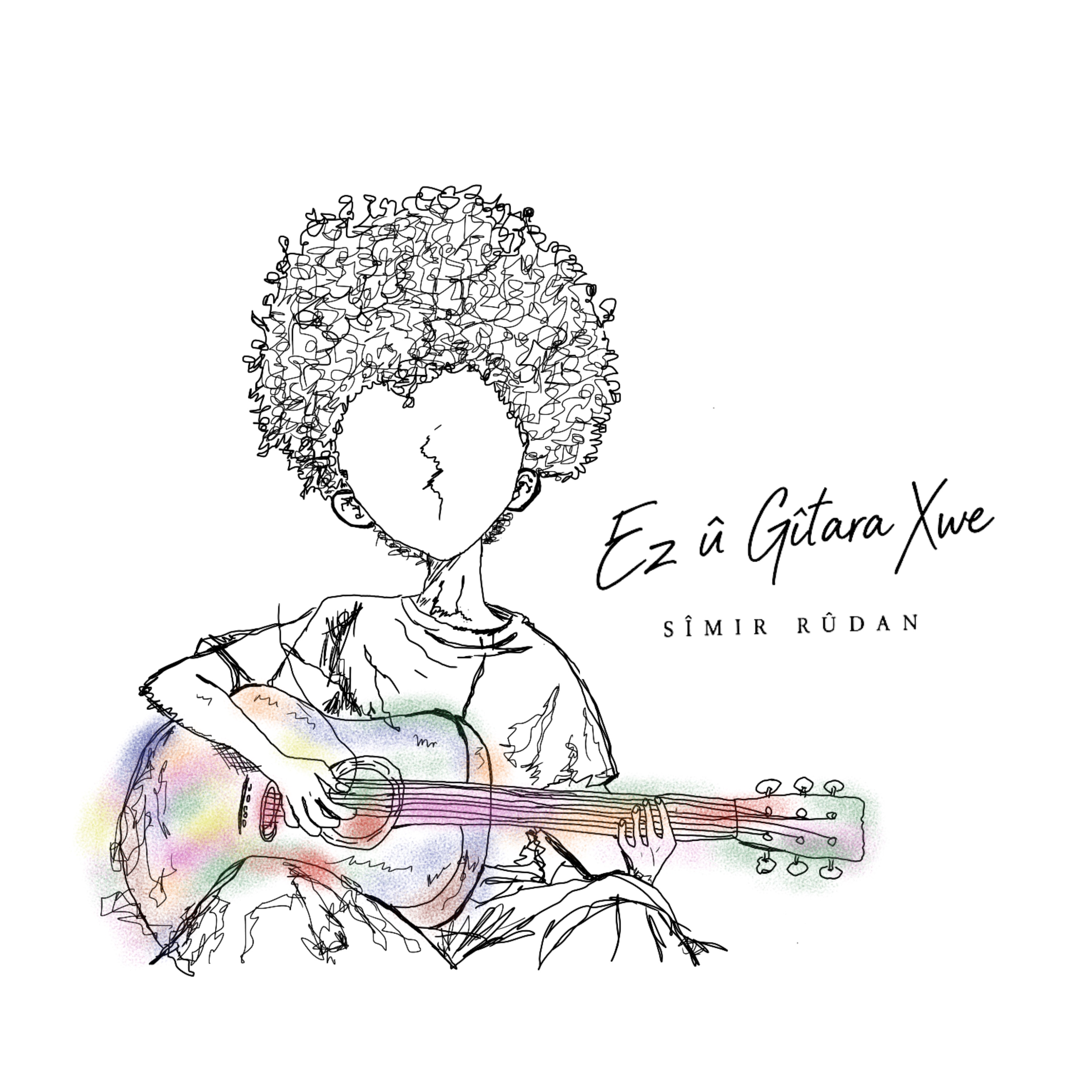
The album’s visual world follows the same approach. Designed by Candan Giyen, the cover replaces a portrait with a broken heart and a colourful guitar; it depicts not so much a person as a condition. A choice some listeners may regard as “too simple,” it consciously reflects the sense of absence and emptiness the album seeks to convey. During the drawing process, a stray line that accidentally crossed the guitar’s sound hole was not erased but deliberately preserved. This small detail extends the album’s embrace of organic imperfections into its visual language.
The album’s rejection of perfection can also be considered alongside Adorno’s critique of presenting the artwork as a smooth and fully reconciled whole. The preservation of minor recording imperfections, free-flowing rhythms, and an unerased line transforms absence from a flaw to be corrected into an element of the work’s very form. As a result, the album does not exist solely through the themes of loss and deprivation articulated in its lyrics; it also carries their formal counterpart. Rather than striving for perfection, it chooses to exist with its irregularities intact, allowing the work to assert itself without concealing its own conditions of being. In this sense, Ez û Gîtara Xweproposes an aesthetic unity shaped through absence and fragility rather than through the reassuring wholeness of completion.
EZ Û GÎTARA XWE SPOTİFY'DA DİNLE

Sîmir Rûdan was born in Cizre in 1981. In 1999, he moved to Ankara to study philosophy at Hacettepe University. During his university years, he turned increasingly toward music, began playing the guitar, and developed an interest in Western classical music. He also spent a period singing with the Ankara University Bach Choir.
In 2013, Rûdan released his debut album, Bi Çîrokî (Fairytale-like), featuring lyrics, music, and arrangements entirely written by him. The album was named Album of the Year by Hawar.net, one of the prominent Kurdish arts and culture platforms of the period. In 2015, he contributed the song Berfîn (Snowdrop) to the compilation album Peşk (Drop), a collaborative project bringing together a range of musicians. His second album, Kevî (Shore), followed in 2019. In 2024, he released the singles Hê Jî Digerim (I Am Still Wandering) and Yekî Gotibû (Someone Had Said). The same year, he participated in Na, Ne Tenê Me! (No, I Am Not Alone!), a project celebrating the 30-year artistic career of Mehmet Atlı, with the song Birîn (Wound). In 2025, he released Sira Sibê, Fîncan, Reng Esmerê, Ez Berf im, and Her Evîndarê Caran im.
Rûdan’s third album, Ez û Gîtara Xwe (Me and My Guitar), brings together ten songs written, composed, and arranged by the artist himself. Recorded using only guitar and voice, the album marks a new stage of reduction in the musical journey that began with Bi Çîrokîand continued with Kevî. In this work, Rûdan foregrounds both his relationship with the guitar and the personal dimension of his songwriting. Rather than concealing minor imperfections in the recordings, he preserves them, placing naturalness at the centre of the album’s aesthetic. Bringing together themes of loss, distance, and absence through a stripped-back musical language, Ez û Gîtara Xwedistils the experience accumulated over years of songwriting into the intimate space of a single guitar and a single voice.

Comments (0)