

Yonca Karakaş, one of the distinctive voices in contemporary art, has extended her new solo exhibition, Back Contamination, at G-art Gallery. Originally scheduled to run from May 12 to June 27, the exhibition will now remain open until July 10, 2026.
Back Contamination (2026)
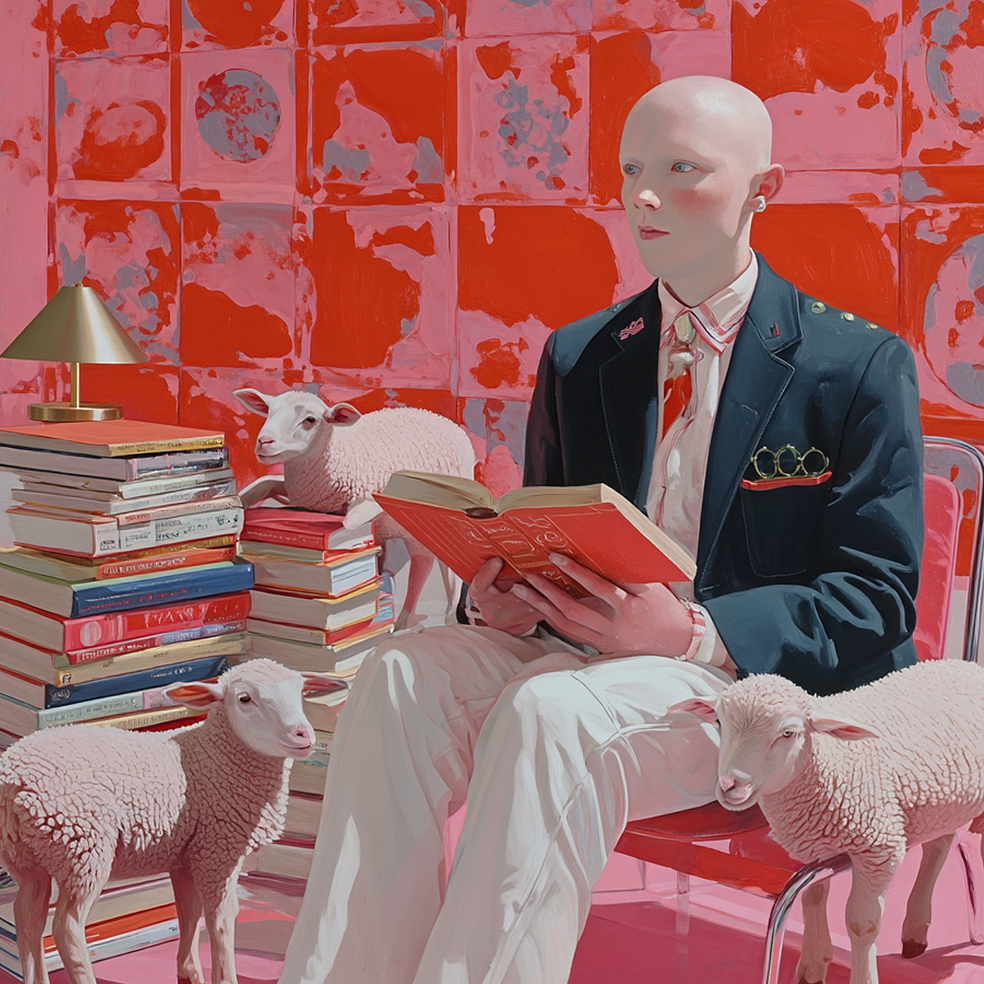
Comprising photography, video, and installations, the exhibition invites viewers to rethink possible disaster scenarios concerning the future of humanity. Rather than relying on familiar dystopian imagery, it approaches the idea of extinction through the fragile relationships between body, memory, and perception. Taking as its point of departure the human mind’s evolutionarily developed, threat-oriented perception, Karakaş interrogates how narratives of war, environmental devastation, and apocalypse—continuously reproduced in media and collective memory—shape our modes of thinking. The exhibition suggests that projections of the future are often constrained by disaster imagery inherited from the past, while also drawing attention to forms of risk that remain invisible or insufficiently represented. In this context, Back Contamination does not depict catastrophe directly; instead, it transforms images associated with its aftermath. Moving beyond representations of war, environmental destruction, and dystopian landscapes, Karakaş’s works confront the viewer with a sterile, almost clinical mise-en-scène. This deliberate choice removes catastrophe from the realm of extraordinary external events and embeds it within the body, perception, and constructed space.
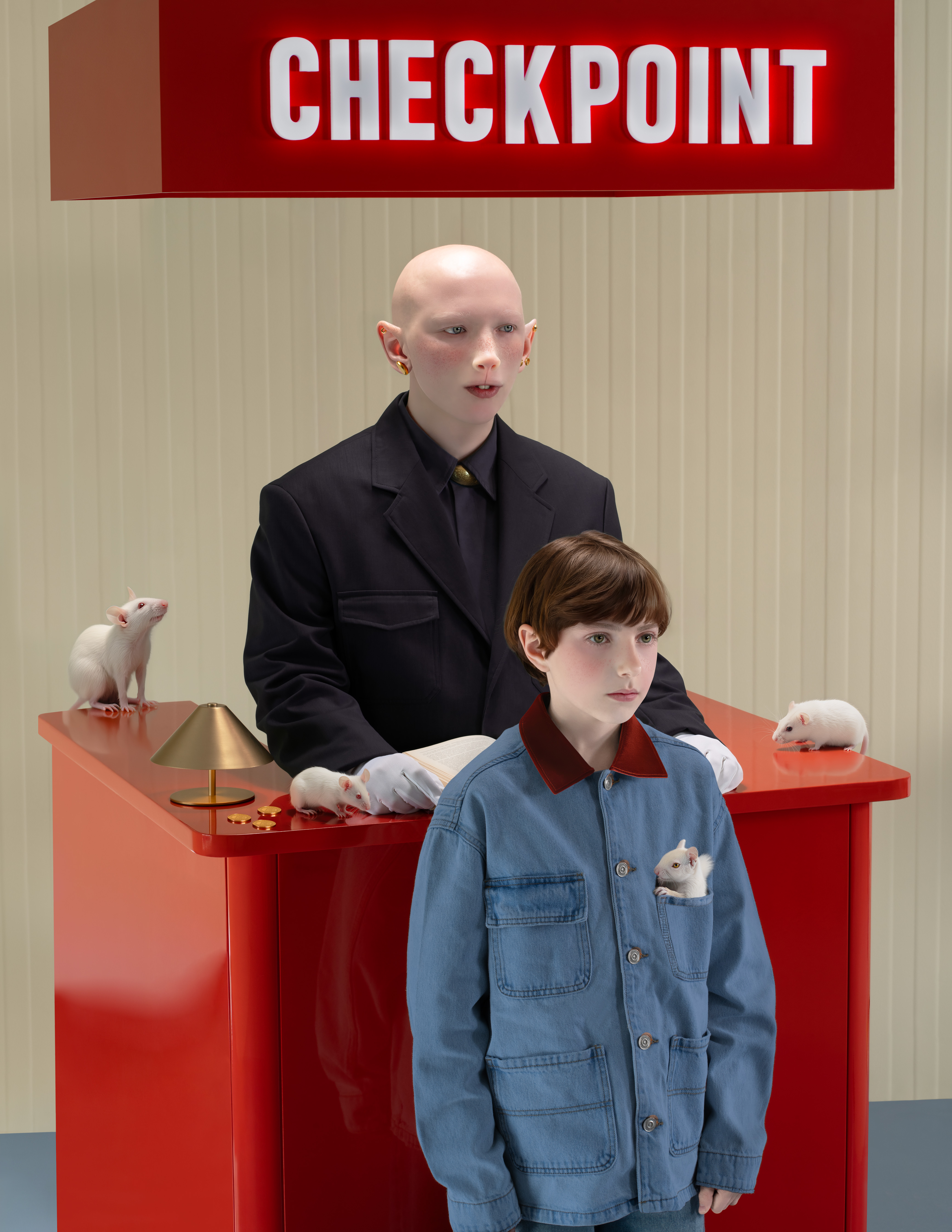
The most striking element in Karakaş’s compositions is the still, almost inert presence of mutated bodies. In these images, the boundaries between human figures and mice become blurred, while ears, noses, skin, and surfaces lose their familiar anatomical integrity. Yet this deformation does not aim to evoke grotesque horror; rather, it functions as the exhibition’s primary visual language. The body ceases to be merely a victim of catastrophe and instead becomes an index of adaptive transformation. At this point, the exhibition refrains from depicting the devastation itself. The destruction has already taken place, leaving behind only its biological and aesthetic traces. No signs of ruin or debris are visible; instead, what emerges is a condition in which irreversible change is clearly inscribed in the forms, surfaces, and gestures of the bodies.
 Back Contamination (2026)
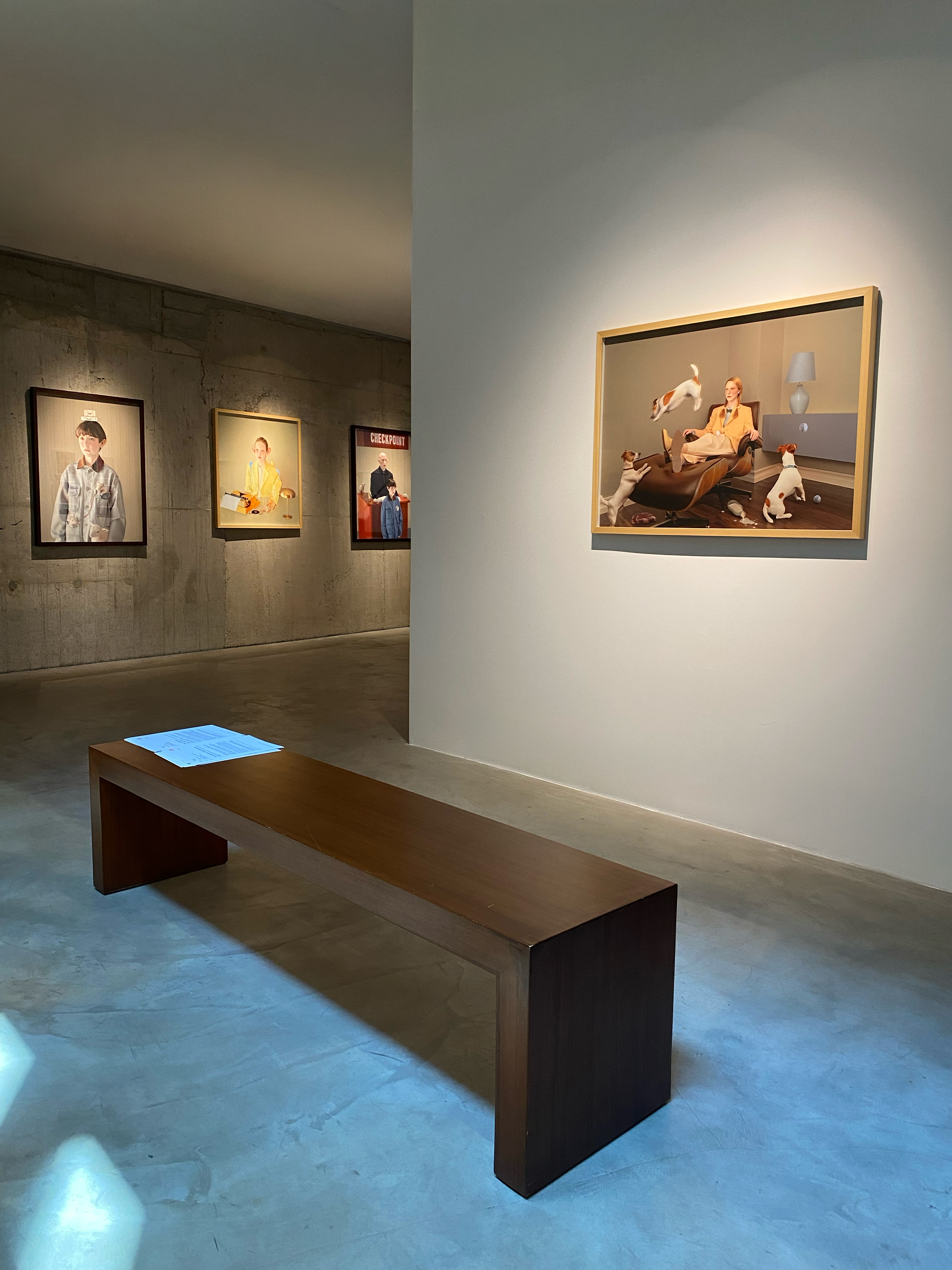
One of the defining aspects of Karakaş’s practice is her deliberate withdrawal of narratives related to the external world. Rather than directing the viewer toward battlefields, ruins, or sequential representations of ecological destruction, Karakaş reconstructs space, objects, and the human body as a theatrical set. In doing so, the viewer is not directly exposed to catastrophe; instead, they are drawn into a stage that continues to exist in its aftermath. The exhibition operates less through the events it depicts than through the voids it leaves unrepresented. Positioned prominently within this atmosphere, the CHECKPOINT installation stands as a key component of this transformation at the heart of the exhibition space. Architectural elements of this kind, typically associated with border security and transit control, acquire a different significance in Karakaş’s work. Here, what is regulated is not the movement of bodies, but the shifting boundaries between human and animal, natural and artificial, interior and exterior. Children, adults, and animals are stripped of contexts of violence, time, and space, and placed beyond language, practices, and all discursive relations. For this reason, every element on the stage appears solely as a manifestation of objecthood. The scenography forms the primary spatial ground upon which this objectivity is constructed; yet these very boundaries simultaneously appear as already dissolved. The checkpoint, no longer functioning as a mechanism of regulation, instead assumes the character of a redundant prop.
The sterile color palette, flawless surfaces, and rigorously controlled compositions further intensify this effect. Although the images initially appear calm and ordered, this very order continues to conceal an underlying biological and ontological deterioration. It is precisely for this reason that Back Contamination departs from the familiar visual repertoire of disaster aesthetics to propose something more unsettling: humanity may be approaching its end not through a dramatic explosion, but through subtle, barely perceptible transformations. This perspective inevitably recalls the well-known lines from T. S. Eliot’s poem The Hollow Men: “This is the way the world ends / Not with a bang but a whimper.”
 Back Contamination (2026) From the gallery
 Back Contamination (2026)
Therefore, the work does not derive its political force from direct representation, but precisely from the suspension of representation itself. It does not depict a specific war, country, or historical event. Instead, it places the viewer before decontextualized phenomena, prompting an active process of meaning-making. The artist does not deliver epistemic knowledge at first glance; rather, she establishes the conditions through which such knowledge can be gradually constructed by the viewer over time, through phenomenological experience and engagement with artistic form. Had this knowledge been presented at the outset, it would have remained merely formal—surface-level information. This, in turn, would have fixed meaning prematurely, obstructing the flow of transitions between stages and foreclosing the multiplicity of readings. What is at stake here is the artist’s creation of the image and its emergence as an autonomous form. Karakaş’s compositions, in the first stage, present a saturation of aesthetic intensity to perception; in the second stage, this saturation is absorbed into lived experience; and in the third stage, experience is transformed into an act of thought, articulated as a grounded configuration of perception.
In conclusion, Back Contamination does not shape disaster as an object of representation; rather, it approaches it as a process of transformation that operates invisibly. Instead of guiding the viewer toward definitive meanings, the exhibition constructs an experiential field that continually seeks meaning. This field, in which the boundaries between body, space, and perception begin to dissolve, renders visible the condition that disaster is no longer an external event, but an immanent and ongoing state. This visible field will remain on view at G-art Gallery until July 10, 2026.
Yonca Karakaş (b.1982 Diyarbakır.)
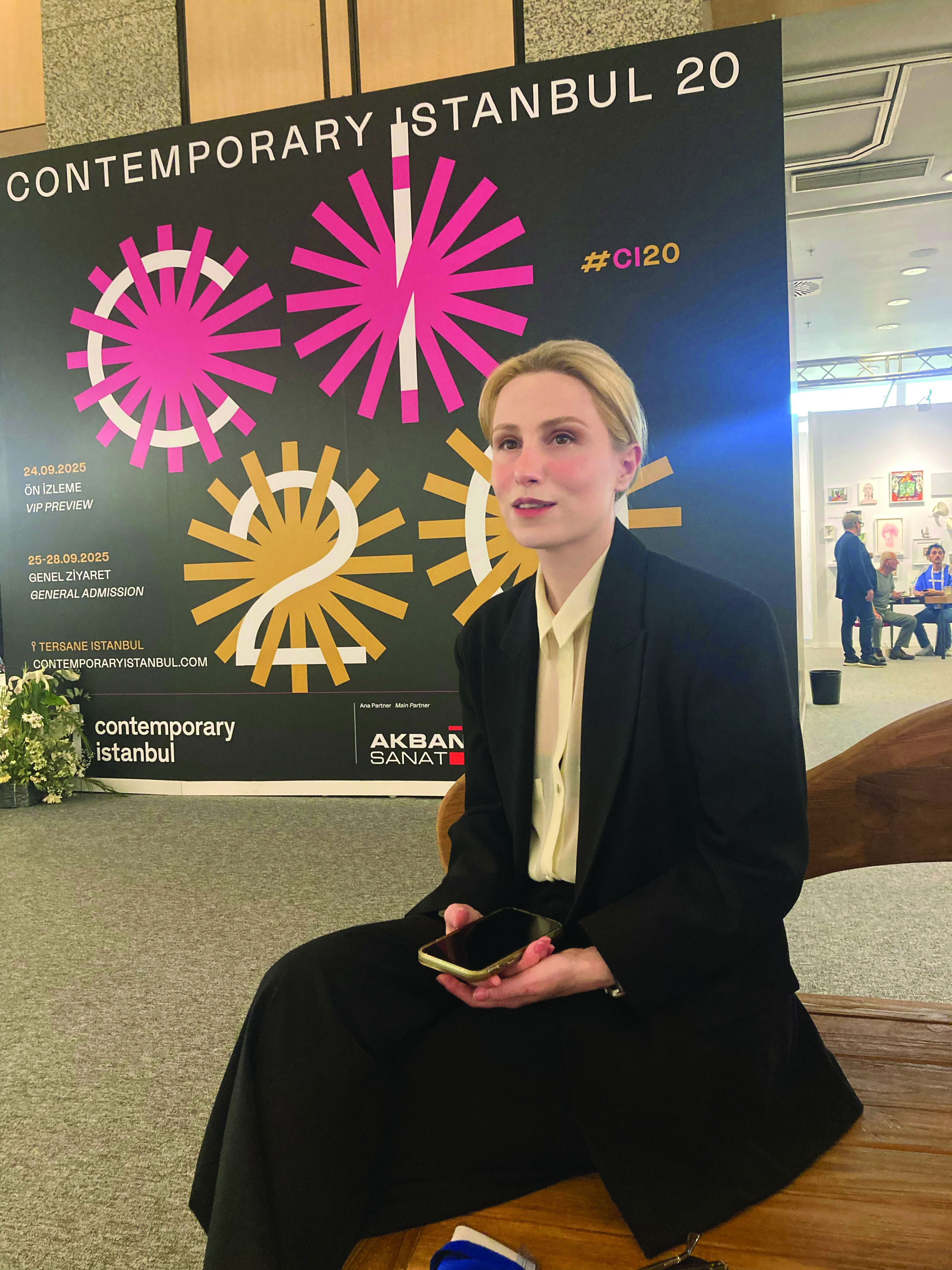
Yonca Karakaş is a photography artist whose practice examines how identity, belonging, and freedom are constructed within social, cultural, and ideological frameworks. Bringing together philosophy, history, religion, psychology, and language, her work uses photography as a critical tool to explore the effects of knowledge, power, and belief systems on both individual and collective consciousness.
Karakaş graduated from the Photography and Video program of the Faculty of Arts and Design at Yıldız Technical University in 2012. She has participated in exhibitions at major institutions such as Akbank Sanat and Istanbul Modern, and her work has been presented internationally in collaboration with Guy Hepner. Her works were shown in Spain within the scope of PhotoEspaña and at UVNT Art Fair (Madrid). Her first solo exhibition was held at Pg Art Gallery in 2017. In 2024, she was accepted into the Department of Philosophy at Istanbul University, where she continues her academic studies.
Conceptually, Karakaş’ practice engages with John Locke’s theory of tabula rasa, reconsidering the notion of the mind as a blank slate shaped by external impressions. Rather than approaching knowledge solely as a liberating force, she questions how accumulated information and inherited belief systems can evolve into dogmatic structures that restrict intellectual and emotional freedom. Through photography, she explores the tension between conditioning and autonomy, revealing the fragile boundaries of identity and the human need for belonging.
Karakaş’ visual language consists of alternative and often uncanny worlds constructed through symbolic narration. By deliberately distancing herself from photographic realism, she guides the viewer beyond habitual perceptions of reality toward layered states of awareness. These constructed environments invite reflection on the roles individuals inhabit within their field of being, drawing a conceptual connection to Martin Heidegger’s notion of Verfallenheit (fallenness), and questioning how existence dissolves into everydayness, habit, and established meanings.
Approaching photography as an experimental and interdisciplinary process, Karakaş frequently employs digital manipulation and montage. By merging human, animal, and plant forms within carefully staged compositions, she constructs hybrid structures that interrogate evolutionary processes, biopolitics, and biological hierarchies.
Actively involved in every stage of production, Karakaş oversees the design of the shooting environment, styling, object creation, and on-set interventions. Following the shoot, she further develops her images through digital post-production, where color and symbolism play a central role in generating multilayered meanings. The resulting works offer the viewer not only a visual experience, but also an intellectual space for critical reflection on language, power, and contemporary existence.

info@firezz.com


Comments
00