
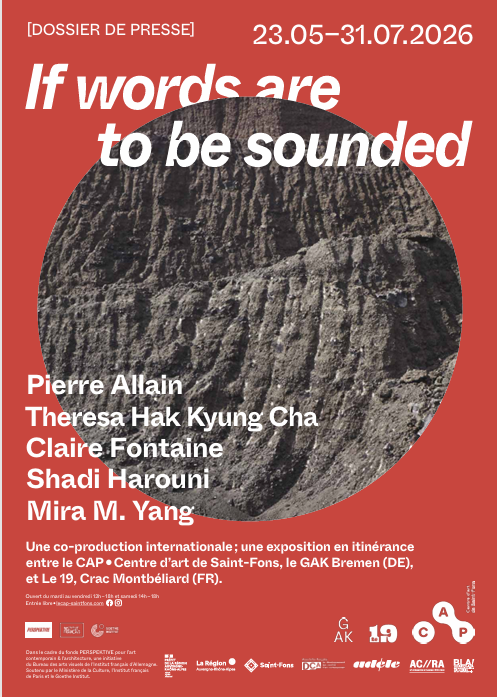
Held at CAP – Centre d’Art de Saint-Fons in the Lyon metropolitan area of France between May 23 and July 31, 2026, the exhibition If Words Are to Be Sounded constitutes the first stage of an international touring exhibition jointly produced between France and Germany, spanning the years 2026–2027. The project, curated by Annette Hans, Adeline Lépine-Delaborde, and Alessandra Prandin, is realized in collaboration with CAP Saint-Fons, GAK Gesellschaft für Aktuelle Kunst, and Le 19, Crac Montbéliard, and after its presentation in Saint-Fons it will travel to Bremen in September 2026 and then to Montbéliard in 2027. Supported within the framework of the PERSPEKTIVE fund for contemporary art and architecture, the exhibition approaches language by freeing it from its narrow definition as a communicative tool and treating it as a social contract and a performative field that shapes imagination. Drawing on Theresa Hak Kyung Cha’s production focused on language, migration, and identity, the exhibition, in contemporary conditions where language’s capacity to build a shared world is questioned, opens to discussion the fragility of meaning, processes of translation and transmission, and forms of memory, identity, and resistance through poetry, image, film, performance, and installation. The exhibition includes works by Pierre Allain, Theresa Hak Kyung Cha, Claire Fontaine, Shadi Harouni, and Mira M. Yang, while some works are presented as newly produced pieces within the scope of the project. Among the notable artists in the exhibition, Iranian-born contemporary Kurdish artist Shadi Harouni stands out with film, photography, and installation works that explore the relationships between language, exile, diaspora, and cultural memory, and is among the prominent figures of the project.
Shadi Harouni’s research-based artistic practice centers on revealing the processes through which erased, suppressed, and denied historical phenomena are naturalized. Harouni is a contemporary artist whose work draws on a broad field of inquiry ranging from everyday forms and procedures of dissent to global social movements, from modern revolutions in the Middle East to historical transgressions in thought and poetry. Working across video, film, photography, sculpture, installation, and site-specific interventions, Harouni brings together words and folkloric elements to trace the legacies of ideas of emancipation and revolution. The artist focuses on spaces, objects, and social memories that carry either realized or interrupted dreams of freedom.
Harouni’s video–film and photographic works, particularly those she produces in the geography of Kurdistan, center the region’s histories of resistance and its social memory. Through works created in various locations across this geography—abandoned houses, decaying factories, and quarry sites under threat of disappearance—she highlights women’s contributions to struggles for freedom and self-determination, while also closely examining the region’s political and cultural history.
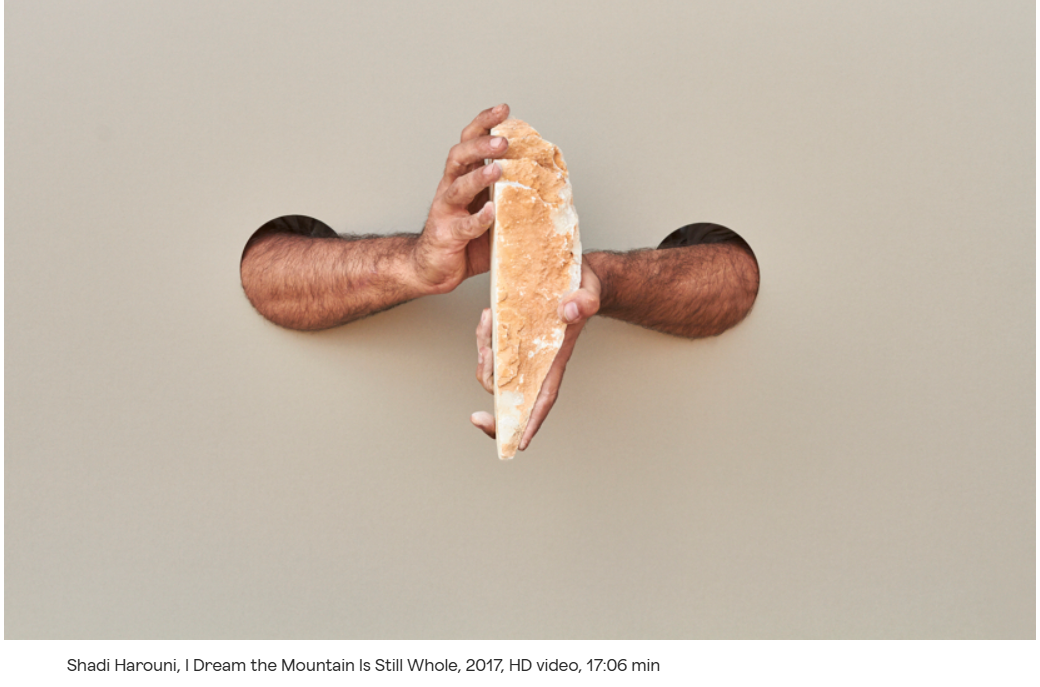
I Dream the Mountain Is Still Whole, 2017, HD video, 17:06 min
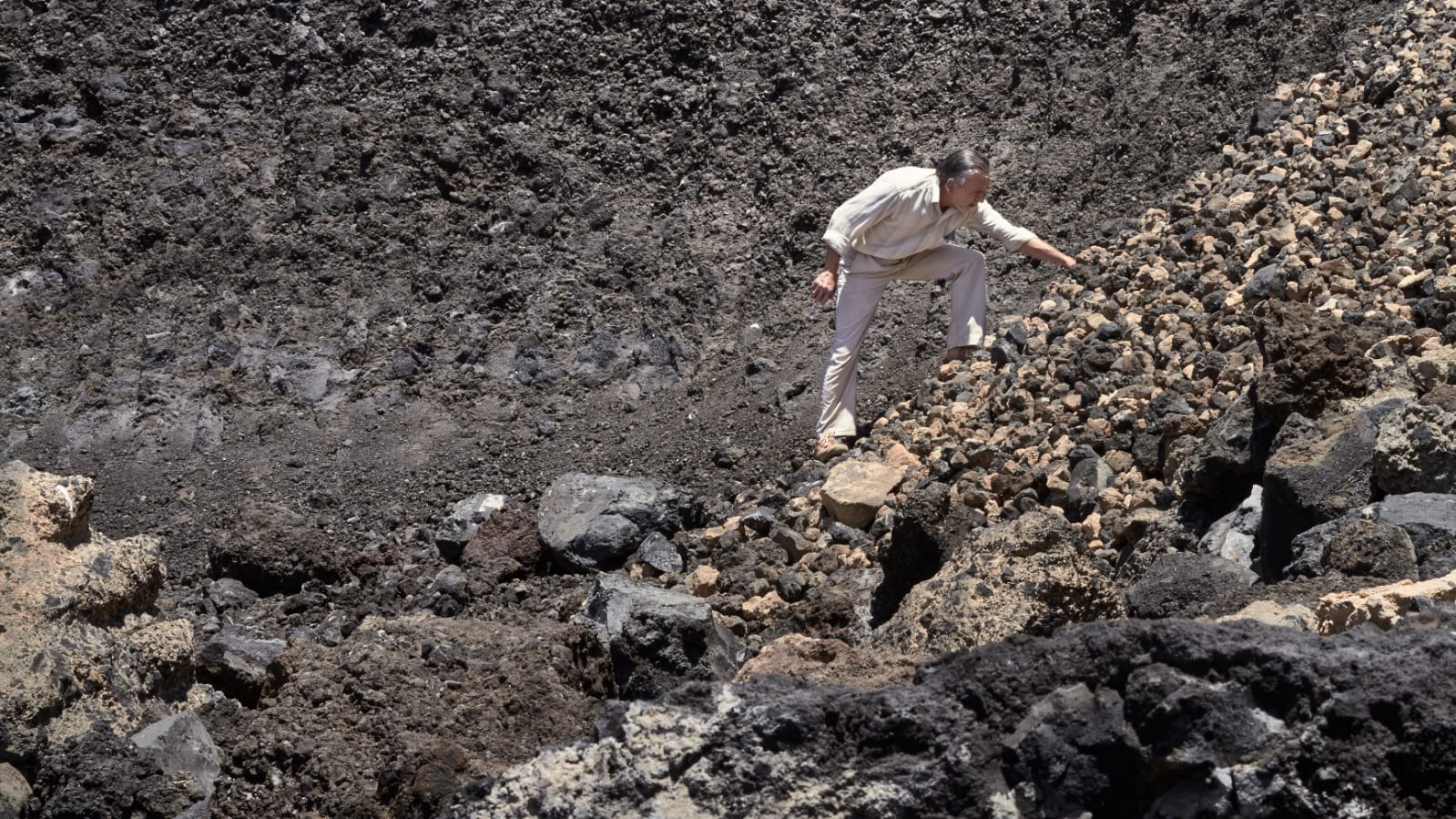
I Dream the Mountain Is Still Whole, 2017, HD video, 17:06 min
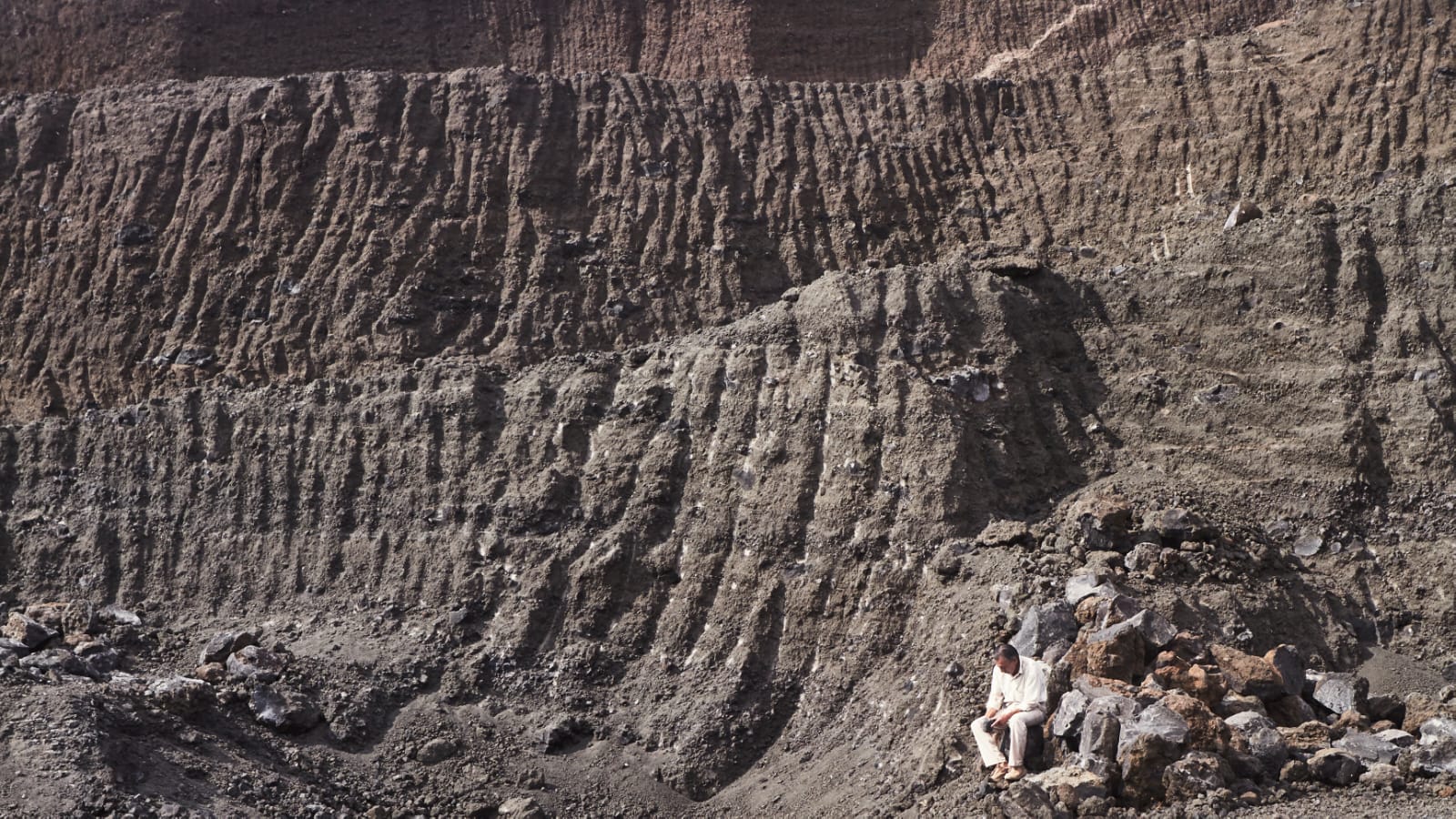
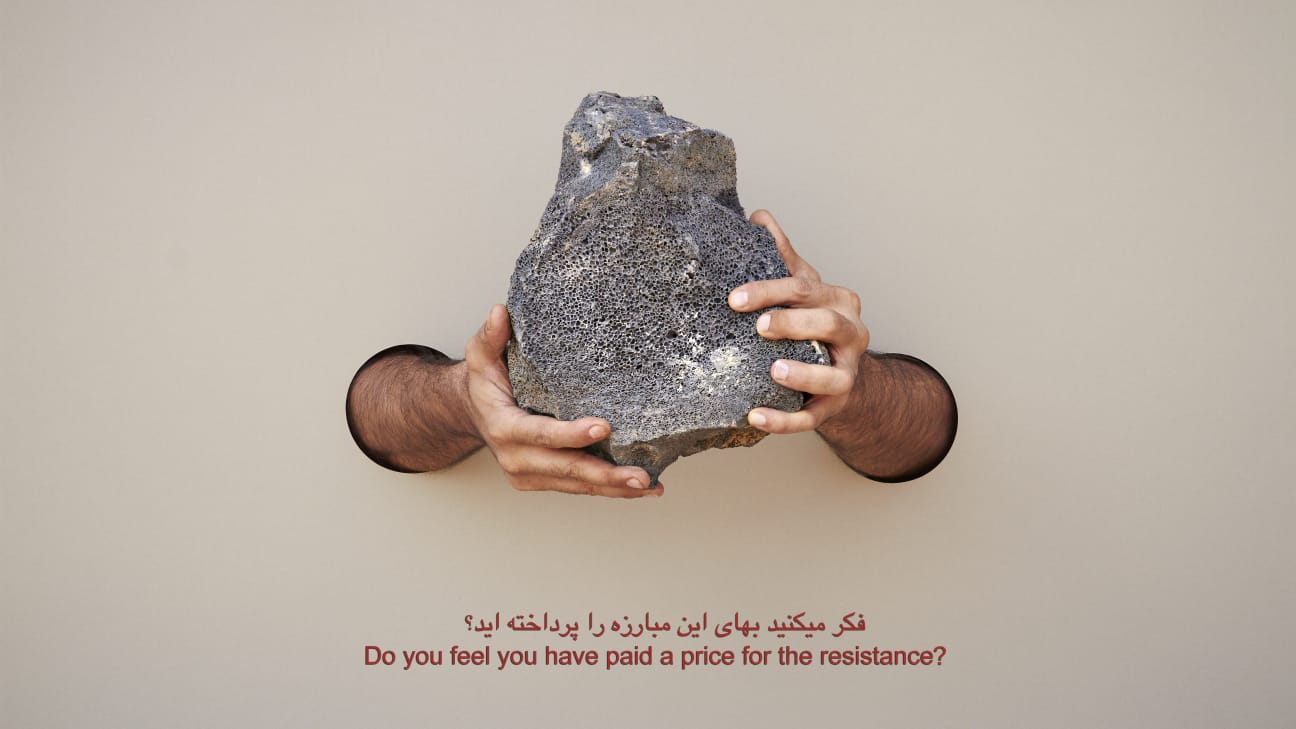
I Dream the Mountain Is Still Whole, 2017, HD video, 17:06 min (Bu görsel, sergi afişinde de kullanılmıştır.)
At CAP Saint-Fons’ If Words Are to Be Sounded exhibition, Shadi Harouni participates with three works. Her first work in the exhibition is the video film I Dream the Mountain Is Still Whole (2017). This multi-media supported work is part of a multi-chapter research and production project that addresses issues of memory, loss, resistance, and continuity within the geography of Kurdistan. Bringing together different media such as film, photography, and installation, this extensive project focuses in particular on the relationship between the historical fragmentation of the Kurdish region—divided between the borders of Iran, Iraq, and Turkey—and the collective memory of the communities living within it. The starting point of the project is the historical and symbolic place of the mountain in Kurdish culture, as also seen in the work of contemporary Kurdish artist Walid Siti. The mountain is approached not merely as a natural element but as a carrier of exile, resistance movements, oral narratives, and collective memory. Harouni emphasizes that although the mountain is divided by political borders, it can still be imagined as “whole” on a cultural and historical level. The phrase “still whole” in the title of the work thus carries both a geographical and a symbolic meaning. A figure wandering like a ghost among the mountains, touching stones and at times immersed in deep contemplation, does not merely reflect an individual melancholy; it also reveals the displacement of collective memory and the rupture of historical continuity. This figure represents a state of existence in which the past is no longer a secure refuge, while the future appears as a horizon that offers little hope. The film and photographs produced within the project were created in the mountainous regions of Kurdistan, in abandoned settlements, quarry sites, and places of historical resistance. As is often the case in Harouni’s practice, these sites are not directly documented; rather, they are treated as silent witnesses bearing the traces of past struggles and suppressed histories. The artist poetically constructs her visual language by relating these spaces to women’s struggles for freedom, experiences of exile, and forms of cultural transmission. I Dream the Mountain Is Still Whole brings together key questions that run throughout Harouni’s broader practice: How is memory preserved when a geography is fragmented? How do forbidden or suppressed languages continue to live? How is the relationship of belonging to land reconstituted under conditions of exile and diaspora? In this sense, the work goes beyond being solely a study of Kurdish history and opens up a universal reflection on loss, resistance, and cultural continuity.
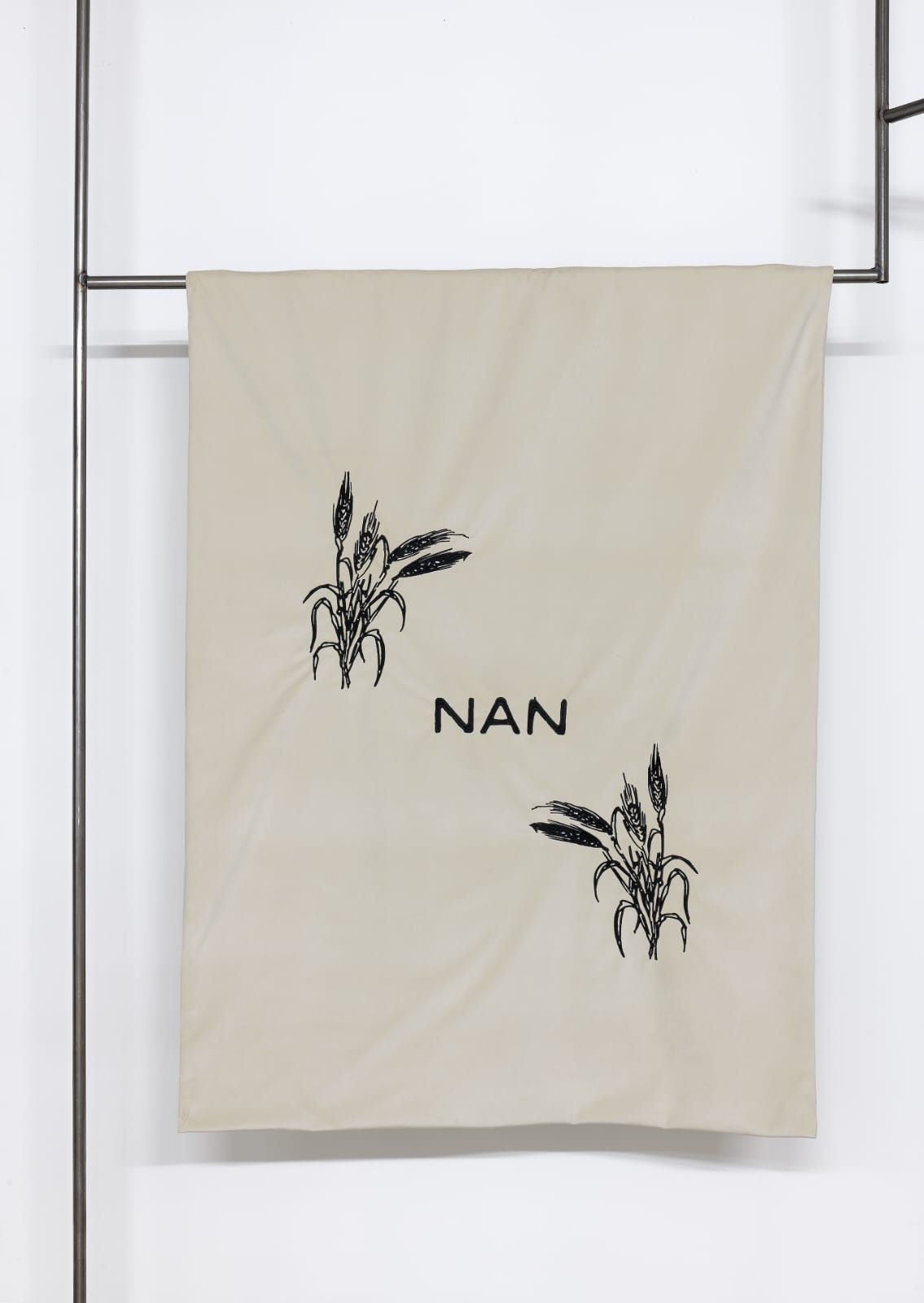
No For Nan, 2026, Mixed-Media Installation with Fabric, Variable Dimensions
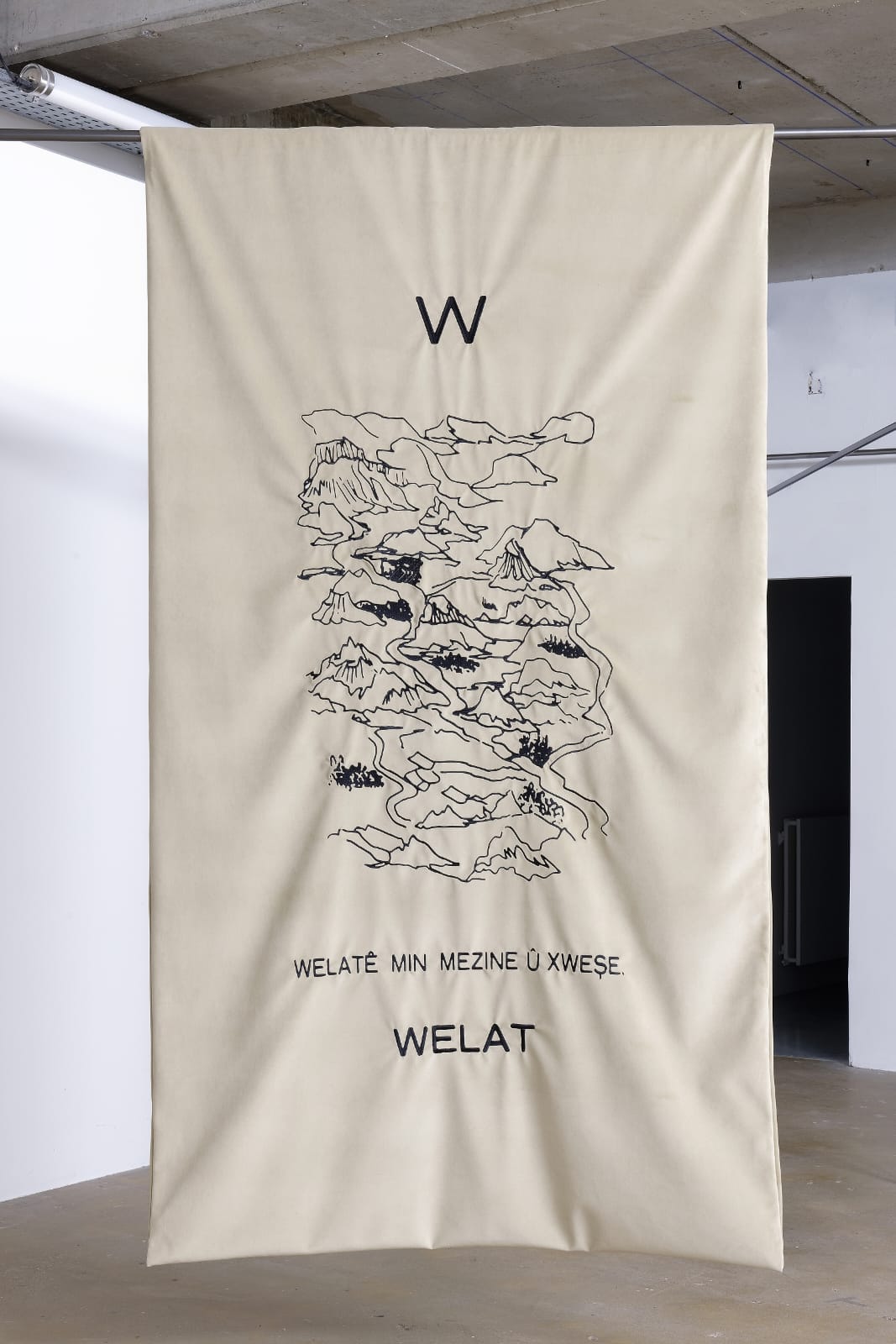
No For Nan, 2026, Mixed-Media Installation with Fabric, Variable Dimensions
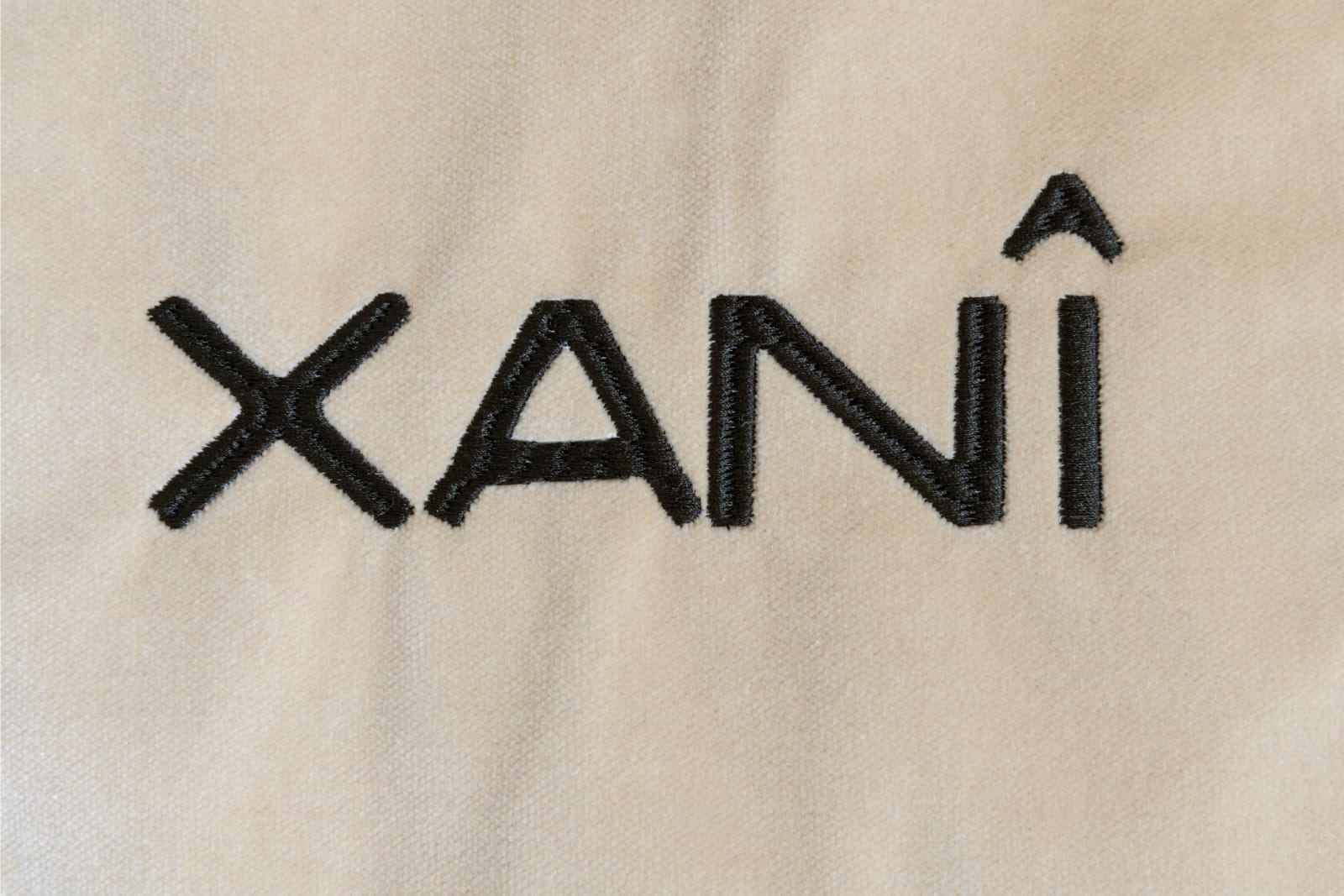
No For Nan, 2026, Mixed-Media Installation with Fabric, Variable Dimensions
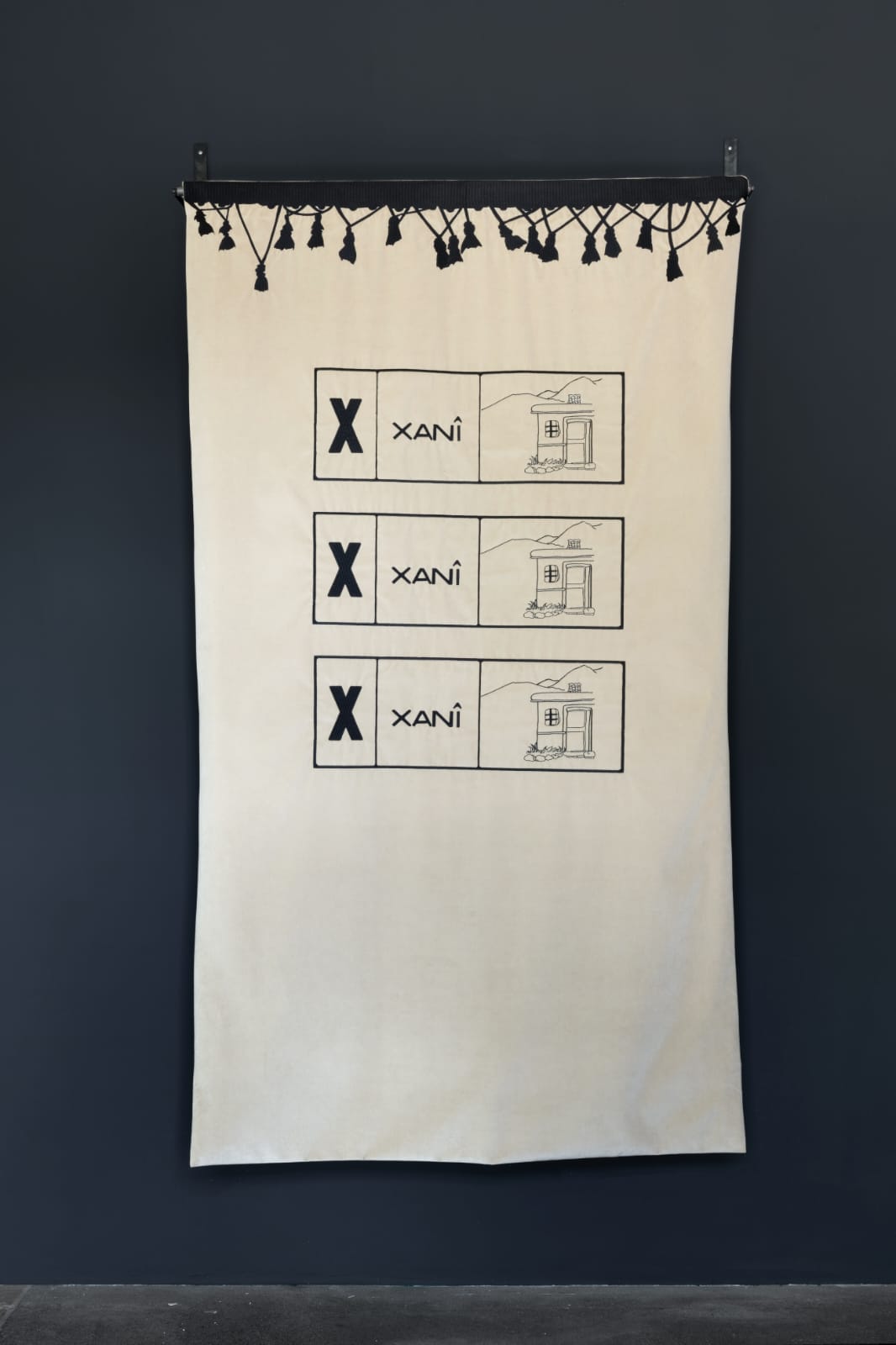
No For Nan, 2026, Mixed-Media Installation with Fabric, Variable Dimensions
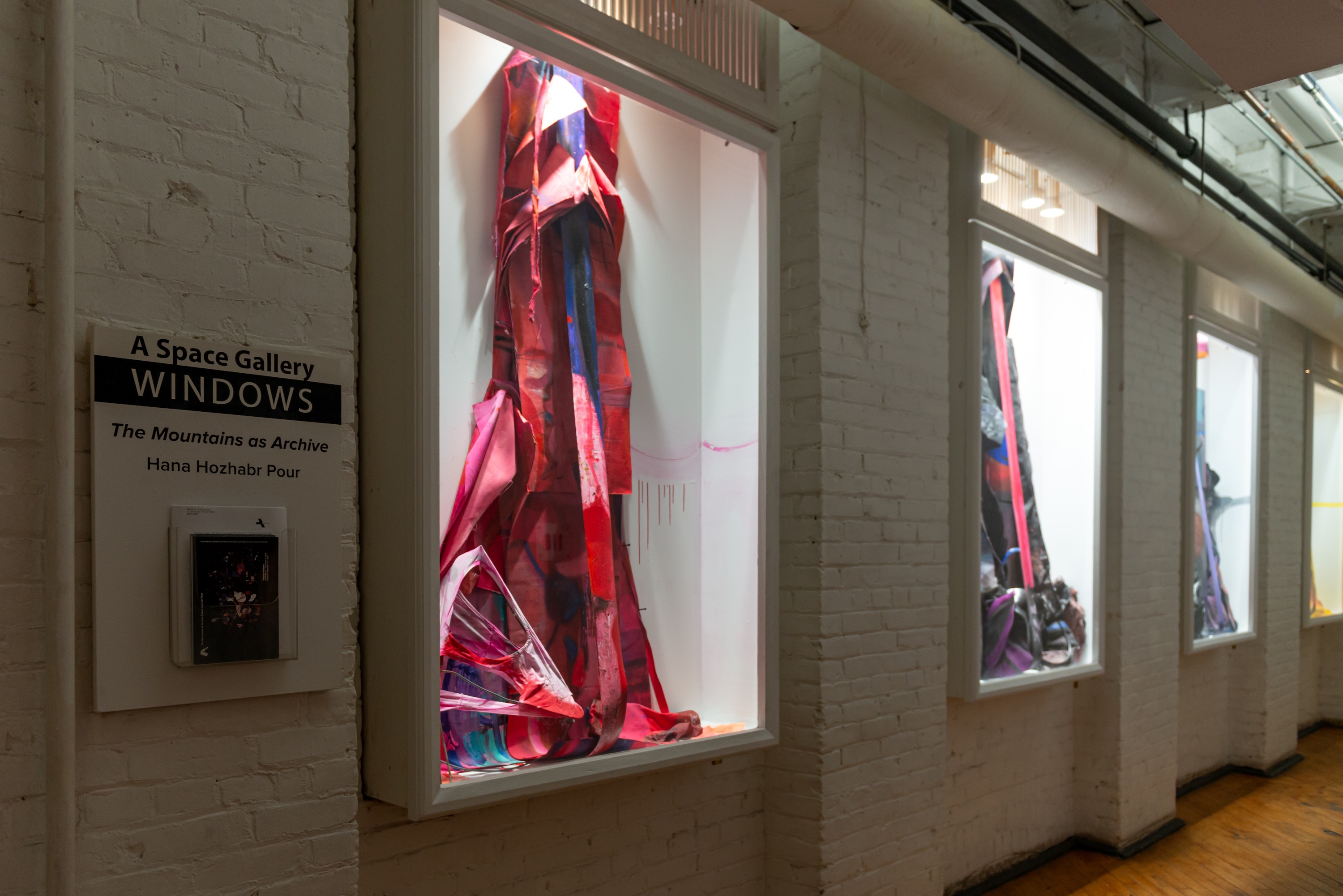
Harouni’s second work in the exhibition is a new extension of the artist’s long-term research on Mehmet Emîn Bozarslan’s 1968 Kurdish children’s book Alfabê. N for Nan (2026) is conceived as an installation composed of textiles of varying dimensions and a range of different materials. Drawing on Alfabê, which was published in Turkey in 1968 but was soon banned and led to the arrest and trial of its author, the work does not merely address letters, words, and learning processes within the framework of pedagogical tools; it reinterprets them as carriers of cultural memory and political resistance. By transforming an archival educational material into a contemporary spatial installation, Harouni exposes the tension between the suppression of language and acts of remembrance. The artist invites the viewer to reconsider each letter of the alphabet through the lens of loss, transmission, and continuity.
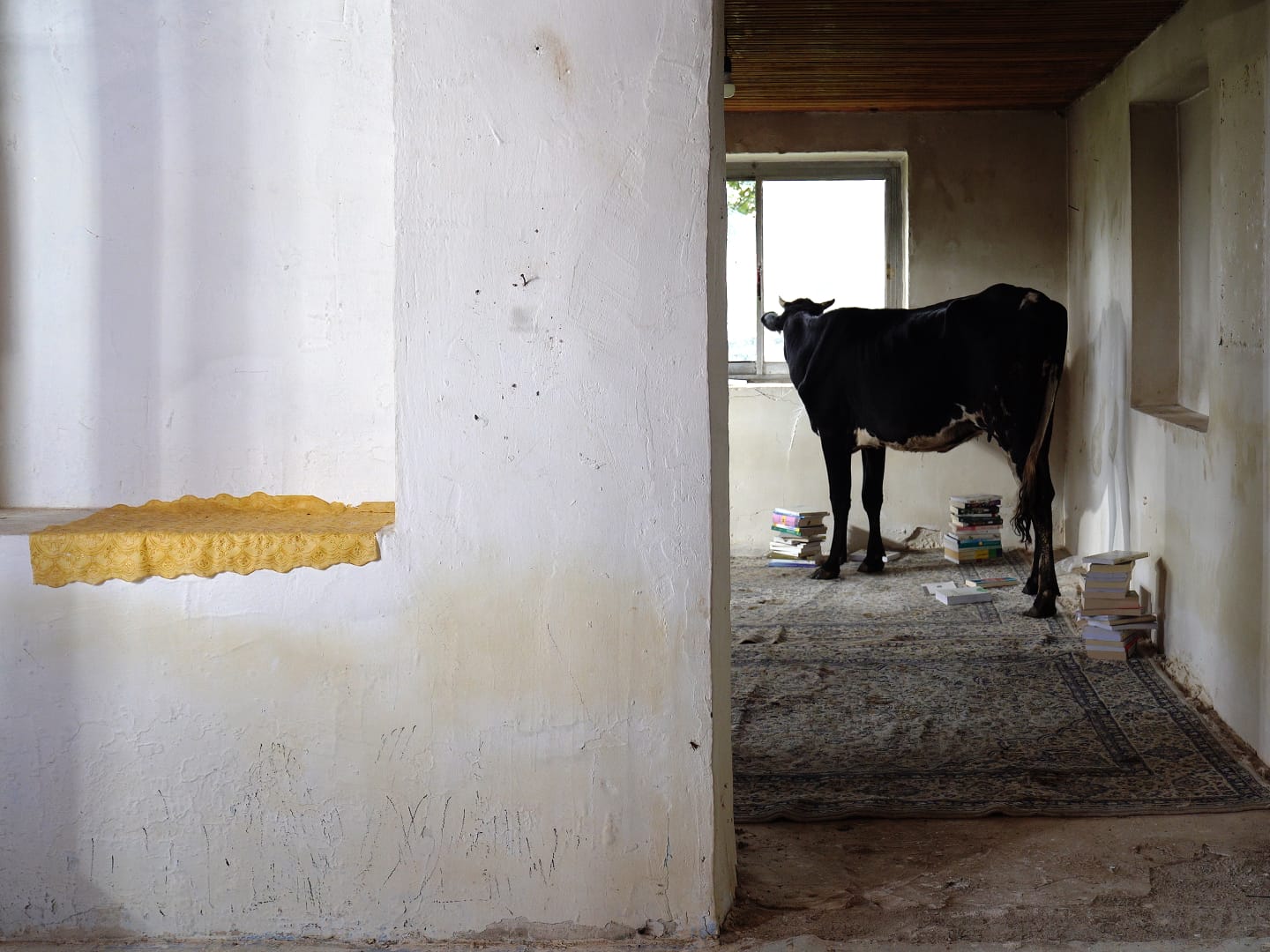
The Owl’s Made a Nest in the Ruins of the Heart, 2021. UHD 4:3, Duration 19:00.
The third work in the exhibition is Shadi Harouni’s single-channel video film The Owl’s Made a Nest in the Ruins of the Heart, shot in Iranian Kurdistan. The title of the film is borrowed from an anonymous Kurdish poem from the Hewraman region. The work is structured around the interior of an old and dilapidated house in which human presence has disappeared. Throughout the film, a cow is seen freely moving between the rooms of the house. However, Harouni’s framing does not focus solely on the presence of the animal; it also reveals the traces left behind by a life that has been abandoned. Books, pieces of fabric, a few plates left in the kitchen, pots and glasses, and a carpet spread on the floor appear in the frame as silent witnesses of a once ongoing everyday life. Objects stacked in the corners of rooms or scattered on the floor point to lives abruptly interrupted by a sudden rupture experienced by the inhabitants of the house. In the absence of humans, the house has lost the order of daily life; books, once carriers of memory and knowledge, have turned into silent witnesses. These simple yet striking images are accompanied by the voice of a politically engaged Kurdish man who once lived in this house, who was tried and convicted by the mullah regime and maintained his oppositional identity throughout his life. The voice has become estranged even from the home in which it once resided. The space that once carried the rhythm of everyday life is now surrounded by silent remnants of a world to which it no longer belongs. The house ceases to be a place that evokes shelter and a sense of belonging; it becomes a reminder of loss, abandonment, and an irreversible past. Thus, the film presents an individual story through the voice of a narrator, articulating the spaces, objects, and memories left behind by Kurds who have been subjected to exile and forced displacement due to political repression. Without directly showing human absence, Harouni records the traces of memory, loss, and displacement through the objects left within an abandoned house.
The prisoner’s voice interweaves personal memory with political history by recalling the places he has inhabited throughout his life, from the village house of his childhood to prison cells and the house at the center of the film. The house depicted in the film was once deliberately left with its doors open, allowing animals to enter and inhabit the space. This condition is presented less as a direct political statement and more, in a Rancièrian sense, as an implicit gesture of resistance emerging within everyday life. Harouni thus transforms the abandoned architecture into a site of memory where the boundaries between human and animal become blurred. The narrator’s ironic and at times humorous tone coexists with heavy historical realities such as poverty, exile, experiences of imprisonment, and broken political hopes. In this film, where personal memory intersects with collective history, the artist addresses themes of displacement, poverty, resistance, and loss through everyday spaces. By reconstructing the relationships between humans, animals, and architecture through a poetic visual language, the work focuses on silent yet powerful forms of resistance and suppressed histories.
In summary, through these three works, Shadi Harouni demonstrates that language is not merely a tool of communication, but also a carrier of historical memory and cultural continuity. Approaching the relationships between language, memory, and resistance through a poetic and research-based practice, Harouni’s works in the exhibition If Words Are to Be Soundedat CAP Saint-Fons offer visitors not only an aesthetic experience, but also an opportunity to reflect on history, identity, and freedom.
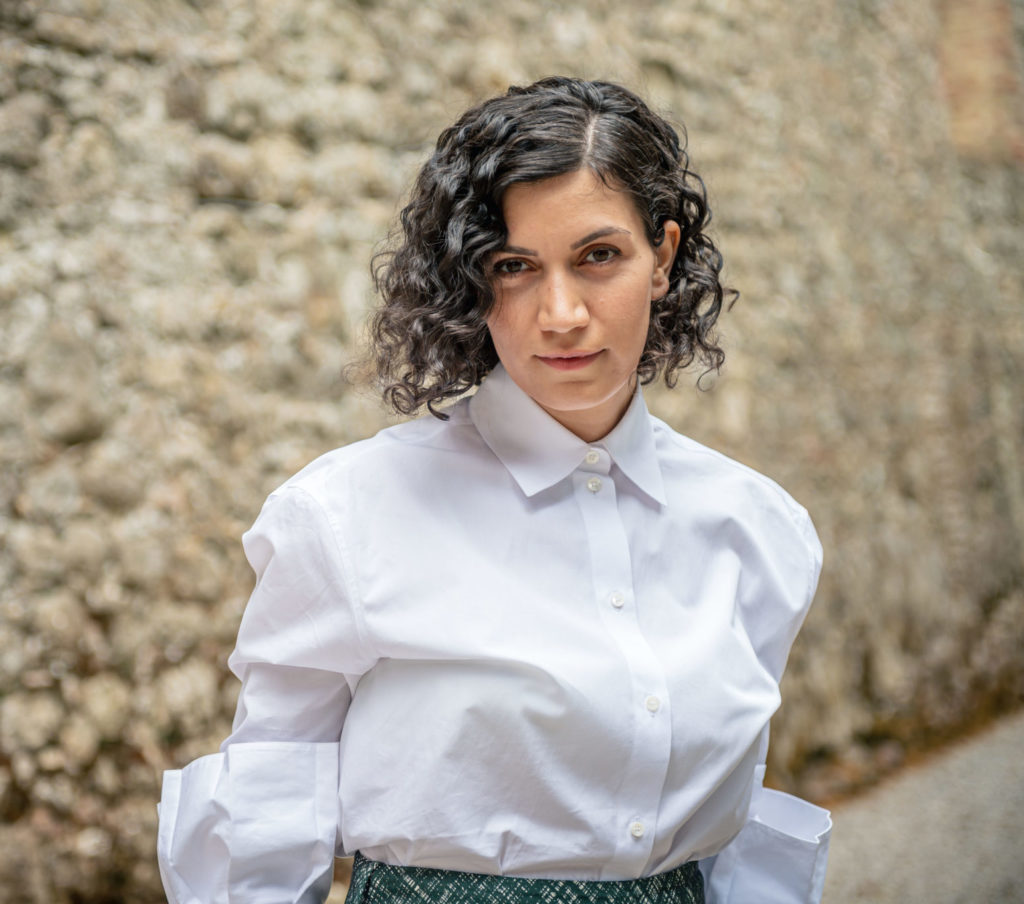
Shadi Harouni (1985, Hamedan, Iran), is an Iranian Kurdish artist and art critic based in the United States. She is currently Professor and Head of the Video and Photography Department at New York University Steinhardt, and also serves as the Head of the BFA Studio Art Program.
Harouni’s artistic production is grounded in her personal experiences in post-war and post-revolutionary Iran, as well as in a critical examination of the Islamic regime’s shifting and often tense relationship with form, image, music, fashion, and the human body. Her practice focuses on the methods through which political powers prohibit, erase, and reshape historical narratives. The archival materials, films, sculptures, photographs, and prints she collects reveal forms of resistance developed by individuals and communities against systematic practices of forgetting. Harouni’s works function as a multilayered visual archive that materializes the opposition between memory and counter-memory. In her practice, motifs drawn from sacred imagery and architecture are interwoven with images that point to the volatility and fragility of contemporary power structures, forming a figurative mosaic that continuously reconfigures historical and political meaning.
Harouni’s works, which hold an important place in international art circles, have previously been exhibited at institutions such as the Queens Museum, Kunstmuseum Bonn, Prague City Museum, and Museo d’Arte Orientale. The artist was also awarded the 2024–2025 Film and Video Fellowship from the Guggenheim Foundation and has been accepted into award programs and artist residencies at institutions such as the Gattuso Foundation, Civitella Ranieri Foundation, and the Skowhegan School of Painting and Sculpture. Her works have been exhibited in many major cities around the world, particularly in the United States and Europe, and her writings on art have been published in major outlets such as Artforum, The New York Times, and The Guardian. Shadi Harouni is currently represented by Galleria Tiziana Di Caro in Naples.
info@firezz.com


Comments
00