Manifesta 16 Ruhr opened its doors on June 21. Spanning four German cities and hosting 107 artists across 12 church buildings, the biennial features contemporary Kurdish artist Pınar Öğrenci, whose works explore themes of migration, forced displacement, and resistance and are currently on view at St. Anna Church in Bochum.
The 16th edition of Manifesta, Europe’s longest-running nomadic biennial, opened in Germany’s Ruhr region on June 21, 2026.Spanning four cities—Bochum, Essen, Gelsenkirchen, and Duisburg—the event has transformed 12 disused post-war church buildings into exhibition venues. Bringing together 107 artists and collectives from over 30 countries, the biennial presents 67 newly commissioned works to the public for the first time. Admission is free, and the exhibition runs until October 4, 2026.
One of the key conceptual axes of this edition is the re-evaluation of religious structures that have lost their function through secularization, reactivating them through new public and cultural uses. The strong presence of artists and cultural actors from Turkey is directly linked to the historical and social legacy shaped by post-war labor migration from Turkey to the Ruhr region.
Pınar Öğrenci, also featured in a news report published by FIREZZ on June 22, stands out as one of the notable names on the Manifesta 16 artist roster. The curatorial framework for this venue was developed by Anda Rottenberg and Krzysztof Kościuczuk. Presenting her work at St. Anna Church in Bochum, Öğrenci shares the space with Pedro Cabrita Reis, Kateryna Lysovenko, Mykola Ridnyi, Wilhelm Sasnal, and Marion Stokes.
"The world is changing; political tensions, divisions, polarization. Manifesta 16 Ruhr aims to create spaces where people can come together." — Manifesta 16 Ruhr
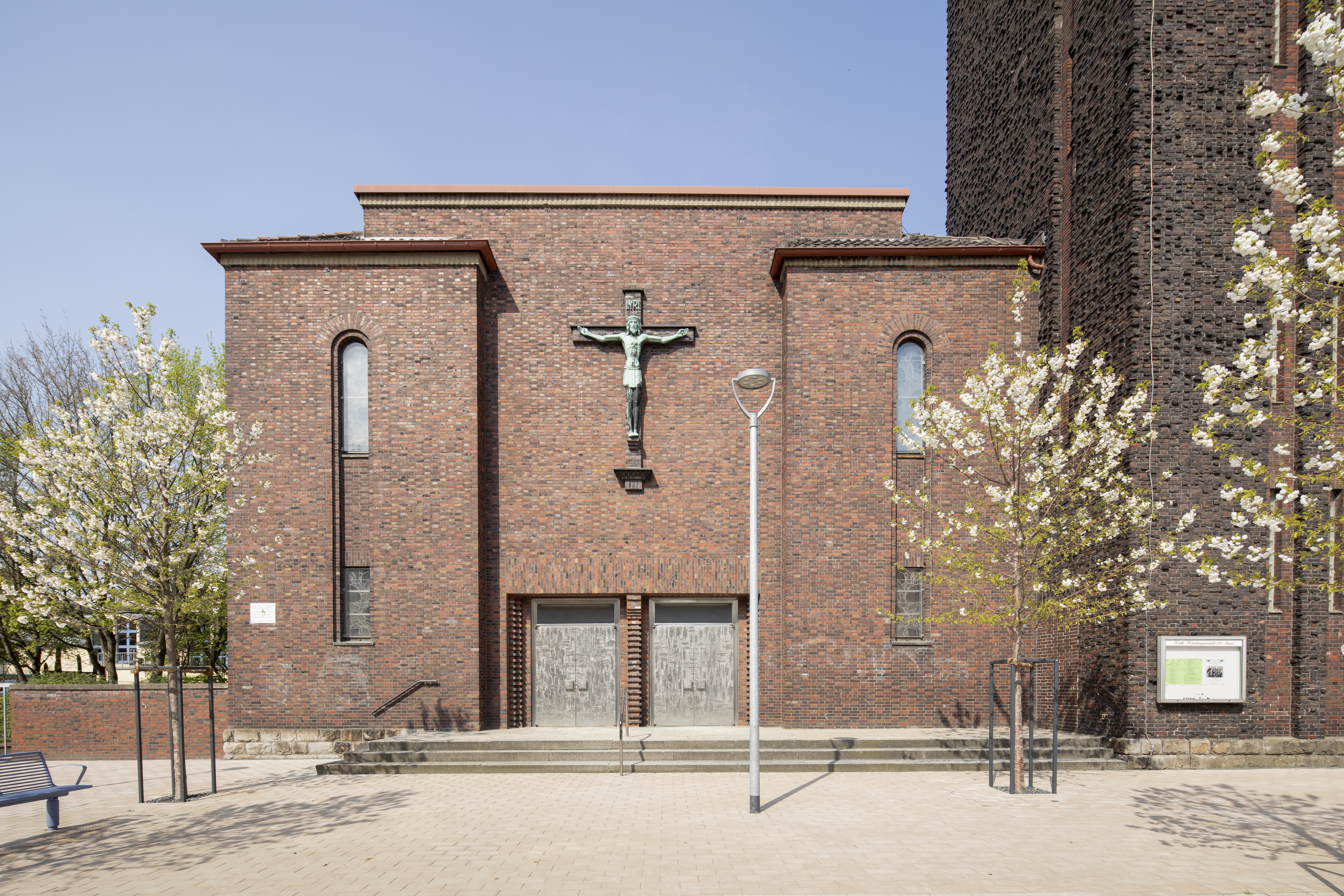
St. Anna Church, Bochum — Built in 1929, the church is one of the venues for Manifesta 16 Ruhr.
Photo © Manifesta 16 Ruhr / Claudia Dreysse
Located in Goldhamme, one of Bochum’s historic working-class neighborhoods, St. Anna Church was designed by architect Wilhelm Peter in 1929 and stands as a significant structure bearing witness to the social history of the Ruhr region shaped by the steel industry. Constructed as a symbol of the desire to strengthen community life and the neighborhood’s ties to the church, the building is notable for its austere Expressionist architecture—a style that became particularly prevalent in working-class districts in the 1920s. The emphasis on horizontal and vertical lines, along with the visible load-bearing structure, constitutes characteristic features of the region’s architectural language. The church’s interior was further enriched in the 1970s with organically shaped stained-glass windows in shades of red, blue, and green, designed by the German stained-glass artist Nikolaus Bette. As part of Manifesta 16 Ruhr, St. Anna has been opened to artistic production as part of the biennial’s broader vision of rethinking the future of underused religious buildings. In this context, it has moved beyond its original function as a place of worship, evolving into a space of encounter that fosters discussions on cultural and public transformation. (1)
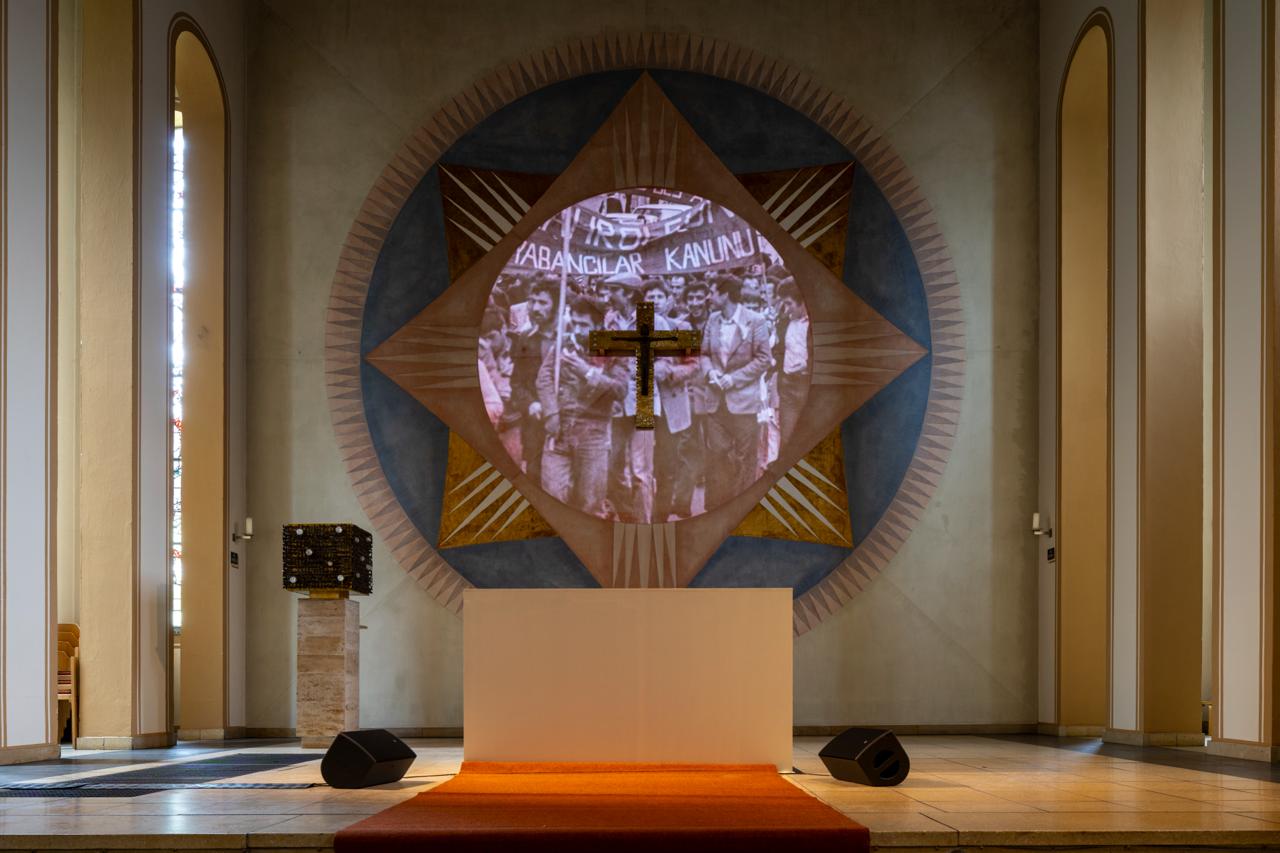
A Labor Dictionary, 2026 — Manifesta 16 Ruhr, St. Anna Church, Bochum.
© Pınar Öğrenci · Photo © Manifesta 16 Ruhr / Rainer Schlautmann
A Labor Dictionary (2026) is a newly commissioned work by Pınar Öğrenci, created specifically for Manifesta 16 Ruhr. Projected onto the mosaic of the apse wall of St. Anna Church, the video work depicts a crowd of protesters carrying a banner bearing the Turkish words “YABANCILAR KANUNU” (“Foreigners’ Law”). The footage offers a glimpse into the historical struggle of migrant workers against Germany’s foreigners’ legislation.
The church’s cross and altar remain visible within the projection, becoming integral elements of the composition. Religious architecture and political archival footage are thus deliberately superimposed. This gesture aligns closely with Öğrenci’s broader practice, which reads architecture as a site where violence materializes.
The superimposition of the church’s original religious iconography with historical protest imagery emerges as one of the most compelling, site-specific expressions of Öğrenci’s long-standing spatial-political inquiry within this biennial.
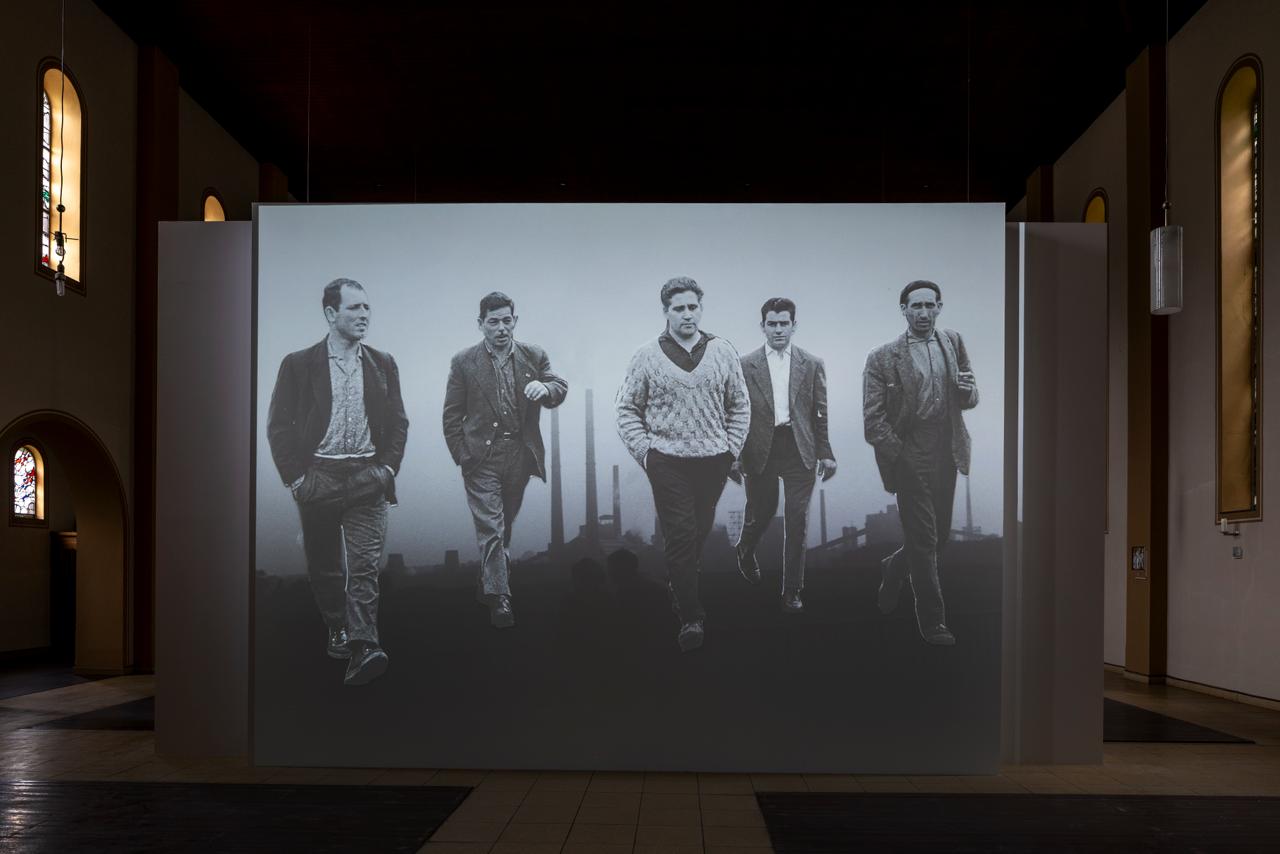
Glück auf in Deutschland, 2024 — Manifesta 16 Ruhr, St. Anna Church, Bochum.
© Pınar Öğrenci · Photo © Manifesta 16 Ruhr / Rainer Schlautmann
Good Luck in Germany / Glück auf in Deutschland—the title of the work—derives from “Glück auf!”, a traditional greeting among Ruhr miners. Öğrenci adopts this phrase to investigate the invisible labor of Turkish and Kurdish migrant women in the mining industry.
Drawing on black-and-white archival photographs taken between 1950 and 1987, Öğrenci interrogates the body politics of the mining industry, the invisibility of migrant workers, and the racist health and insurance practices in the Ruhr region. The photographs are primarily sourced from the Ruhr Museum archive in Essen and also include works by artists from the 1950s and 1960s. Five related collages further reimagine the bodies of workers and their families within the industrial landscape and architecture of the Ruhr. (2)
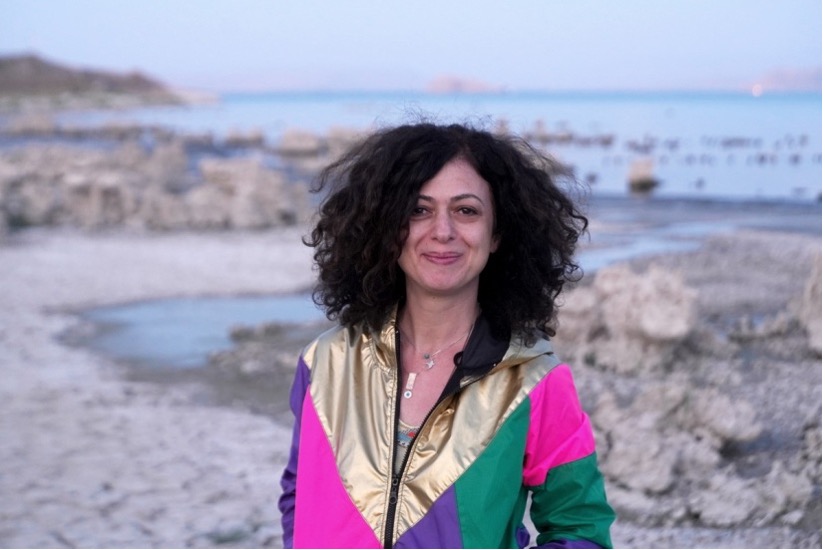
Pınar Öğrenci. Photo: Barış Aygen
Born in Van in 1973, Pınar Öğrenci is an artist with a background in architecture, currently living and working in Berlin. Since the late 1990s, she has contributed writings on contemporary art and architecture to publications such as Agos, Radikal, and SALT Online.
Following the climate of political repression in Turkey, Öğrenci was forced to relocate to Germany in 2018. An artist and filmmaker, she is also the founder of the art initiative MARSistanbul, established in 2010.
Öğrenci’s architectural background informs her poetic and experimental video-based works and installations, which trace material cultures shaped by forced displacement and loss across geographies. Her works offer decolonial and feminist readings emerging at the intersection of social, political, and architectural research, human stories, everyday practices, music, and literature.
They address the driving forces of migration, including war, state violence, assimilation, collective movements, natural disasters, as well as industrial and urban development projects.
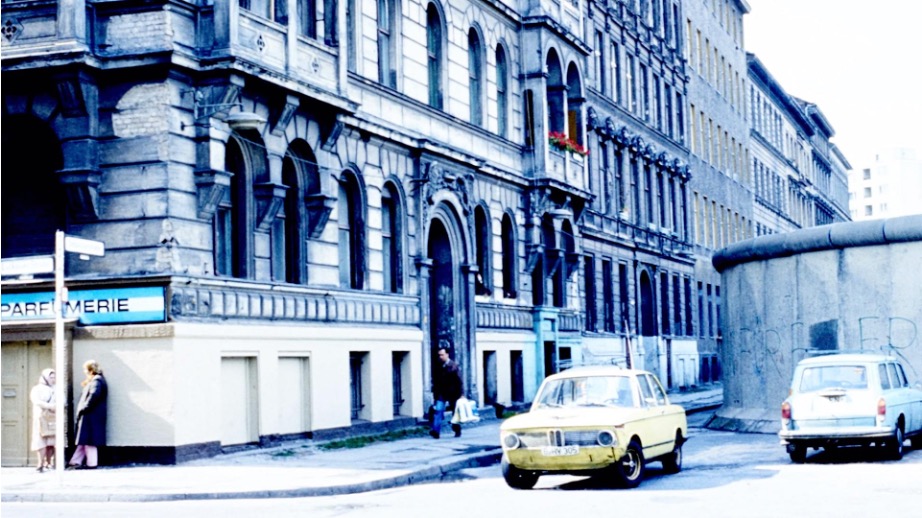
Gurbet is a Home Now – 14 th DOCUMENTARIST İstanbul Documentary Days
© Pınar Öğrenci · Almanya, 2021, 63 min Photo © https://www.peramuseum.org/
Completed in 2021, her debut feature-length documentary Gurbet is a Home Now draws on the narratives of former guest workers and received the Special Jury Prize at the Documentarist Film Festival. The film examines the impact of discriminatory urban policies implemented in 1980s Berlin on “guest workers” and exiles from Turkey. The film’s point of departure is the IBA (Internationale Bauausstellung), a post-war urban renewal initiative carried out in the Kreuzberg district between 1984 and 1987. Photographs taken by architect Heide Moldenhauer, who worked on the IBA, together with various private and public archival materials, form the core of the film. By tracing and interviewing the individuals depicted in these photographs, Öğrenci uncovers the hidden history of Kreuzberg through the lived experiences of migrant women and their narratives of solidarity. (3)
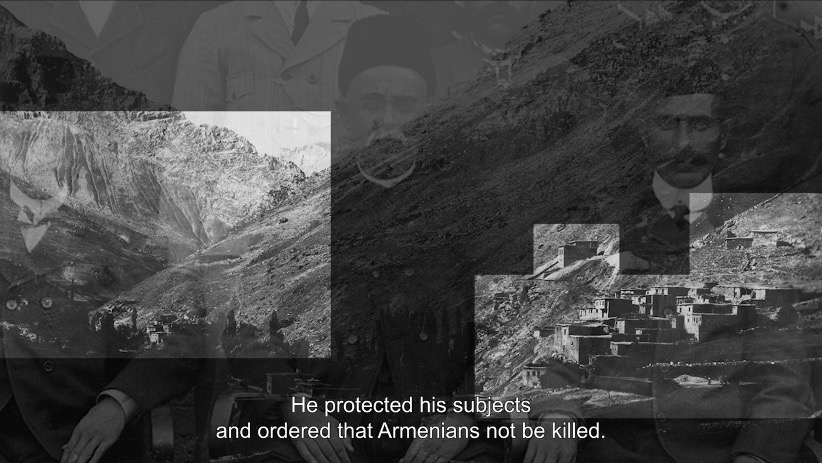
Aşît – 2022, film still. documenta fifteen, Kassel.
© Pınar Öğrenci
For her major international breakthrough, Aşît (2022)—produced for documenta fifteen in Kassel—Öğrenci returns to Müküs, her father’s hometown, located in the mountainous region south of Van. Situated near Turkey’s border with Iran, the city—once the capital of the Urartian civilization and the Armenian Vaspurakan dynasty—is today predominantly inhabited by Kurdish-speaking communities. Until 1915, it sustained a multilingual educational and cultural heritage encompassing Armenian, Kurdish, Persian, and Arabic. Aşît draws inspiration from Stefan Zweig’s final novella, The Royal Game (Schachnovelle, 1941), a psychological narrative in which chess becomes a mechanism of survival in the face of fascism.
Meaning both “avalanche” and “disaster” in Kurdish, Aşît evokes not only the threat of avalanches that isolate Müküs from the outside world but also the “Meds Yeghern” (“Great Catastrophe”) of 1915, during which 1.5 million Armenians were exiled, killed, or forced to leave Anatolia. The film thus operates simultaneously as an act of mourning. Material elements recurring in Öğrenci’s recent works reappear here as part of the installation: stitched paper handkerchiefs, collectively produced by women affected by armed conflict in Van, are integrated into the work as a tactile and symbolic layer. (4)
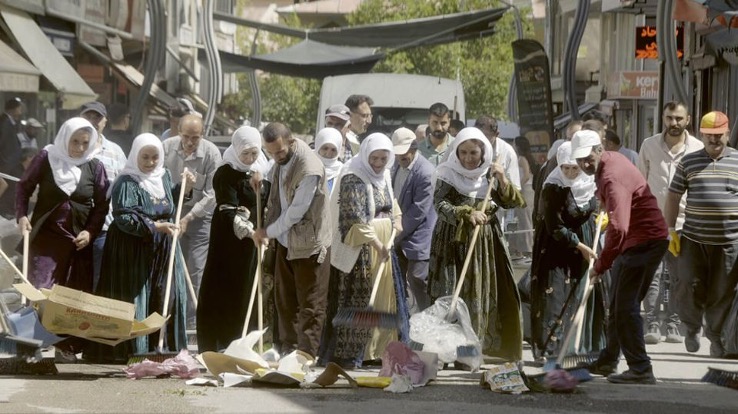
Şehrin Annelerinin İtirazı / Objection of the Mothers of the City, 2025, video still.
© Pınar Öğrenci · 12 min 2025 HKW Berlin · With the support of SAHA
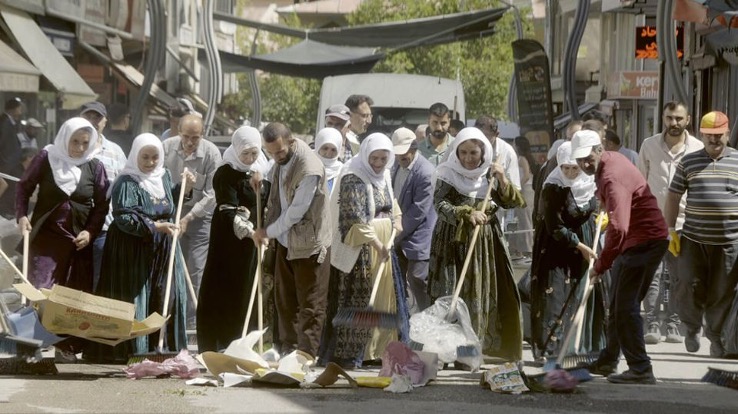
In 2025, she produced a new video work titled The Objection of the Mothers of the City (Şehrin Annelerinin İtirazı), commissioned by Haus der Kulturen der Welt (HKW) in Berlin. Pınar Öğrenci’s architectural background informs her experimental video-based works and installations, which engage with decolonial and feminist concerns at the intersection of social, political, and spatial research. She approaches space and architecture as sites where violence materializes. Her artistic language foregrounds the intergenerational transmission of stories, often circulating through popular forms and practices ranging from poetry and music to public protest. In The Objection of the Mothers of the City (2025), Öğrenci revisits a 2024 public action by the Peace Mothers—a group of Kurdish women—who collectively cleaned the streets in her hometown of Van to protest the replacement of a democratically elected Kurdish co-mayor with a government-appointed trustee. Van, which remained a major Armenian center until the end of the Ottoman Empire, has in recent years become a significant site for the Kurdish political struggle following an influx of Kurdish populations fleeing persecution in neighboring cities such as Hakkari, Ağrı, and Muş. The film examines the role of Kurdish women in the region’s struggle for peace, as well as the agency of water within both border and political landscapes. By reactivating the practice of street cleaning, the work initiates an act of reclamation, foregrounding a community’s determination to sustain its own culture of memory despite hegemonic attempts to erase Kurdish political and cultural autonomy and its infrastructures. Commissioned by Haus der Kulturen der Welt (HKW) with the support of the SAHA Association, the work was presented as part of HKW’s Global Fascisms program. (5)
"In the cemetery of the nameless in her hometown of Wan, refugees and Kurds are buried under numbers instead of names. It is imperative to discuss the right to mourn and the right to a grave." — Pınar Öğrenci
In addition to Manifesta 16, Pınar Öğrenci’s work Good Luck in Germany / Glück auf in Deutschland is featured in her first solo exhibition in the United States, on view at the Harvard Art Museums in Boston from April 17 to October 30, 2026.
Manifesta 16 Ruhr marks the final edition led by founding Director Hedwig Fijen, coinciding with the 30th anniversary of the European Nomadic Biennial. The biennial will close its doors on October 4, 2026. It is open to the public free of charge from Tuesday to Sunday, 11:00 AM to 6:00 PM, with extended hours until 7:00 PM on Fridays and Saturdays. To view Pınar Öğrenci’s works, St. Anna Church in Bochum must be added to your itinerary.
REFERENCES
1- Manifesta 16 Ruhr, “About Manifesta 16 Ruhr”.
2- https://manifesta16.org/press
3- https://www.peramuzesi.org.tr/film/gurbet-artik-bir-ev/3062/2451
4- https://documenta-fifteen.de/en/lumbung-members-artists/pinar-oegrenci/
5- https://www.hkw.de/en/programme/global-fascisms/
info.firezz.com


Comments
00