
Kunsthaus Hamburg in Hamburg, Germany, is hosting Whispers, a solo exhibition by Melike Kara. Opened on June 5 and on view through August 23, 2026, the exhibition is one of 11 shows presented across eight institutions in the city as part of the 9th Triennale der Photographie Hamburg. Curated by Anna Nowak, Whispers reveals a new phase in Kara’s practice, exploring the relationships between photography, painting, and space.
Born in Bensberg in 1985 and based in Cologne, Melike Kara works with photographic fragments, organic materials, and site-specific installations within her painting-centered interdisciplinary practice. A student of Rosmarie Trockel at the Kunstakademie Düsseldorf, Kara has exhibited internationally at institutions including Yuz Museum, Shanghai; WIELS, Brussels; Kölnischer Kunstverein, Cologne; Carnegie Museum of Art, Pittsburgh; Kunst Halle Sankt Gallen; Museum De Fundatie, Zwolle; and Schirn Kunsthalle Frankfurt.
Melike Kara, Whispers, Installation view, Kunsthaus Hamburg-Hamburg, 2026, Photo: Jaewong Kim
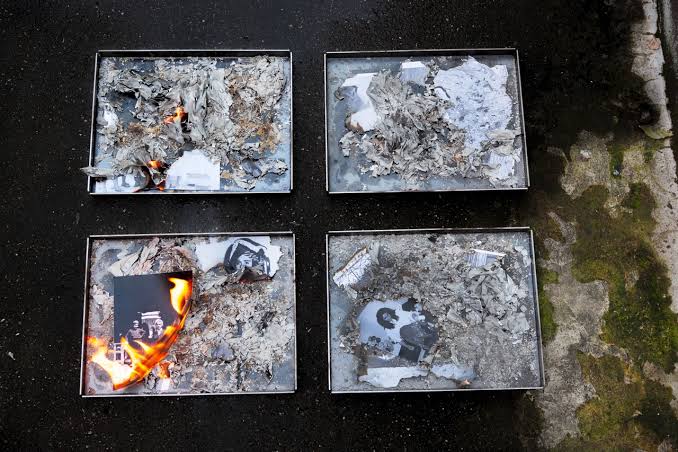
Kara’s Kurdish heritage and the photographic archive she has been building since 2014 form a key point of departure for Whispers. For a large-scale site-specific installation developed for Kunsthaus Hamburg, the artist revisits this archive—closely tied to both personal and collective memory—through a range of materials and interventions. In one of the exhibition’s most notable gestures, Kara incorporates the ashes of photographs from her own archive, created by burning the images for the first time, into the installation. This encounter between photography, painting, ash, organic materials, and space forms the basis of the material world constructed by Whispers within the exhibition space.
From Archive to Transformation: The Material World of Whispers
In Whispers, Kara’s engagement with photography is shaped less by the preservation of images than by their transformation through a range of material processes. In her earlier works, the artist’s interventions on photographic surfaces disrupted the integrity of the image, developing a method that questioned the very notion of the archive. Cutting, layering, and chemically erasing portions of photographs revealed that the information an image carries cannot always be preserved in its entirety. In Whispers, this process is taken a step further: the image is no longer simply altered but physically transformed into another material.
Melike Kara, Whispers, Installation view, Kunsthaus Hamburg-Hamburg, 2026, Photo: Jaewong Kim
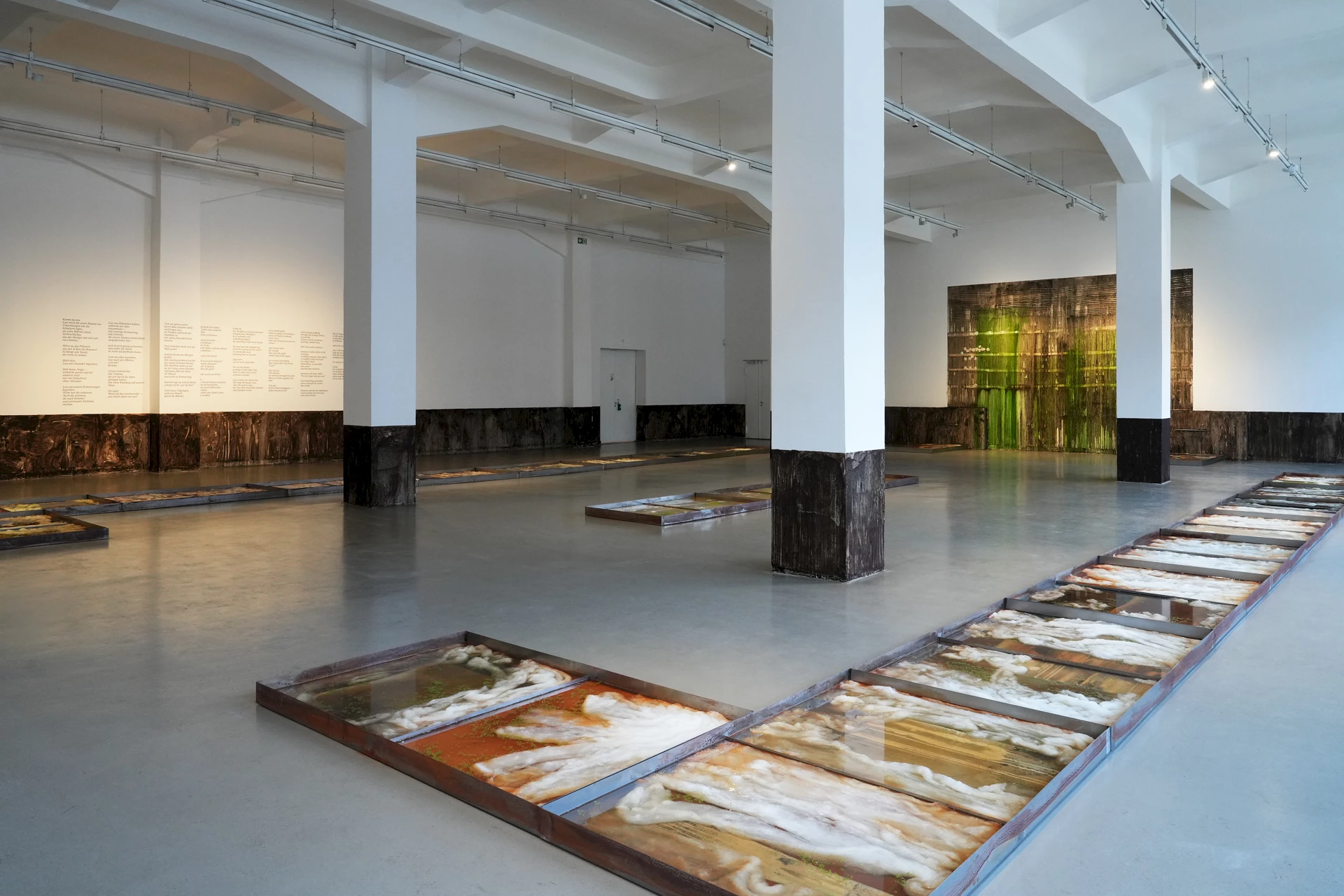
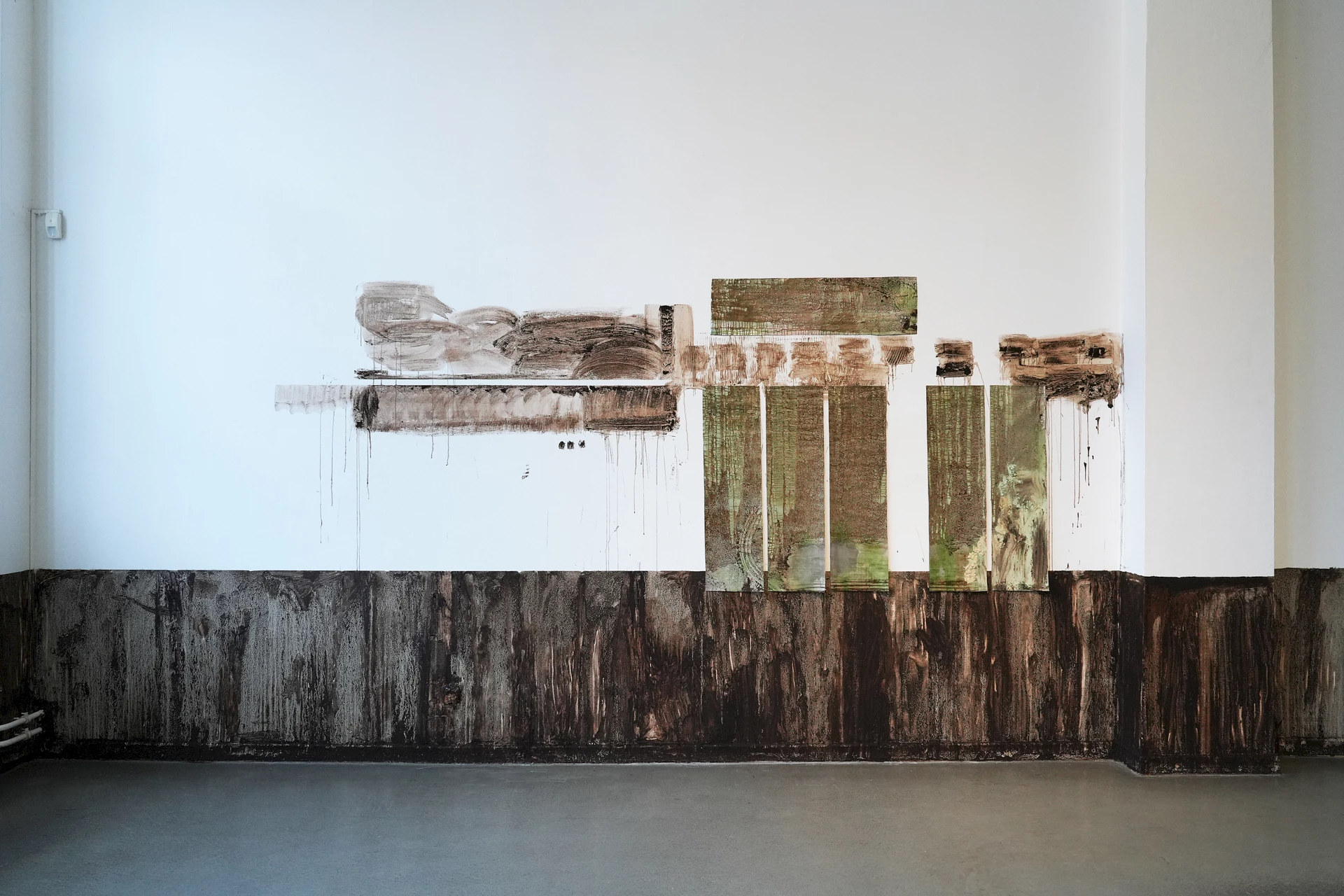
This transformation extends to the exhibition’s spatial organization. Rather than functioning as a conventional display in which individual works are presented side by side, the main hall of Kunsthaus Hamburg is reconfigured as a unified installation structured around the idea of a garden. Paintings extend beyond the walls and onto the floor; traces made from coffee grounds stretch throughout the space; and plants grow at various points within the installation. Water flows down the walls, coming into contact with both the paintings and the floor, where it forms pools and small accumulations in certain areas. Bringing these elements together within a single composition, the installation transforms the exhibition space into an environment that evolves over time.
Melike Kara, Whispers, Installation view, Kunsthaus Hamburg-Hamburg, 2026, Photo: Jaewong Kim
Coffee grounds are among the most personal materials in this environment. Kara associates them with her grandmother’s tradition of Turkish coffee fortune-telling, incorporating an everyday familial practice into the exhibition’s material vocabulary. Yet the grounds function as more than a cultural reference. The traces they leave across the floor blur the boundaries between painting and architecture. By bringing the residue left behind after a cup of coffee into the exhibition space, Kara transforms an ordinary material from daily life into an integral component of the artwork.
The plants, meanwhile, make the installation’s relationship to time directly visible. Unlike a painting or photograph, which is encountered as a completed object, a plant embodies a different temporality through its ongoing growth and transformation. For this reason, the garden in Whispers is more than a spatial arrangement; it functions as a framework in which materials evolving at different rates encounter one another within the same environment. The stillness of ash, the fluidity of water, and the growth of plants bring different temporalities into coexistence within a shared space.
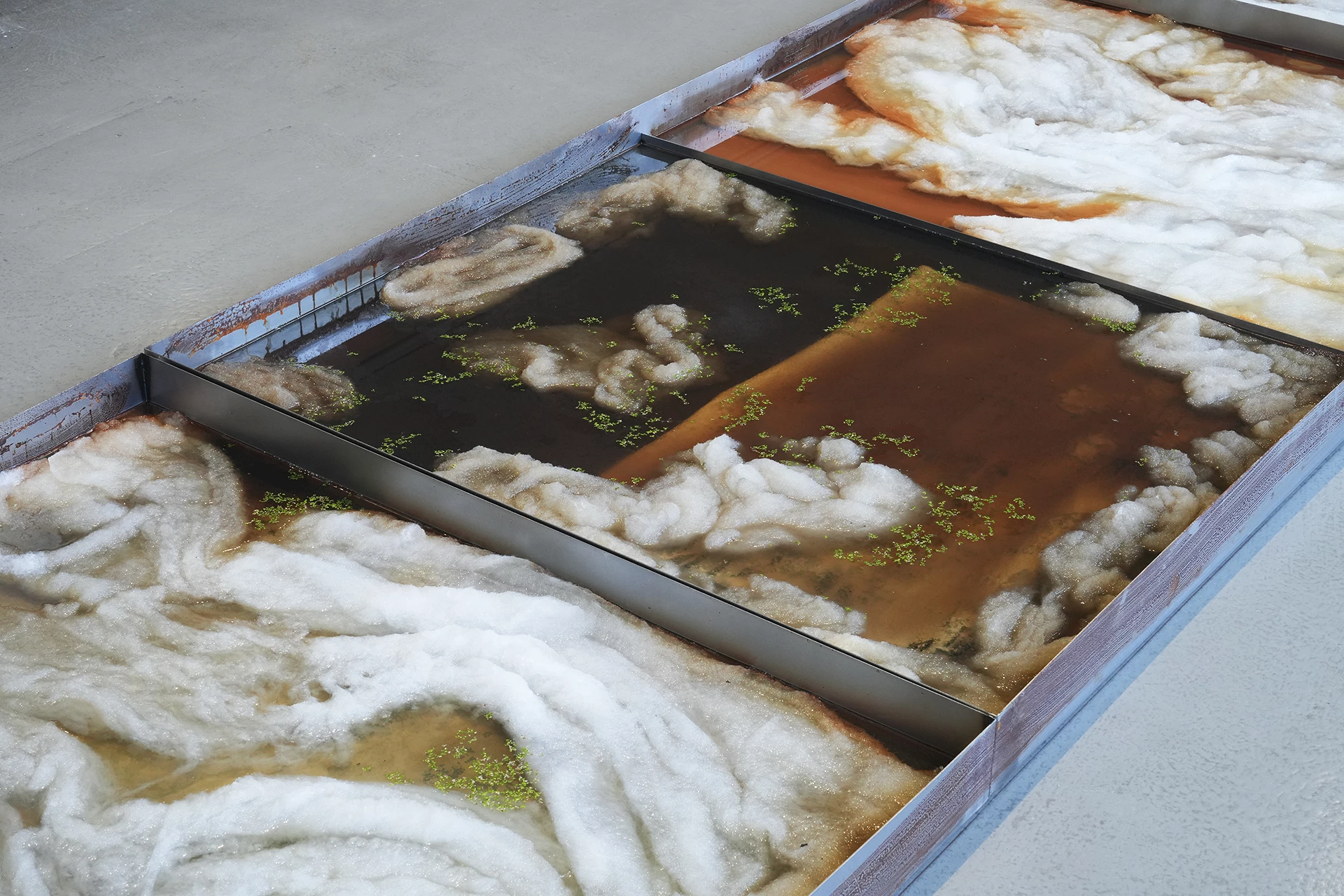
Melike Kara, Whispers, Installation view, Kunsthaus Hamburg-Hamburg, 2026, Photo: Jaewong Kim
Water forms the exhibition’s most dynamic element. Flowing down the walls and gathering in certain areas, it prevents the boundaries between paintings and floor surfaces from remaining fixed. At times clear, at others clouded, the water continually alters the perception of the space. Painting, in this context, exceeds the role of a surface simply to be viewed and becomes one through which water moves and interacts with surrounding materials. In doing so, the relationship between image and materiality—a central concern of Kara’s practice—extends into the exhibition space itself.
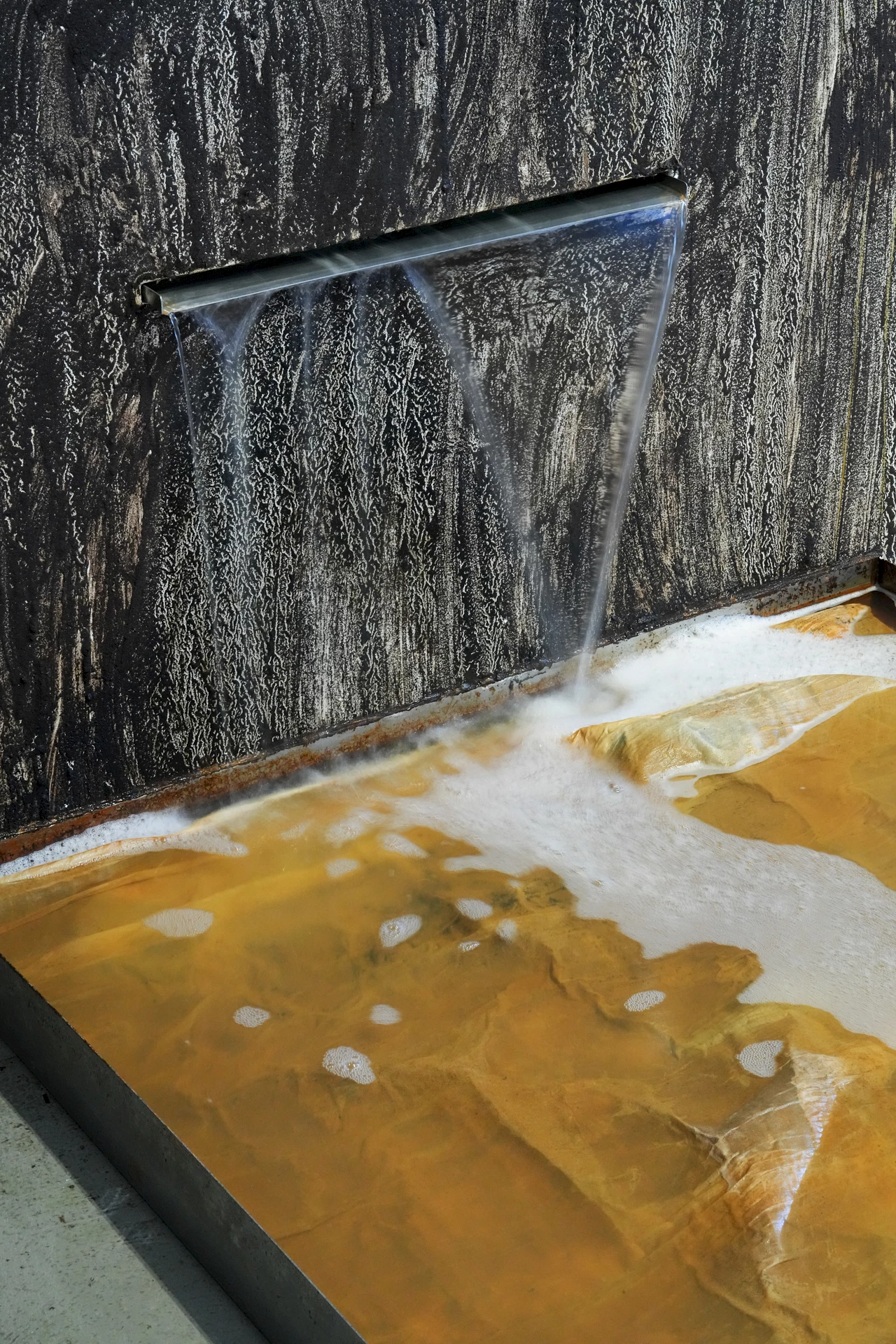
Melike Kara, Whispers, Installation view, Kunsthaus Hamburg-Hamburg, 2026, Photo: Jaewong Kim
At this point, fire and water emerge as two opposing yet complementary forces within the material logic of Whispers. Fire transforms the material basis of representation, turning the photograph from image into ash, while water continuously reshapes the space through its movement across surfaces. Together with the growth of plants and the residue left behind by coffee grounds, these elements transform the exhibition into an environment in which processes of formation and dissolution unfold simultaneously. The materials do not simply stand in for particular ideas; through their physical properties, they actively shape both the temporality of the exhibition and the viewer’s spatial experience.
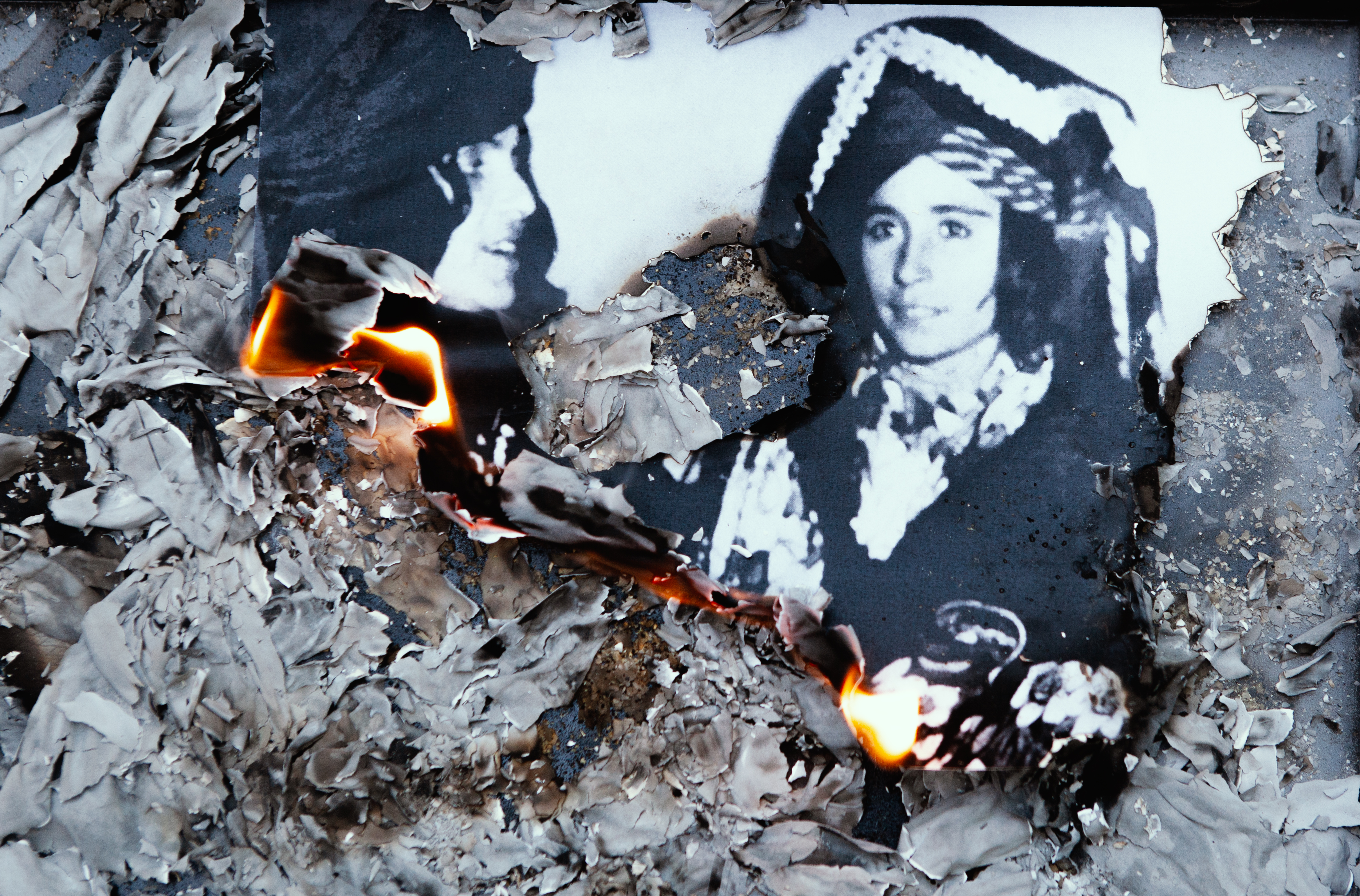
Photo: Studio photo, 2025 © Melike Kara, Photo: Şirin Şimşek
This material structure does not locate Whispers’ relationship to Kurdish heritage in direct cultural symbols; rather, it invites reflection on processes of transmission and transformation. The shift of coffee grounds from a familial practice into an exhibition material, the transformation of photographs from images into ash, and the archive’s integration into a spatial installation all suggest that cultural heritage is not a fixed entity passed down unchanged. Rather than being transmitted to successive generations in the same form, a tradition, an image, or a family archive can enter new contexts and take on new material forms with each act of transmission.
For this reason, questions of identity and belonging are explored not through the direct representation of specific images but through these processes of transformation. While Kara’s personal and cultural background remains a clear point of reference, Whispers does not turn it into a fixed or complete narrative of identity. Instead, the exhibition encourages reflection on how heritage is carried forward, which elements are preserved, which are transformed, and how they acquire new meanings in different contexts. It is here that the exhibition’s connection to the 9th Triennale der Photographie Hamburg’s theme, “Alliance, Infinity, Love – In the Face of the Other,” becomes particularly apparent. Beginning with a personal archive, the installation presents cultural belonging not as a closed and immutable category but as a relational field continually reshaped through encounters and transformations.

Melike Kara, Whispers, Installation view, Kunsthaus Hamburg-Hamburg, 2026, Photo: Jaewong Kim
Whispers thus constructs a framework that begins with a photographic archive yet extends far beyond photography itself. Images become ash, paintings spread across floors and walls, coffee grounds are carried from everyday life into the exhibition space, water moves between surfaces, and plants continue to grow over time. It is here that Kara’s most significant transformation takes place: the archive ceases to function as a collection that simply preserves the past and becomes instead a living environment in which different materials, temporalities, and experiences meet and coexist.
Melike Kara in her Köln studio, 2018.
Melike Kara (*1985, Bensberg, DE) is an artist working across various media with a particular focus on painting. In her practice, she engages with questions of perception, materiality and transformation in the interplay between image and space. In addition to painting, Kara works with fragments of photography, organic materials and installation-based arrangements, assembled into multi-layered, spatial constellations. She studied under Rosmarie Trockel at the Düsseldorf Art Academy. Her works have been exhibited internationally, among at Yuz Museum, Shanghai (2018); Wiels Contemporary Art Centre, Brussels (2020); Kunstverein Göttingen (2020); Kölnischer Kunstverein, Cologne (2021); Carnegie Museum of Art, Pittsburgh (2022); Kunst Halle Sankt Gallen (2023); Kunstverein für die Rheinlande und Westfalen Düsseldorf, Düsseldorf (2023); Museum De Fundatie, Zwolle (2023); Philara Foundation, Düsseldorf (2023) as well as Schirn Kunsthalle, Frankfurt (2024).She lives and works in Cologne.


Comments
00