
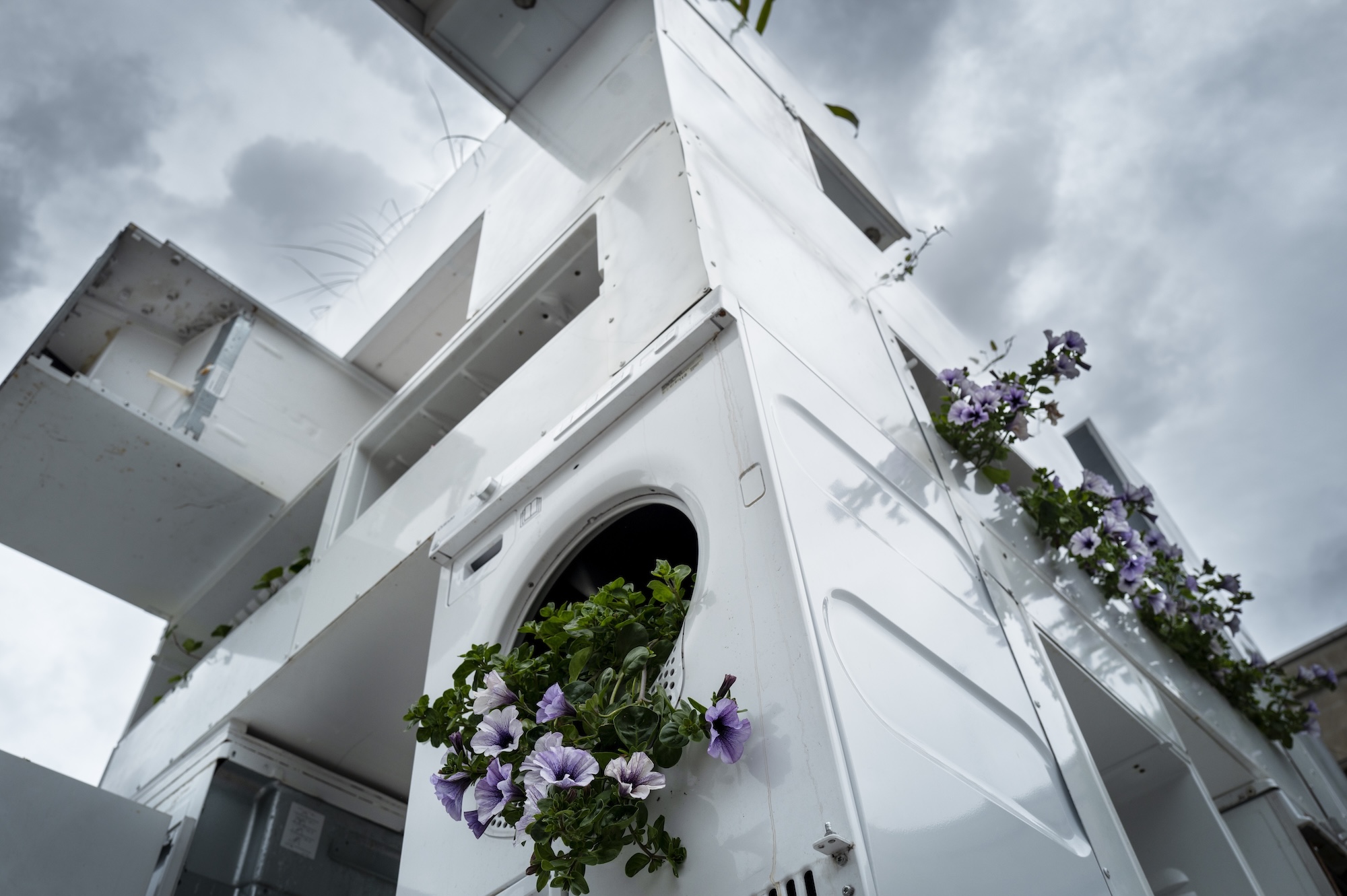
OpenART, the international contemporary public art biennial held in Örebro, Sweden, brings together more than 30 artists presenting works across the city’s public spaces in its 2026 edition. Running from June 13 to September 6, 2026, OpenART 2026 transforms Örebro’s squares, parks, streets, and other urban sites into platforms for contemporary artistic interventions. Among the participants is Germany-based contemporary Kurdish artist Bahzad Sulaiman, whose project The Garden of Fragments was developed in Örebro through the residency program collaboration between Magic Carpets and OpenART.
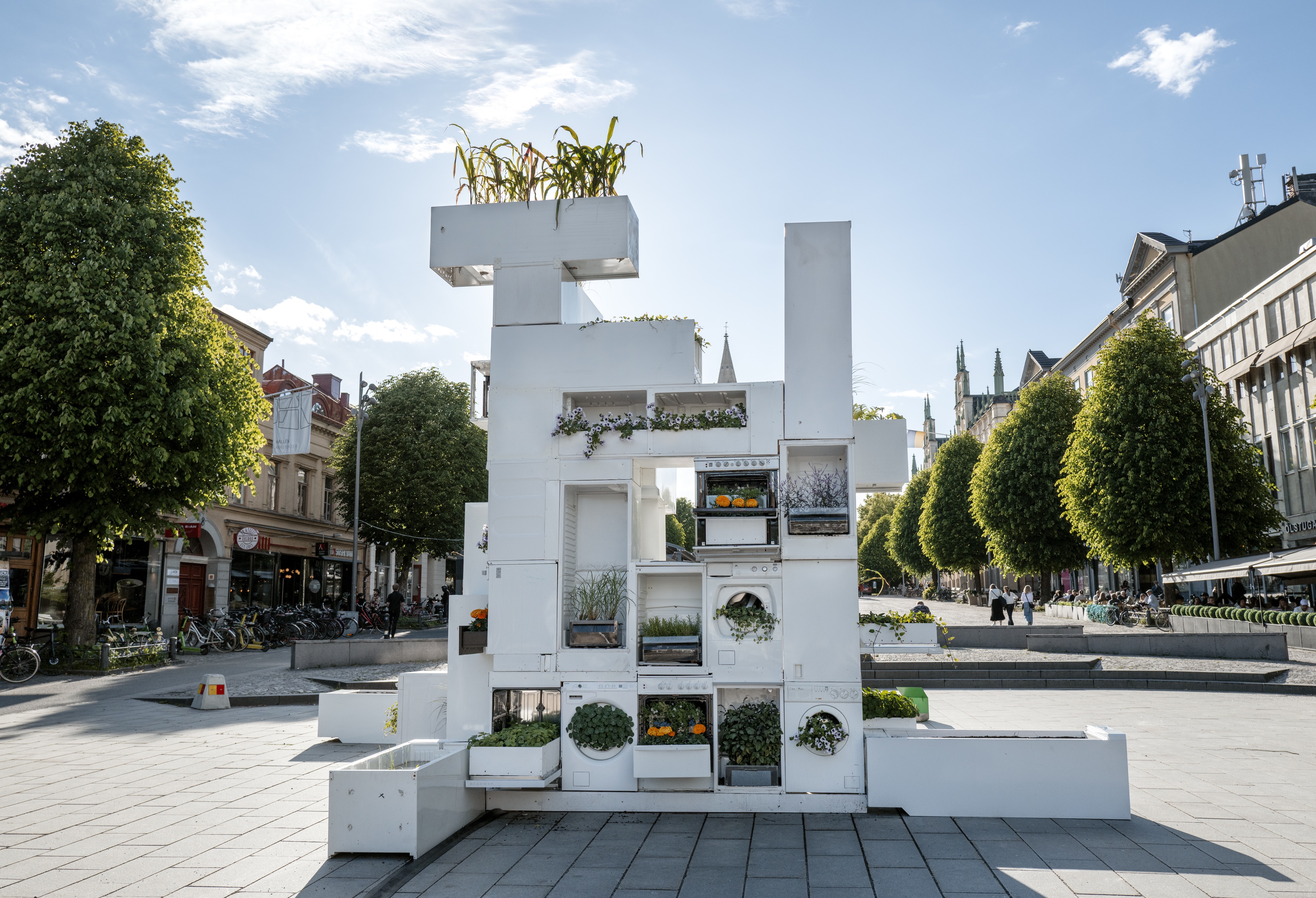 The Garden Of Fragments Bahzad SULAIMAN VG Bild Kunst, Bonn 2026 ©Sofie Isaksson
Born in 1991 in Rmelan, in northeastern Syria, and based in Germany since 2016, Bahzad Sulaiman works across visual art, performance, and installation. He began his artistic training at the Intermediate Institute of Applied Arts before studying sculpture at the University of Fine Arts in Damascus. He later continued his exploration of the relationships between space, movement, and the body through studies in scenography at the Higher Institute of Dramatic Arts in Damascus. In 2019, he completed his Master's degree in Performance and Installation at the Hochschule der Bildenden Künste Saar in Saarbrücken. This multidisciplinary educational background has played a key role in shaping his practice, through which sculpture is understood as an expanded field engaging with the body, space, and time. Through everyday objects, performances, and site-specific installations, Sulaiman explores questions of memory, identity, ecology, and displacement.
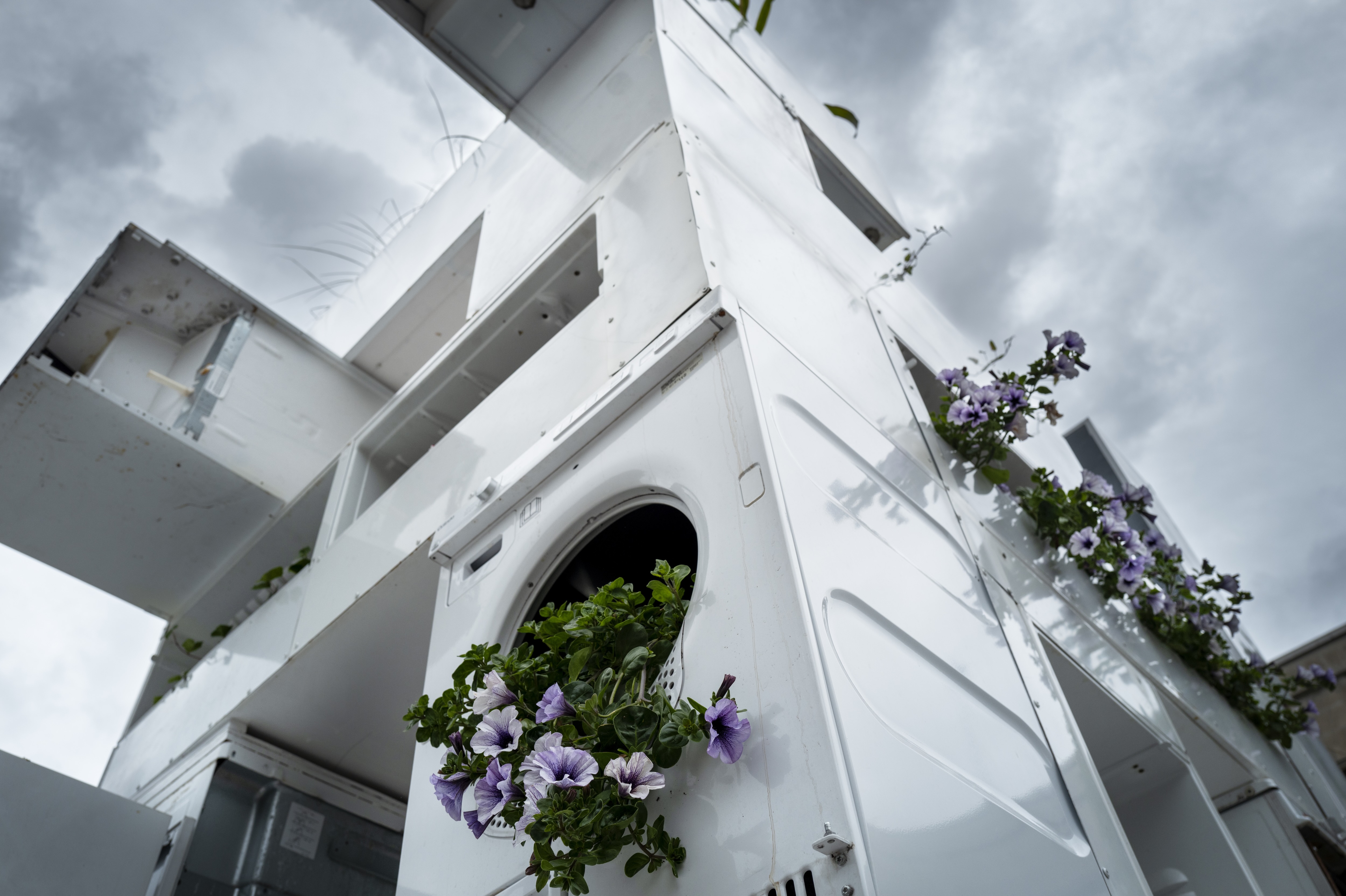 The Garden Of Fragments Bahzad SULAIMAN VG Bild Kunst, Bonn 2026 ©Sofie Isaksson
In The Garden of Fragments, presented as part of OpenArt 2026, Sulaiman creates a public installation by bringing together plants and discarded household appliances such as refrigerators, stoves, and washing machines. Situated in Örebro’s Stortorget Square, the work continues the artist’s ongoing interest in recontextualizing everyday objects, an approach that has also characterized his earlier practice. During a performance on June 14, visitors participated in the making of the installation by planting greenery into the structure alongside the artist. In this sense, the project resonates with OpenArt’s understanding of public space as a site of encounter, participation, and collective production between artwork and audience.
Sulaiman’s installation The Garden of Fragments revisits the Hanging Gardens of Babylon and the legend of Princess Semiramis through the lens of contemporary public art. Here, however, the garden becomes a material expression of the tensions between human intervention, consumer culture, and ecological transformation. Conceived as a large-scale public installation, the work combines plants with discarded domestic appliances such as refrigerators, stoves, and washing machines. One of its conceptual points of departure is the transformation of these objects into waste once they have reached the end of their functional lifespan. Detached from their original purposes and reassembled into a new configuration, the appliances form a structure in which technology and nature become intertwined, with vegetation emerging from within them. As noted in the Magic Carpets project text, this encounter brings together apparent oppositions such as “waste and life” and “technology and nature,” opening up a space for reflection on reuse, regeneration, and broader processes of social transformation.
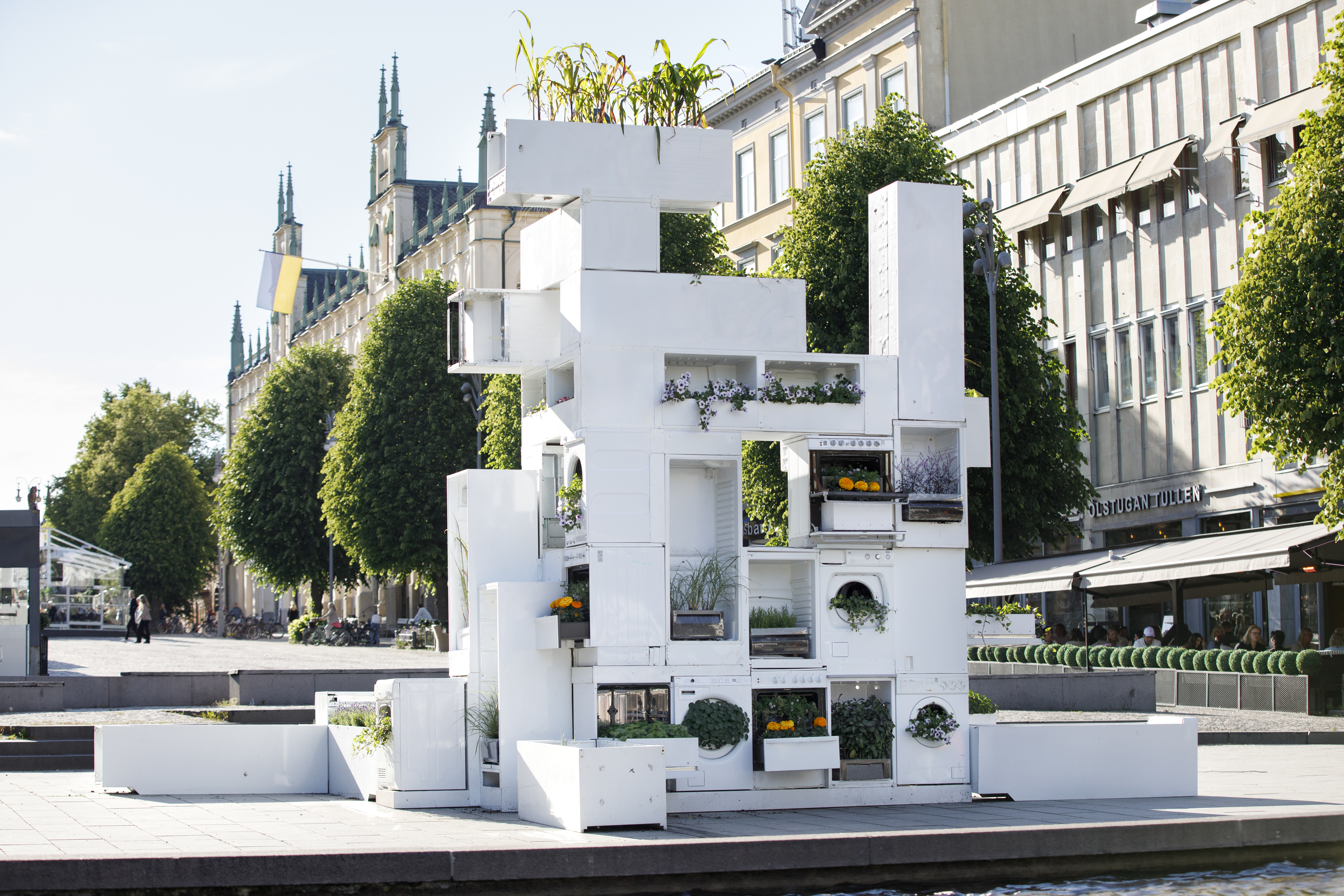
The Garden Of Fragments Bahzad SULAIMAN VG Bild Kunst, Bonn 2026 ©Sofie Isaksson
This transformation makes visible the mnemonic value that Sulaiman attributes to everyday household objects. The artist approaches domestic appliances not merely through their practical functions, but as silent witnesses to lived experience and as forms of material archive. His approach suggests that objects carrying the traces of care, consumption, daily routines, and personal memory continue to maintain a relationship with life even after they have fallen out of use. During the community-based activities developed as part of the Magic Carpets residency in Örebro, this relationship was explored particularly through the refrigerator. Sulaiman considers the refrigerator a carrier of domestic memory, drawing attention to the photographs, school timetables, unpaid bills, and other everyday traces attached to its surface that transform it into a small archive of personal life. In the final phase of the residency, participants from the Ung Arena community placed their own photographs, notes, and creative works inside a discarded household appliance, allowing the object to be reactivated as a vessel for both personal and collective memory.
This context brings the relationship between objects and life in The Garden of Fragments into sharper focus. Composed of discarded refrigerators, washing machines, and stoves, the installation is not simply an exercise in transforming waste into art; rather, it proposes a reconsideration of the material remnants of everyday life. By displacing these objects from their status as obsolete technological devices, Sulaiman turns them into material agents through which to reflect on memory, consumption, and social transformation. The plants emerging from their cracks and openings reconnect these remnants with living processes, bringing together apparent oppositions such as technology and nature, consumption and regeneration, and waste and life within a single interconnected structure.
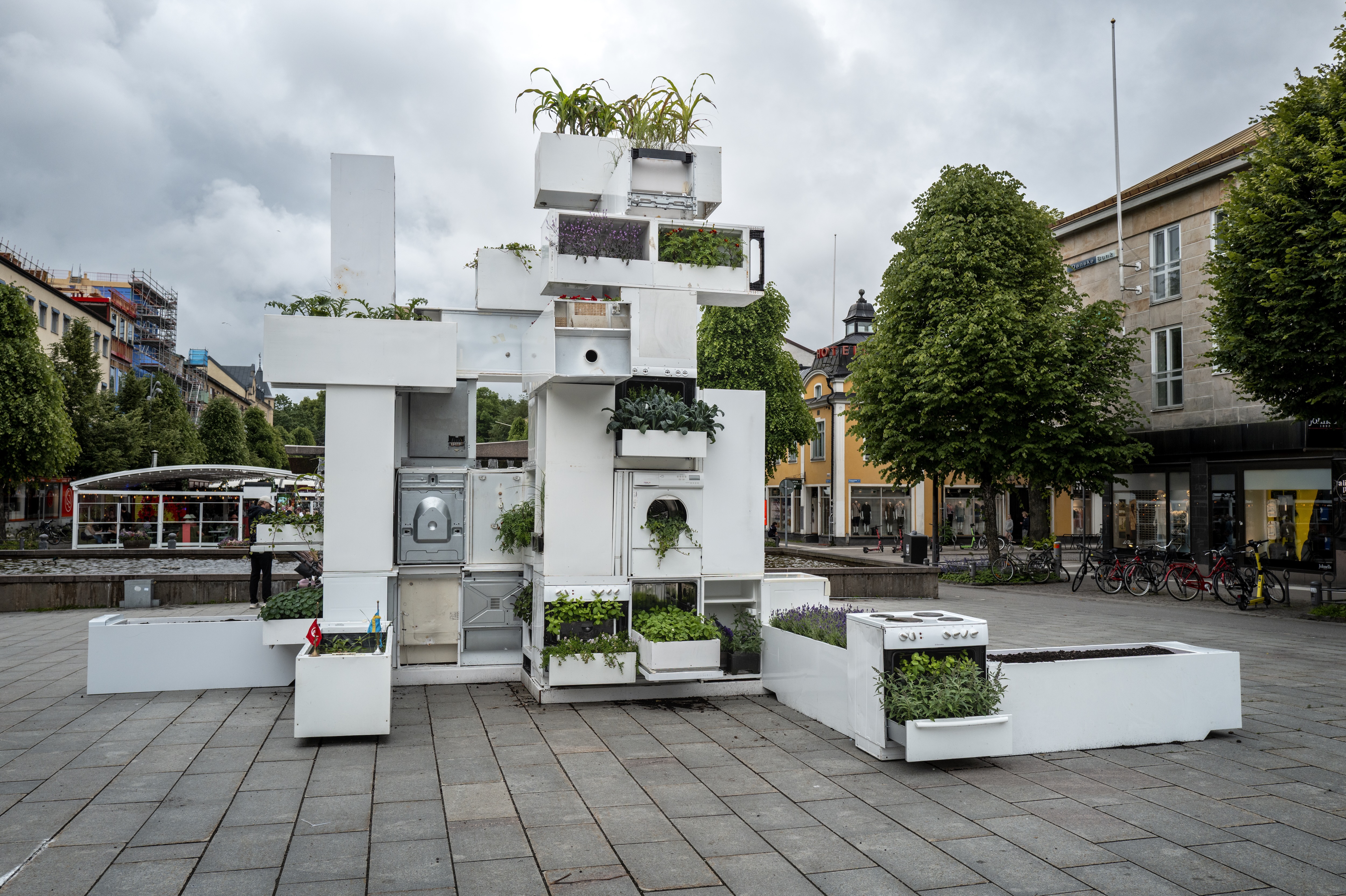
The Garden Of Fragments Bahzad SULAIMAN VG Bild Kunst, Bonn 2026 ©Sofie Isaksson
Therefore, the garden itself can be understood as a continuously evolving structure composed of discarded household appliances. As plants emerge through openings and cracks in the metal shells, new forms of life take root within objects that have outlived their original function. Nature here is not presented as a pure force opposed to technology; rather, it resurfaces from within a material environment that has been produced, used, and abandoned by human beings. The tension between “function” and “failure,” a recurring concern in Sulaiman’s practice, becomes particularly visible in this context: the moment an object ceases to fulfill its intended purpose also marks the beginning of new meanings and possibilities of use.
In this respect, The Garden of Fragments is closely connected to Sulaiman’s broader artistic practice, which engages with questions of personal and collective memory, forced displacement, and belonging. As the artist relates his work to experiences of memory, displacement, and transformation, the installation can be understood within the same framework of uprooting and the search for belonging that informs much of his practice. The gathering of discarded household appliances in Örebro and their transformation into a new living environment through plant life operates as a reflection on ecological reuse, as well as on the possibility of bringing fragmented elements together within a new context. The garden emerges here not as a preserved image of the past, but as a space in which what has been fragmented can be reorganized into new forms of connection and coexistence. This approach also resonates with Sulaiman’s understanding of art as a space for “listening”: he invites viewers to reconsider the stories carried by discarded objects, bodies, and the invisible social systems that shape everyday life.
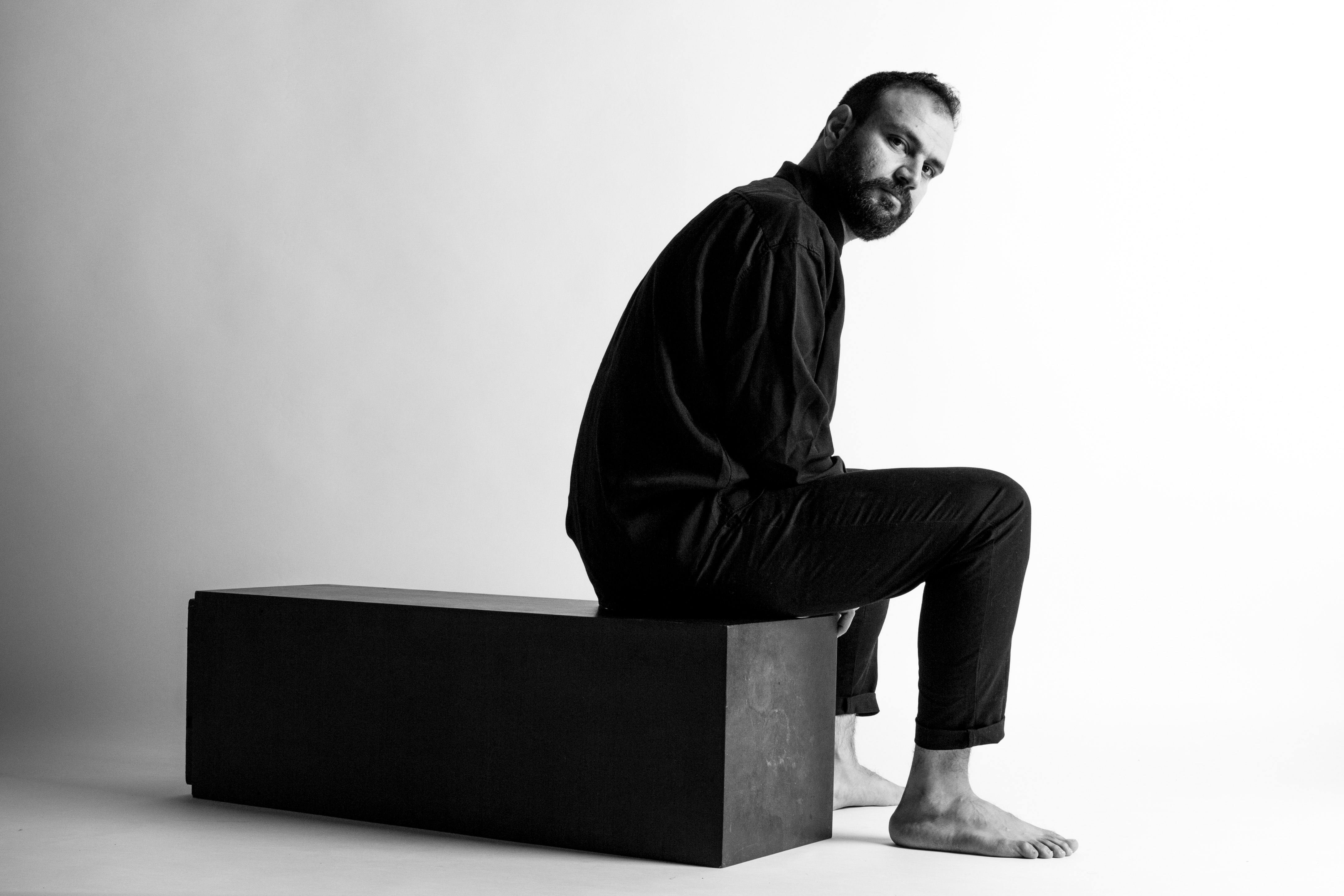 Photo credit: © Christoph Holz
Bahzad Sulaiman (*1991) is a Kurdish-Syrian artist living and working in Germany. His interdisciplinary practice explores sculpture as an expanded field, examining the relationships between body, object, sound, and space. Through a critical engagement with systems of consumption and material culture, his work addresses questions of identity, memory, technological infrastructures, and ecological transformation.
Working across visual art, performance, and installation, Sulaiman reimagines sculpture beyond the realm of static objects. He conceives of the human body as a kinetic sculpture and approaches domestic appliances as sculptural archives that carry traces of time, use, and human presence. Through processes of transformation, these objects are reactivated as material and spatial carriers of memory and perception.
In recent years, he has expanded his sculptural language to incorporate immaterial elements such as light and sound. In collaboration with composers, he integrates acoustic components, including operatic voice, into sculptural environments. These immaterial elements destabilize fixed forms, creating immersive installations and performances in which sculpture becomes a temporal and embodied experience.
Sulaiman first studied at the Intermediate Institute of Applied Arts before pursuing sculpture at the University of Fine Arts in Damascus. Seeking to further investigate spatial dynamics and the relationship between moving bodies and built environments, he continued his studies in scenography at the Higher Institute of Dramatic Arts in Damascus. In 2019, he completed his Master's degree in Performance and Installation at the Hochschule der Bildenden Künste Saar in Saarbrücken, Germany.
From 2021 to 2022, he was a member of the European Network of Opera Academies (enoa) at the Festival d’Aix-en-Provence, where he was mentored by director Peter Sellars. In 2022, he participated in the International Forum of the Berliner Festspiele Theatertreffen and received the Cultural Award of the Regionalverband Saarbrücken. From 2023 to 2025, he was a fellow of Akademie Musiktheater heute in the field of directing.
Sulaiman has participated in numerous residency and funding programmes, including Art Omi Residency (New York, USA), Schloss Wiepersdorf Residency (Germany), Bijloke Residency, Boghossian Foundation – Villa Empain and DOLERS Residency (Belgium), Kultur Ensemble Art Residency (Italy), Magic Carpets Art Residency (Sweden), OASiS Art Residency (Hungary), 7THEX Artistic Residency(Portugal, Italy, and Germany), Fonds Darstellende Künste (Germany), Stiftung Kunstfonds (Germany), Look Up Residency (UK and Germany), Akademie der Künste (Germany), and the LIBERTY Creative Europe Programme (UK).
His interdisciplinary works have been presented at Saarlandmuseum – Moderne Galerie, Kunsthalle Mannheim (Germany), the Centre for International Light Art in Unna, the EVI LIGHTS Light Art Biennial (Germany), the public art biennial OpenART (Sweden), Festival d’Aix-en-Provence (France), the LUNA Light Art Festival (the Netherlands), Esponja Cultural House in São Paulo (Brazil), Museum Friedland (Germany), Journeys Festival International (UK), Penticton Art Gallery (Canada), SPARTE4 at Saarländisches Staatstheater (Germany), and Österreichisches Freilichtmuseum Stübing (Austria), as well as at venues and festivals across Belgium, Italy, the United States, Portugal, Lithuania, Bulgaria, Spain, Syria and Turkey.

info@firezz.com

Comments
00