
Cinema’s Three-Scene Regime: Aesthetic Appearance, Phenomenal Transition, and Epistemic Depth
The Three-Stage Regime argument, if briefly outlined, is an aesthetic interpretive framework I have been developing over the past year. It is an attempt to rethink and rearticulate the relationship between aesthetics and politics in fields such as painting, sculpture, photography, video, installation, and cinema, through the relations between the viewer, form, image, and space. The first stage consists of aesthetic elements. The second stage is composed of the phenomenal trajectory. The third stage corresponds to the level at which thought is transformed into a form of knowledge. In the monograph on Bahram Hajou that I co-authored with Mahsum Çiçek, I developed an extensive section on these three stages and analyzed Hajou’s works within this framework.
The conceptual infrastructure of the Three-Stage Regime emerges from the intersection of multiple intellectual moments. Among its key references are Jacques Rancière’s concept of the “distribution of the sensible” and Nicolai Hartmann’s phenomenological theory of aesthetic “strata.” However, my engagement with Rancière is both affirmative and critically divergent. The first point of divergence concerns dialectics. In Rancière, there is no classical notion of dialectics. The subject emerges through dissensus, and political subjectivation operates through this rupture. In my framework, however, the subject is already there; it is continuously drawn into a (pathetic) dialectic by authority and ultimately directed in a phenomenological manner. From this condition, the subject achieves a political rupture. For the artist, by contrast, rupture occurs through autonomous image and episteme. The second and more decisive divergence is the following: in Rancière’s “distribution of the sensible,” perception is not phenomenological in the classical sense. The perceptual field within the distribution of the sensible is a priori allocated by the police order. For this reason, Rancière conceives art and politics as operations that divide and reconfigure this distribution. My inclusion of thinkers such as Hartmann, Husserl, and Merleau-Ponty within this stage regime stems from the need to reconstruct, in theoretical terms, the perceptual condition that emerges when the subject—in the classical phenomenological sense—directs itself toward the aesthetic object. This phenomenological orientation has, within the aesthetic domain, a viewer dimension that I call “symptomatic vision.” Drawing on Althusser’s concept of “symptomatic reading,” this refers to a mode of perceptual reading in which the viewer uncovers the layered structure of the artwork, replacing hermeneutic interpretation with a phenomenological regime of seeing. At the level of artistic production, there is the artist’s dimension. Here the structure I call “pathetic dialectics” comes into play. This structure designates the point at which authority constructs the intentionality of the Other (Kurdish) artist. Authority invariably directs other artists toward a preordained image, concept, or object. In short, there exists a phenomenological condition in which the artist realizes an intentional orientation toward the artwork, guiding the spectator toward the artistic object. Alongside this, however, there is another phenomenological reality: authority or power itself realizes an intentional orientation toward the artist, directing them toward its own project.
The point at which politics, in the Rancièrian sense, is suspended—or even collapses—lies precisely within this pathetic dialectical construction generated by intentionality. The intentionality of power draws the artist into a reality and framework predetermined by authority, and rather than establishing their own orientation, the artist operates within this imposed horizon. Yet this field of movement often appears, especially to other artists, as a site of political production. In reality, however, the route of consciousness and appearance has already been mapped out in advance. What one is to approach, how one is to approach it, and under what conditions this approach is to occur have already been determined. For this reason, the result is not political but pathetic. Politicality does not consist in the sensational display of radical images—for example, the exhibition of a flag as a provocative symbol. Rather, politicality emerges through the disruption of the regime of meaning anticipated by authority, a disruption enacted through the rupture of autonomous images. Consequently, other artists frequently fail to produce or even recognize the autonomous image, and the rupture never takes place. What is particularly striking is that productions positioned within this framework are often designated by the artistic consensus as “political art.” Yet, much like Rancière’s critique of the founding of politics in Ancient Greece, it is possible to argue that a similar misconstitution is repeated within the field of art itself in the case of other artists, and especially among Kurdish artists. What is presented as political often remains confined within a preconfigured regime of visibility and intelligibility, where the coordinates of appearance have already been established by power itself.
At the same time, the Kantian notion of “common sense” (sensus communis) and Rancière’s concept of the “distribution of the sensible” constitute a particularly important and foundational reference for me. I draw on Rancière’s trajectory toward the “sharing of the sensible,” and ultimately consider the regime of the sensible as a determining factor in aesthetics; however, I pursue this line through different tools and methods than Rancière himself. Ultimately, the “Three-Stage Regime” rejects the fundamental assumption of representational art. Representation, in this sense, constructs thought as a meaning already given within the image, reducing aesthetic experience not to the production of new knowledge but to the recognition of an already existing meaning. For this reason, it often reproduces existing meanings, legitimizes them, and serves the continuation of established hierarchical orders, thereby limiting the egalitarian possibilities that aesthetic experience could open. In contrast to this, the Three-Stage Regime argues that thought is not represented but produced through the movement between aesthetic appearance, phenomenal transition, and epistemic depth. This critique is not limited to aesthetic representation; it also interrogates ethical and political forms of representation. Ethical and political representation often fix the subject, the community, identity, or thought within pre-established meanings, thereby closing off their experiential and historical openness. The Three-Stage Regime, by contrast, understands the subject, society, and thought not as represented objects, but as processes continually reconstituted within the relations between appearance, transition, and depth. Thus, the Three-Stage Regime is a critical practice that, across aesthetic, ethical, and political domains, opposes the stabilizing logic of representation and instead affirms the multiplicity of experience, the openness of the subject, and the unfinished horizon of thought. I will now explain the cinematic adaptation of this argument.
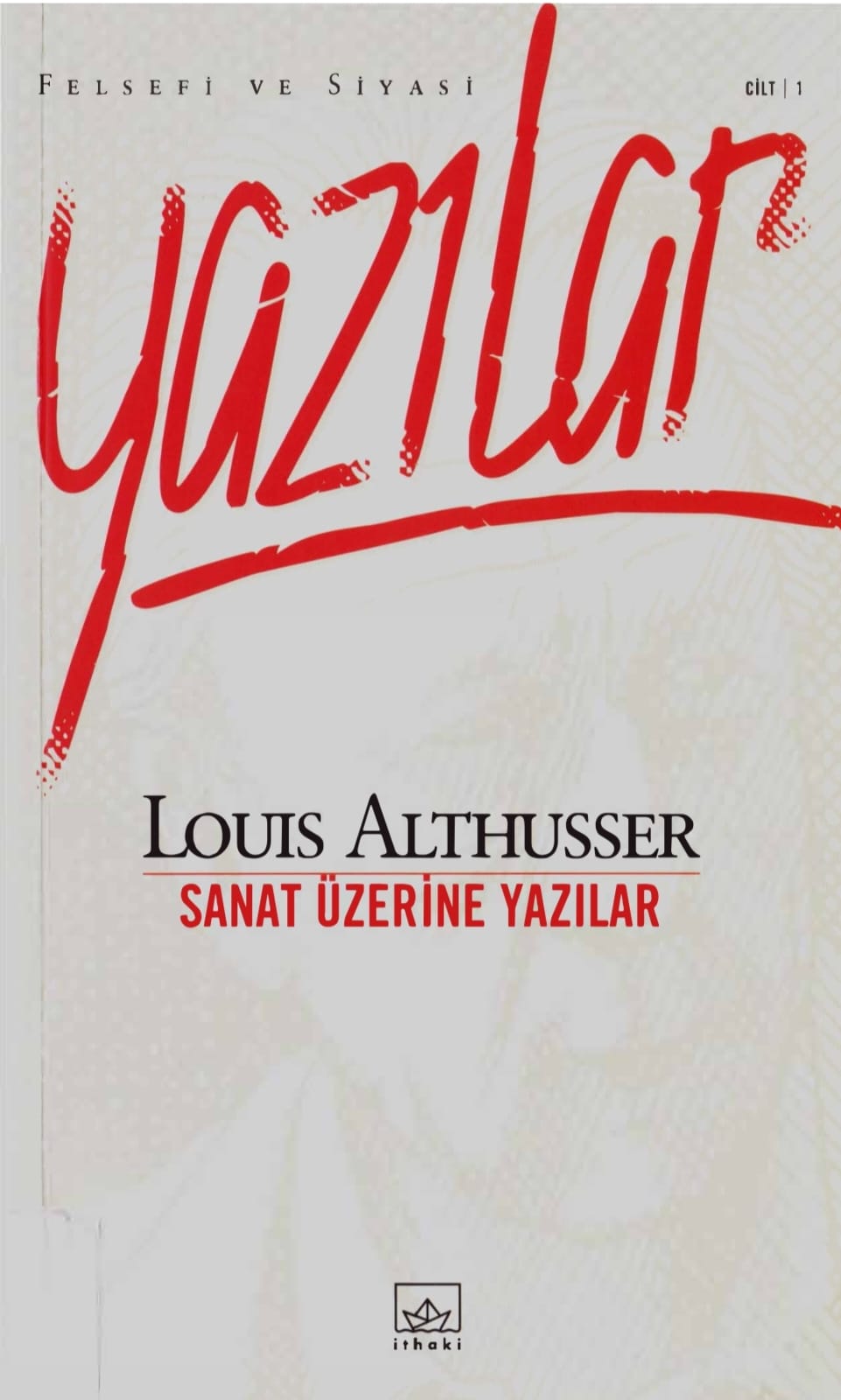
To conceive of cinema in the classical sense merely as a sequential arrangement of moving images is to narrow both its aesthetic and epistemic capacities. At its most fundamental level, cinema is more than a technique for producing images; it is a staging practice that organizes how visibility is constituted, what is rendered visible and what is excluded, and through which stages knowledge emerges within this regime of visibility. The notion of knowledge at stake here corresponds to the form of knowledge that Louis Althusser attributes specifically to art. More precisely, it refers to the artistic form of knowledge identified by Althusser—one that differs from scientific knowledge while maintaining a distinctive relationship with it. In Essays on Art, Althusser argues that a genuine work of art does not provide knowledge in the strict sense and therefore cannot replace scientific knowledge in the modern understanding of the term. Nevertheless, he emphasizes that what art offers stands in a special relation to knowledge. For Althusser, what art provides is different from knowledge, yet not opposed to it. Artistic knowledge is not a positivist or conceptual form of knowledge such as Newton’s law of gravitation or Talcott Parsons’s theory of functional integration. Indeed, such positivist forms of knowledge were never what Althusser had in mind. Rather, the knowledge specific to art is a distinctive mode of experience that enables us to see, perceive, and feel; that refers us back to reality; that places us in relation to the texture of objective life; and that allows us to conceptualize the real order of the social world at both theoretical and practical levels. For this reason, cinema should not be approached merely as a narrative apparatus or a system of visual representation. Rather, it must be understood as a broader mode of thought that organizes the very act of seeing itself.
Everything that appears before us in a film and is presented to our gaze—the choice of framing, the position of the camera, the direction of light, the rhythm of movement, the abruptness or continuity of editing—is not merely a matter of technical preference. These elements are components of a particular regime of seeing and understanding. Cinema should not be reduced solely to what it shows. More fundamentally, it produces meaning through how it shows. For the mode of presentation directly shapes the mode through which meaning itself is produced. The difference between holding a shot for an extended duration and cutting it rapidly can confer entirely different epistemic values upon the same event. In other words, as in many artistic disciplines, cinema does not simply transmit knowledge; it actively shapes and configures it.
In this context, through the argument of the “Three-Scene Regime,” I seek to develop a cinematographic visor—a conceptual framework for understanding the layered structure of the cinematic gaze. Rather than reducing cinema to a single plane of representation, this threefold structure aims to interpret it through three interconnected layers of visibility and thought. These layers should not be understood as fixed domains separated by rigid boundaries. On the contrary, they constantly overlap, infiltrate one another, shift positions, and transform each other within the cinematic experience. A scene can simultaneously function as a sensory surface, as part of a temporal flow, and as a field of conceptual associations. For this reason, the Three-Scene Regime does not regard cinema merely as a linear progression of narrative or as a purely visual aesthetic experience. Instead, it approaches cinema—as Jacques Rancière suggests—as a space in which the relationship between what is visible and what is thinkable is continuously reconfigured. The image here is not a fixed content but a dynamic surface that constantly intervenes in the production of meaning. Movement, in a Deleuzian sense, is the organizational force that disperses, cuts, and reconnects this surface through time. Knowledge, in turn, emerges within this distribution not as a fixed conclusion but as a mode of relation that is continually deferred and reconstituted.
In this respect, cinema—particularly within this framework—is not merely the “sum of what is seen.” Rather, it should be understood as a staging regime in which seeing, thinking, and meaning are intertwined and, in Alva Noë’s terms, generate a form of “enactment.” Within this regime, each film establishes its own order of visibility, and each configuration simultaneously carries an implicit or allegorical proposition about what can be known and how it can be known. For this reason, to think cinema requires not only thinking films themselves, but also thinking together the conditions of seeing and knowing that they produce. It is precisely this general line of thought that I develop through the framework of the Three-Scene Regime:
I. First Scene: Raw Form of the Image and Cinematic Emergence
The First Scene refers to the most fundamental level of visibility in cinema, where the image has not yet been attached to narration, character construction, or a conceptual framework. At this stage, the film does not appear on the screen through what it “tells.” Instead, it operates at a much more primordial level, through what it shows and how it appears. The image has not yet become part of a story. More precisely, the film has not yet been integrated into a chain of meaning. What we encounter here is not a completed representation, but rather the most primary and raw form of emergence itself. At this level, cinema produces a kind of sensory intensity before it conveys meaning. Elements such as light, framing, surface, depth, rhythm, movement, and color appear as perceptual events in their own right, before being subordinated to narrative function. For example, a face held in a static long take or an empty space presented to the viewer without any dramatic event does not yet produce psychological explanation, nor is it tied to a character’s inner world or to a narrative structure. Such images carry the weight of visibility itself before representing meaning. For this reason, the First Scene is often simply defined as an “aesthetic surface” in cinema, and is frequently overlooked or even dismissed. Yet this surface is not the absence of depth; on the contrary, it is the very ground upon which depth becomes possible. For every narrative, every character, and every dramatic structure is first constituted at this level of visibility. To call the image “raw” does not mean it is unprocessed or insignificant; rather, it indicates that it has not yet been enclosed or stabilized within any discursive framework. Because of this openness, the First Scene is one of the most fragile yet also most intense layers of cinematic experience. Here, the image functions not as the representation of something, but as a form of being that asserts itself directly.
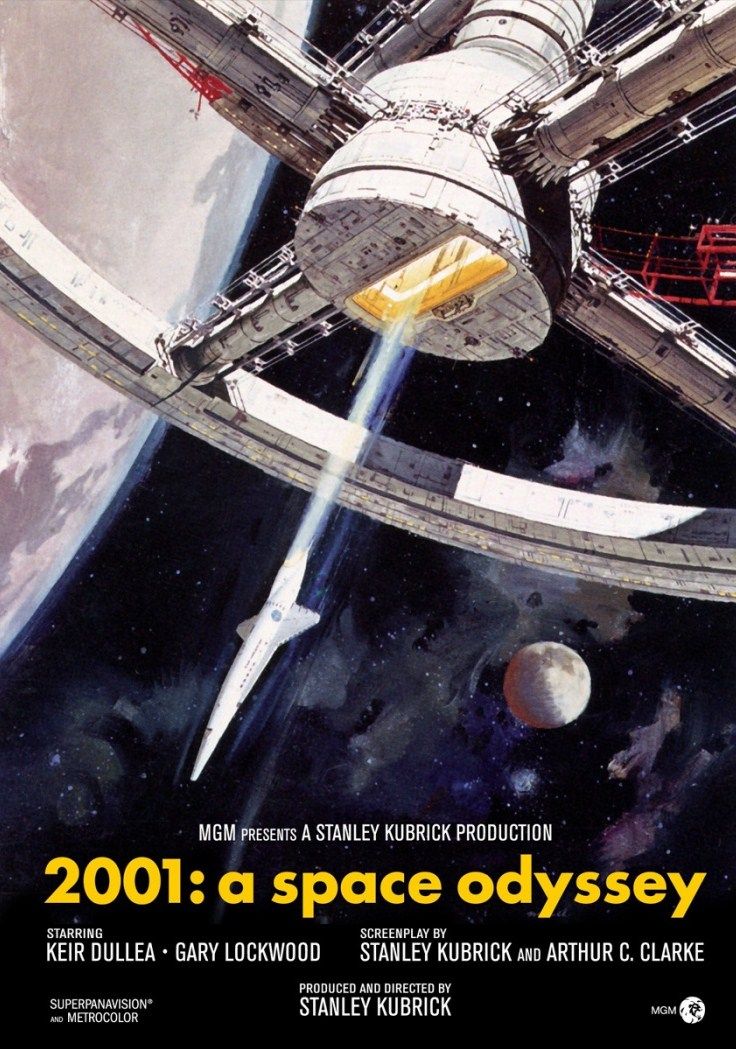
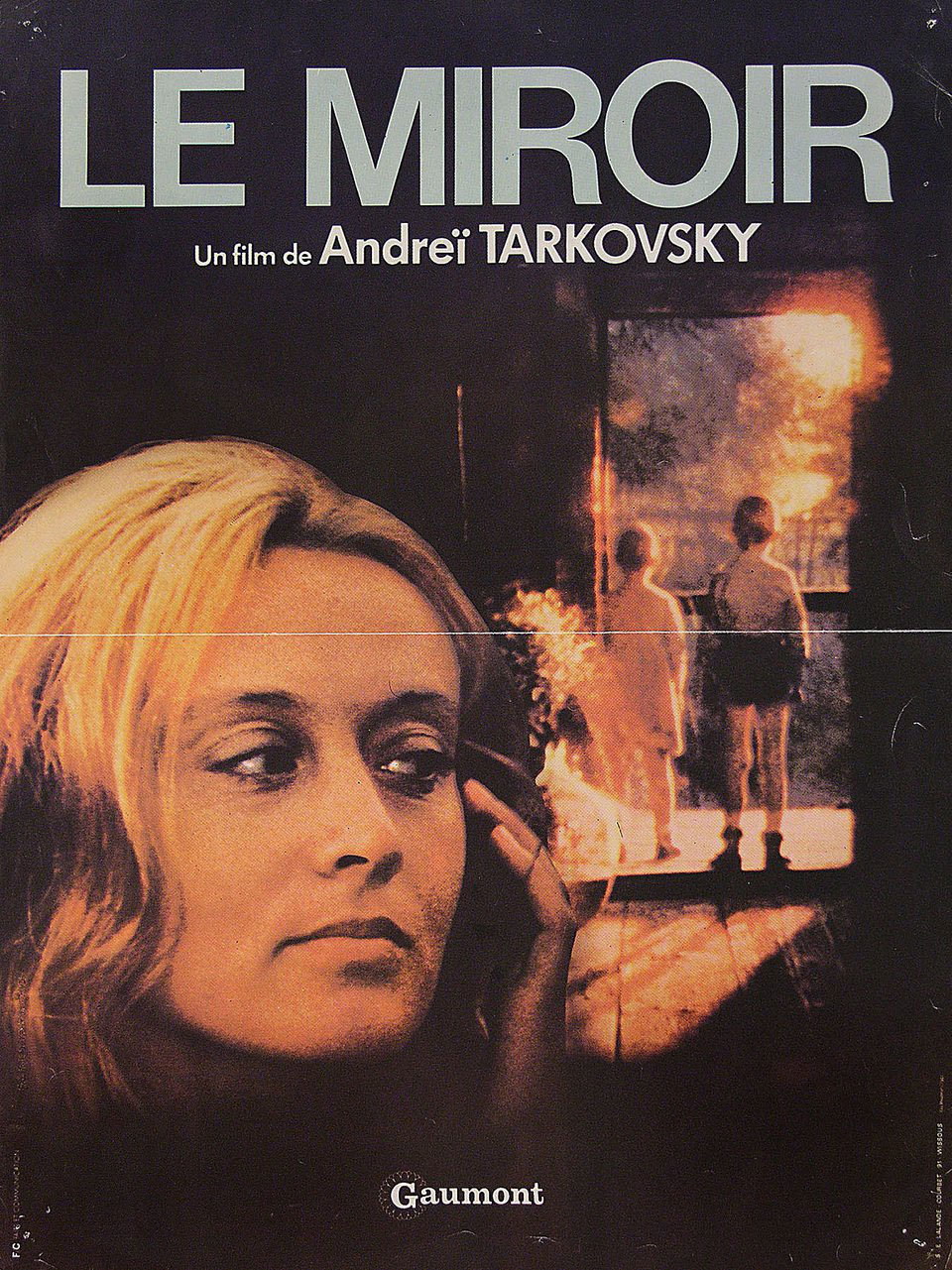
The camera does not frame an object in order to “tell” it; it frames it in order to include it within the regime of the visible. However, this regime of visibility is still an indeterminate visibility, one whose meaning has not yet been stabilized and remains unknown. In this sense, the viewer at this level encounters the image itself more than they follow a story. This encounter produces a pause that precedes interpretation. Meaning has not yet been organized, yet the sensory field is already activated. This intensity becomes particularly evident in modern and experimental cinematic practices. For instance, Stanley Kubrick’s 2001: A Space Odyssey and Andrei Tarkovsky’s The Mirror are two important examples in this regard. In these films, long takes, minimal movement, static framing, or narrative-stripped empty spaces push the narrative into the background and foreground the image’s own presence. Here, cinema does more than produce a story; it reorganizes the act of seeing itself. The viewer no longer asks “what will happen?” but instead is confronted with a more fundamental question: “what am I looking at?” In this respect, the First Scene allows us to think cinema in its state prior to becoming “film” in the conventional sense. What we call a film here is not a completed structure but a field of visibility in formation. However, this field is not a neutral ground onto which meaning is later added; rather, it is an active configuration that determines the conditions under which meaning becomes possible. The First Scene thus transforms cinema from a system of representation into a field of sensory encounter. This encounter is not limited to the viewer’s following of a story; it also enables an experience of seeing itself. The image here does not carry a message; it produces an experience. And this experience constitutes the first moment upon which all other scenes of cinema are built.
II. Second Scene: Movement, Transition, and Phenomenal Configuration
The second scene constitutes the most defining and dynamic field of cinema: it describes a space-time regime continuously reorganized by the movement between sequences, transitions, cuts, and montage. If the first scene refers to the image’s own presence—its raw and not yet signified appearance—the second scene activates this appearance, fragments it, re-links it, and transforms it into a flow oscillating between continuity and rupture. Here, the image is no longer a singular and closed surface; it becomes a structure dispersed across interconnected temporal fragments, different points of view, and discontinuous units of perception. In this plane, the fundamental operation of cinema is montage.
However, montage should not be understood merely as a technical process of assembly. From a Rancièrian perspective, the juxtaposition of two images does not simply produce a sequential act of montage. Montage opens an invisible field between existing images. This field belongs neither entirely to the first image nor to the second; nor is it a simple synthesis or fusion of the two. On the contrary, it is a zone of intellectual and sensory intensity that emerges in the distance between two images, something that cannot be directly represented yet is nonetheless perceptible. The true power of montage lies here: it connects images while simultaneously separating them; it produces meaning while also deferring it. Moreover, for Rancière, montage in cinema is not merely a technical operation of combining images but an aesthetic operation that reorganizes the “distribution of the sensible.” Montage does not fix meaning at a single center; rather, it redistributes the relations between images, opening up plural possibilities of meaning. In this context, Rancière interprets Sergei Eisenstein’s films as a form of dialectical montage, in which dialectics ultimately establishes a hierarchy. Eisenstein, indeed, aims to produce a determinate thought and political meaning from the conflict and opposition of images. However, Rancière critically approaches dialectical montage’s tendency to direct the opposition between images toward a predetermined synthesis and to reduce the distance between them to a single meaning. For him, what matters is that the interval between images remains open, and that meaning is always opened up within this interval through the active participation of the viewer, toward multiple interpretive possibilities.
In this respect, the second scene transforms cinema from a representational system into a phenomenal apparatus that reconstructs perception itself. Images are no longer arranged in sequence merely to “show” something. Instead, they produce a rhythm that continuously re-establishes the viewer’s mode of seeing. Every cut is not just a transition but a restart of perception. This restart removes the viewer from the position of a passive observer and turns them into a perceptual subject that is constantly repositioned. In this scene, the viewer no longer simply sees; they are compelled to continually reconstruct their mode of seeing. Cinema, here, does not offer a fixed point of view. The movement of the camera, shifts in framing, abrupt transitions between episodes, or slow flows all continuously disrupt and reconfigure the viewer’s perceptual stability. This disruption is not a deficiency; it is the very mode of cinema’s production. Seeing ceases to be a natural faculty and becomes an experience that is learned, reorganized, and constantly tested. The linearity of time is distinctly fractured at this level. A scene that follows another is not merely what comes “after”; it sometimes reprocesses the meaning of the preceding scene, and at other times completely abstracts it. Spaces are fragmented: for instance, there is no longer a direct continuity between the inside and outside of a room, between a street and memory, or between a face and the narrative structure. This fragmentation removes cinema from being a simple copy of reality and turns it into a field of experience that is continuously reconstituted. For this reason, the second scene renders cinema not merely as a producer of narrative, but as a plane that investigates experience itself. The film does not simply tell a story; it also experiments with the conditions under which a story can emerge. Alongside following events, the viewer experiences how events become perceptible in the first place. This turns cinema into an art form that operates not only at the level of content but directly at the structural level of perception. Ultimately, the second scene defines cinema as an art of flow; however, this flow is not a smooth or continuous progression. It is a fragile regime of organization operating through cuts, gaps, and re-articulations—in other words, a form of structuration. This fragility constitutes cinema’s fundamental power: it transforms the image from a stable bearer of meaning into a continuously reconstituted event of perception.
III. The Third Scene: Epistemic Depth and Allegorical Reading
The third scene is the plane in which cinema ceases to be merely a sensory or temporal experience and instead acquires a conceptual, political, and intellectual intensity. If the first scene refers to the raw emergence of the image, and the second scene to the transformation of this emergence into flow through movement and montage, then the third scene is the stage in which this flow is no longer only seen, but also thought, analyzed, and reconstructed. At this level, the image ceases to be a self-sufficient surface. It becomes a threshold for interpretation, reading, and conceptual expansion. In this phase, the film transcends the boundaries of its internal events and opens onto a broader field of meaning. Characters are no longer merely carriers of a story, spaces are no longer simply units of staging, and events are no longer perceived solely as dramatic developments. All these elements are displaced beyond their immediate contexts and rendered readable within social, historical, ideological, or existential registers. A face is no longer just a face; a body is no longer just a body; a space is no longer just a space. Each becomes a multi-layered field of meaning production within the cinematic experience. However, what is critical at this point is that the third scene should not be understood as the discovery of a “deep meaning.” Cinema here does not offer a hermeneutic practice in which a hidden essence is revealed. On the contrary, it prevents the reduction of the image to a singular and closed meaning and attaches its multiple semantic potentials to the openness of the visible. Allegorical reading, therefore, is not an act of analysis but an act of multiplication. To conceive of the film as a structure representing a single truth is to limit its expansive language. A film is, rather, a field of meaning multiplicity in which different perspectives are simultaneously possible. In this sense, cinema acquires an epistemic function. However, this function is not based on instructional or didactic transmission of knowledge. Cinema does not direct the viewer toward a specific conclusion, a fixed interpretation, or a closed semantic totality. Instead, it renders visible the conditions under which knowledge is produced, distributed, and continually deferred. In other words, cinema does not present a truth; it exposes the conditions of the production of truth. This displaces it from being a scientific tool of information in the classical sense—such as the one indicated by Althusser—and transforms it into a field of intellectual experience. Within this framework, the third scene reconstructs cinema as a practice of interpretation. The viewer no longer merely sees or follows. The viewer also reads, establishes connections, produces associations, and moves between different layers of meaning. However, this process of reading is never unidirectional. Every interpretation opens onto another interpretation, and every meaning leaves another meaning in suspension. Cinema, here, operates not as a closing structure, but as an opening one.
Transitions Between Scenes and the Politics of Cinema
From the perspective of the Three-Scene Regime, cinema does not consist of three strictly separated layers divided by clear boundaries. These scenes operate instead as layers that continuously infiltrate one another, transform one another, and at times overlap within the cinematic experience. The sensory intensity of the first scene transforms into a temporal flow in the second scene, and this flow is re-conceptualized in the third scene, opening onto a conceptual and intellectual framework. However, this process does not unfold in a linear progression; it returns, fractures, and begins again. For this reason, cinema is not a unidirectional narrative system, but rather a transitional regime that constantly oscillates between aesthetic and epistemic layers. A film does not exist solely through what it narrates; it gains meaning through how it moves between these layers. This mobility also directly determines cinema’s political dimension. For cinema does not merely organize what is visible. In Rancièrian terms, it also constructs what can be seen, which modes of looking are considered possible, and which forms of perception are recognized as legitimate. At this point, a parallel reading with Jacques Rancière’s concept of the “distribution of the sensible” becomes possible. Cinema is not only a field of content production; it is also a regime that reveals how the sensory world is divided, shared, and redistributed. Questions such as which bodies become visible, which lives are included in narration, and which spaces are centered or marginalized directly define the political aesthetics of cinema. In this sense, cinema is not political because it directly represents politics, but because it reconfigures the conditions of visibility and perception. The image here is not a neutral carrier but itself a mechanism of distribution. What is shown is as politically significant as how it is shown, and especially what is excluded is one of the most critical dimensions inherent to this decision. Therefore, the Three-Scene Regime does not present cinema merely as an aesthetic form. It grounds it as a field in which ways of seeing, thinking, and knowing are continuously reconfigured, spreading perception onto a horizontal plane.
Conclusion: Cinema is not a Representation, but a Dense Field of Tension Between Scenes
Within the framework of the three-stage regime, cinema points to a structure that is far more complex than a classical narrative form, a mere carrier of story, or simply a system of visual representation. In this sense, cinema should be understood as a field of tension that extends from the aesthetic level to the epistemological level, and even continuously transforms these two domains into one another. For cinema is neither merely the organization of the visible nor solely the transmission of meaning. It is a dynamic staging regime in which the relationship between what is visible and what is thinkable is constantly reconfigured. Within this regime, the image is not a closed unit carrying a fixed content. On the contrary, the image is a surface of experience that is continuously reconstructed, reconnected, and re-signified. A film frame does not merely show the objects within it; it also determines how those objects will be seen, in what context they will be read, and within what sense of time they will be perceived. Thus, the image ceases to be a passive instrument of representation and becomes an active production of thought and perception. Cinema, precisely for this reason, is an art that continuously renders visible the difference between “what is shown” and “how it is shown,” placing this difference at the very center of the visible.
The three-stage regime, at this point, does not treat cinema as a fixed structure but offers a way of reading it as three different layers of visibility that are in constant contact with one another. In the first stage, the image is still in a raw and immediate state of appearance; in the second stage, this appearance is transformed into a temporal flow through movement, montage, and transitions; and in the third stage, this flow is elevated once again to a conceptual level, opening itself to processes of interpretation, reading, and conceptualization. However, these three stages are never completely separated from one another; rather, in any given film these layers operate simultaneously, interpenetrate, and interrupt one another.
For precisely this reason, cinema cannot be understood through a logic of linear progression. A scene does not only connect to the scene that follows it; it simultaneously recalls and re-signifies preceding scenes, while also structuring the possibilities of subsequent or future scenes from within the present. This reciprocal interaction turns cinema into an open field of thought rather than a closed chain of narrative. Within this open field, meaning is never fully stabilized; every viewing, every gaze, and every configuration brings with it a new potential for meaning. Thus, cinema is not an art form that can be grasped solely through the question “what does it tell?” This question is of course important, but insufficient on its own. For the real power of cinema lies less in the content of narration than in the regimes of visibility that construct the conditions of seeing and thinkability of that content. In other words, cinema is concerned not only with what is said, but with how what can be seen is rendered visible—and often the second determines the first. At this point, the central question to be asked is: “Into which scenes is the visible divided, and what kinds of knowledge, perception, and modes of thinking does this division make possible?” This question shows that cinema is not merely an aesthetic object, and also reveals its break from this domain. Moreover, it makes it necessary to consider cinema as a field of thought that reconstructs the conditions of seeing, knowing, and meaning-making. In this sense, cinema is political precisely to the extent that it renders these conditions visible; that is, it concerns not only what it shows, but also how it compels us to see. In conclusion, the three-stage regime removes cinema from being a system of representation and proposes instead that it be rethought as an experiential field that continuously produces tensions between scenes. This tension is not a weakness of cinema, but rather its fundamental productive force. In other words, this tension ultimately transforms the image from a carrier of fixed meaning into an event of seeing and thinking that is continuously reconstituted.
Footnote:
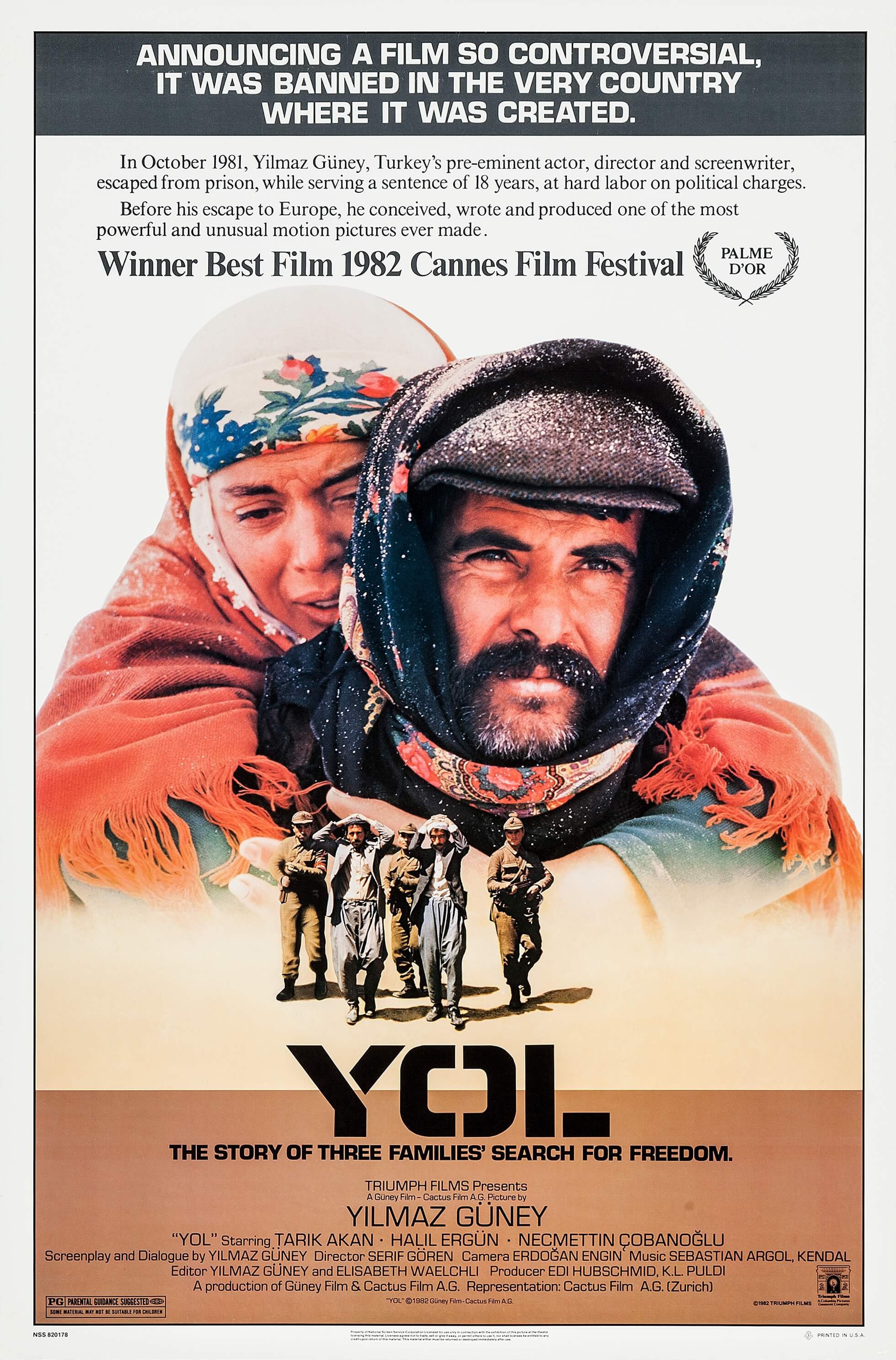
The “Three-Stage Regime” argument should not be understood as a universal model applicable to all cinematic examples. Rather, this regime becomes operative in specific cinematic structures that open from aesthetic appearance to phenomenal transition and from there to epistemic depth. In this sense, Theo Angelopoulos’s Landscape in the Mist, Andrei Tarkovsky’s Stalker, Terrence Malick’s The Tree of Life, and Yılmaz Güney’s The Road can be presented as strong examples in which the three stages are articulated and interconnected. In the next cinema dossier, I will attempt a detailed analysis of one of these films within the framework of the three-stage regime.


Comments
00