
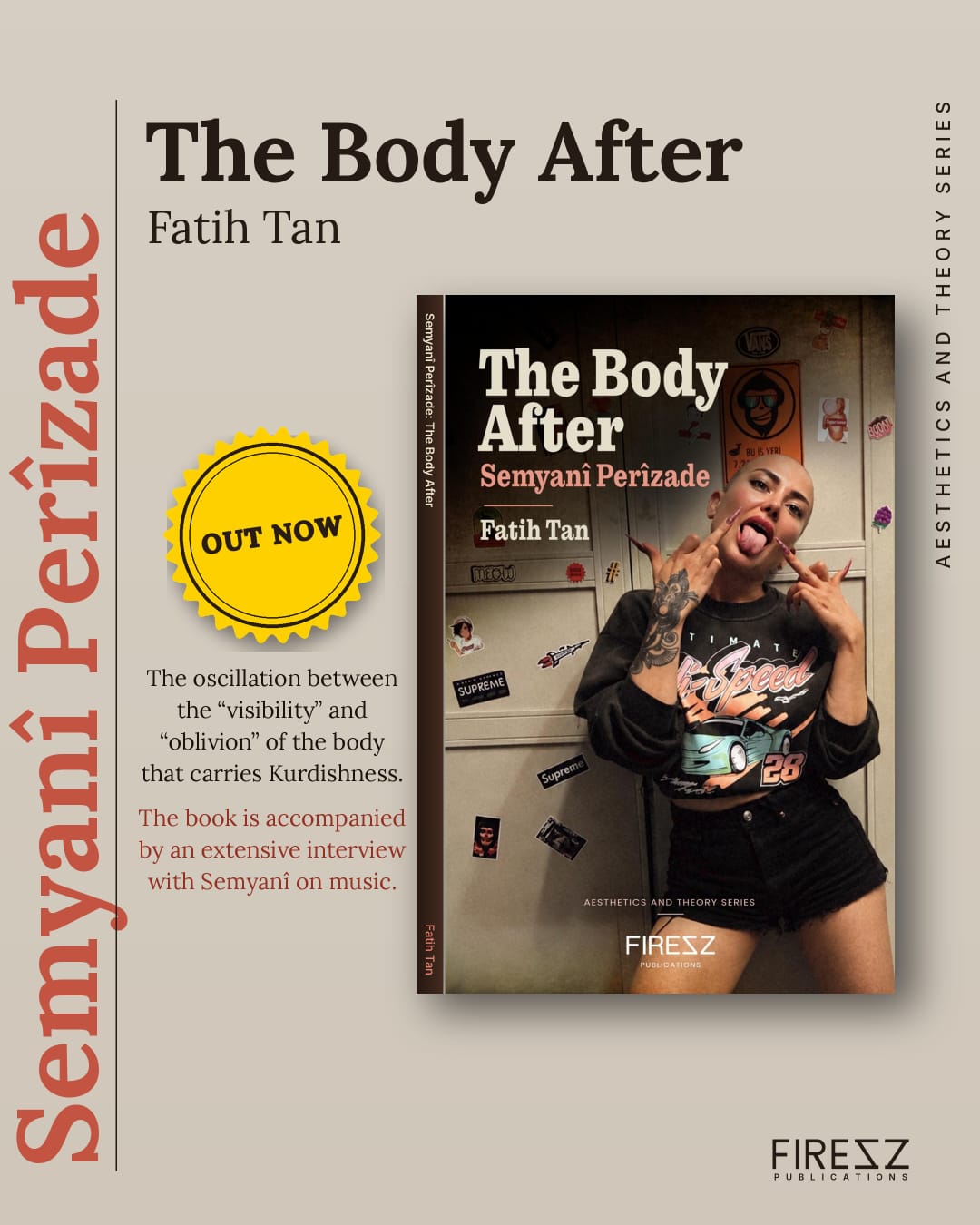
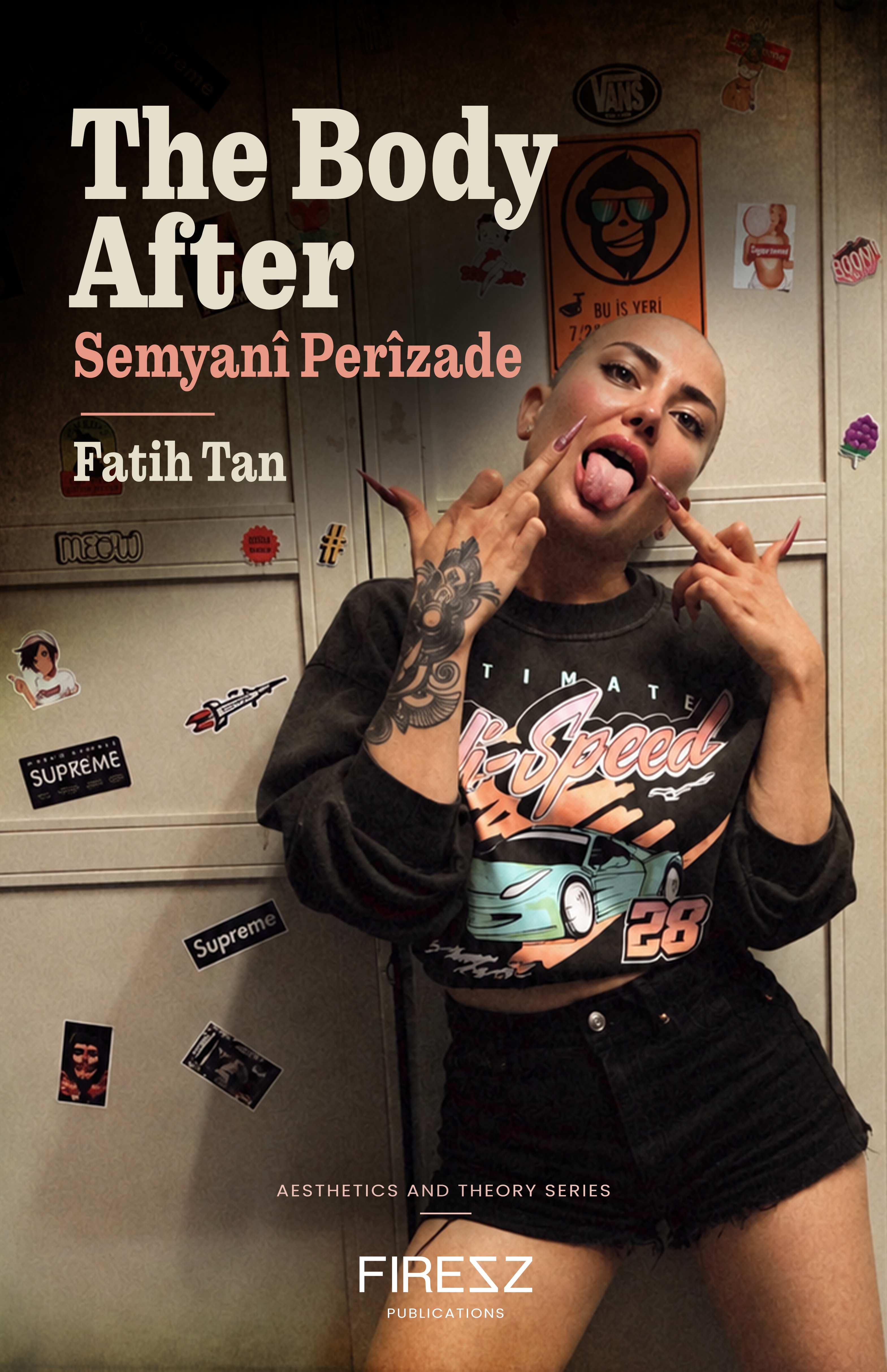
The Body After: Semyanî Perîzade
November 2026
333 pages
13 x 19,5 cm
Author: Fatih Tan
Translated by: Gülşah Akdoğan Tan
Language: English and Turkish
Turkish edition: Ertesi Beden: Semyanî Perîzade (303 pages)
Editors: Mahsum Çiçek, Kabil Çiçek
Cover and Book Design: Kabil Çiçek
Publisher: FIREZZ Publications, Aesthetics and Theory Series
Format: E-book PDF, EPUB free access
THE BODY AFTER: SEMYANÎ PERÎZADE PDF/ EPUB
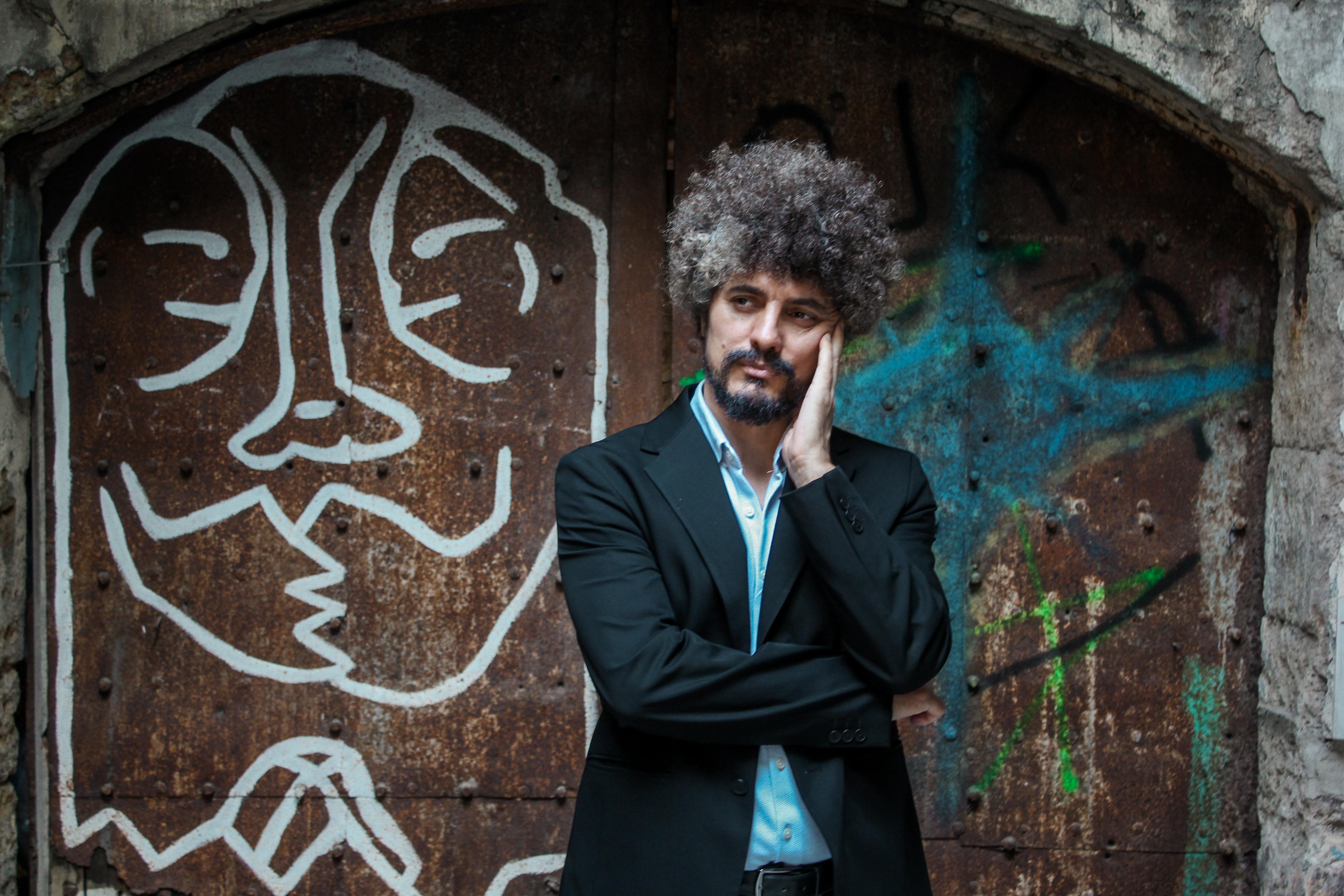
Let us begin with the book's most provocative statement: The body after makes us forget our own Kurdishness!
At first reading, this statement may seem radical and unsettling. The reader immediately asks: “What does it mean to say that the body after makes us forget our Kurdishness?” This reaction is a justified and rightful act of rebellion. Throughout history, the pedagogical and ideological apparatuses of the state have systematically sought to erase the visibility, value, and cultural continuity of Kurdishness.
How, then, can a body that speaks Kurdish, produces in Kurdish, and lives as Kurdish—in other words, Semyanî Perîzade—make us forget Kurdishness? How can it relocate its aesthetic function onto an invisible ground? The paradox emerges precisely here. The book's central argument is concealed within this seemingly contradictory question: How does the body after make Kurdishness forgotten in the very body that carries it most profoundly?
Drawing on a line of reading that runs from Rancière’s concept of dissensus to Duchamp’s Rrose Sélavy, from Bourdieu’s symbolic violence to Broodthaers’s Mallarmé installation, from Béla Tarr’s silence to Flaubert’s indifference, from Merleau-Ponty’s embodied subject to Blanchot’s dissolving subject, from Plato’s critique of mimesis to the invisible presences in Braudel’s background, from the Gauguin Museum to Amedspor, from Warhol’s Brillo Boxes to Manet’s Luncheon on the Grass, from Şivan Perwer’s iconography to Leyla Bedirxan’s modern dance, from Althusser’s epistemological break to Adorno’s negative dialectics, from Arthur Cravan’s boxing match to Greenberg’s notion of the medium, from the Bauhaus to the Venice Biennale, from the dengbêj tradition to contemporary Kurdish music, and from the concept of queer to Semyanî’s songs, Fatih Tan traces the terrain of “normalization” on which the oscillation between the “visibility” and the “forgetting” of the body that carries Kurdishness unfolds. The book is also accompanied by an extensive interview with Semyanî on music.
The book is available free of charge in both PDF and EPUB formats through FIREZZ Publications. The Turkish edition, titled Ertesi Beden: Semyanî Perîzade, can be accessed by selecting the Turkish language option on the website. (www.firezz.com).
About Fatih Tan
Between 2019 and 2023, he regularly wrote about Kurdish artistic production—including music, contemporary art, cinema, and literature—for Gazete Duvar. His writings have appeared in various publications and platforms, including T24, Kitap24, Kürd Araştırmaları Dergisi, Le Monde Diplomatique Kurdî, Zarema, Argonotlar, Mimesis, and the Felsefeciler Derneği. More recently, he has continued publishing articles focusing on Kurdish artistic production in Sanatatak magazine. Tan has also contributed texts to art catalogues, and some of his writings have been translated into French, Italian, and English.
In Unlimitedrag magazine, he published a series of essays titled “Unofficial Texts” (Kayıt Dışı Metinler), drawing on the works of Althusser, Artaud, Bataille, Beckett, Benjamin, Blanchot, Brecht, Breton, Debord, Genet, Kafka, Kandinsky, Klee, Klossowski, Sartre, and Tzara. In the same magazine, he also authored “Unofficial Murders” (Kayıt Dışı Cinayetler), a series of crime-fiction essays in which he reimagined iconic painters from the art world—including Basquiat, Picasso, Warhol, Mondrian, Klimt, Hopper, Cézanne, and Kahlo—as murder victims.
Together with Mahsum Çiçek, he published two monographs under the avestART series at Avesta Publications: Walid Siti: In Pursuit of Mountains in the Shadow of Babylon and Mahmut Celayir: In the Footsteps of the Shadow. The series' third monograph, dedicated to Bahram Hajou, is currently in preparation for publication. He is also the founding editor of FIREZZ Kurdish Contemporary Artmagazine.

Comments
00