

Throughout the development of human history, each era has possessed its own distinctive dynamics. The nineteenth century was a period in which technological, scientific, ideological, economic, political, cultural, social, and artistic transformations gained momentum as a rapid manifestation of accumulated knowledge and experience. Urbanization, which began with modernism, has been mutually reinforced by economic and social developments; this interaction has generated important arguments encompassing both space and memory. While these rapid developments brought about profound changes in the distinctive modernist structure of art, the diversification of subjects, techniques, and media also gave rise to numerous ruptures. This article argues that Expressionism, which emerged in the twentieth century, was not merely an aesthetic orientation but also a vehicle for existential and political rebellion. Furthermore, it examines the intellectual foundations of the movement and its influence on the works of the Kurdish artist Gara Rasul.
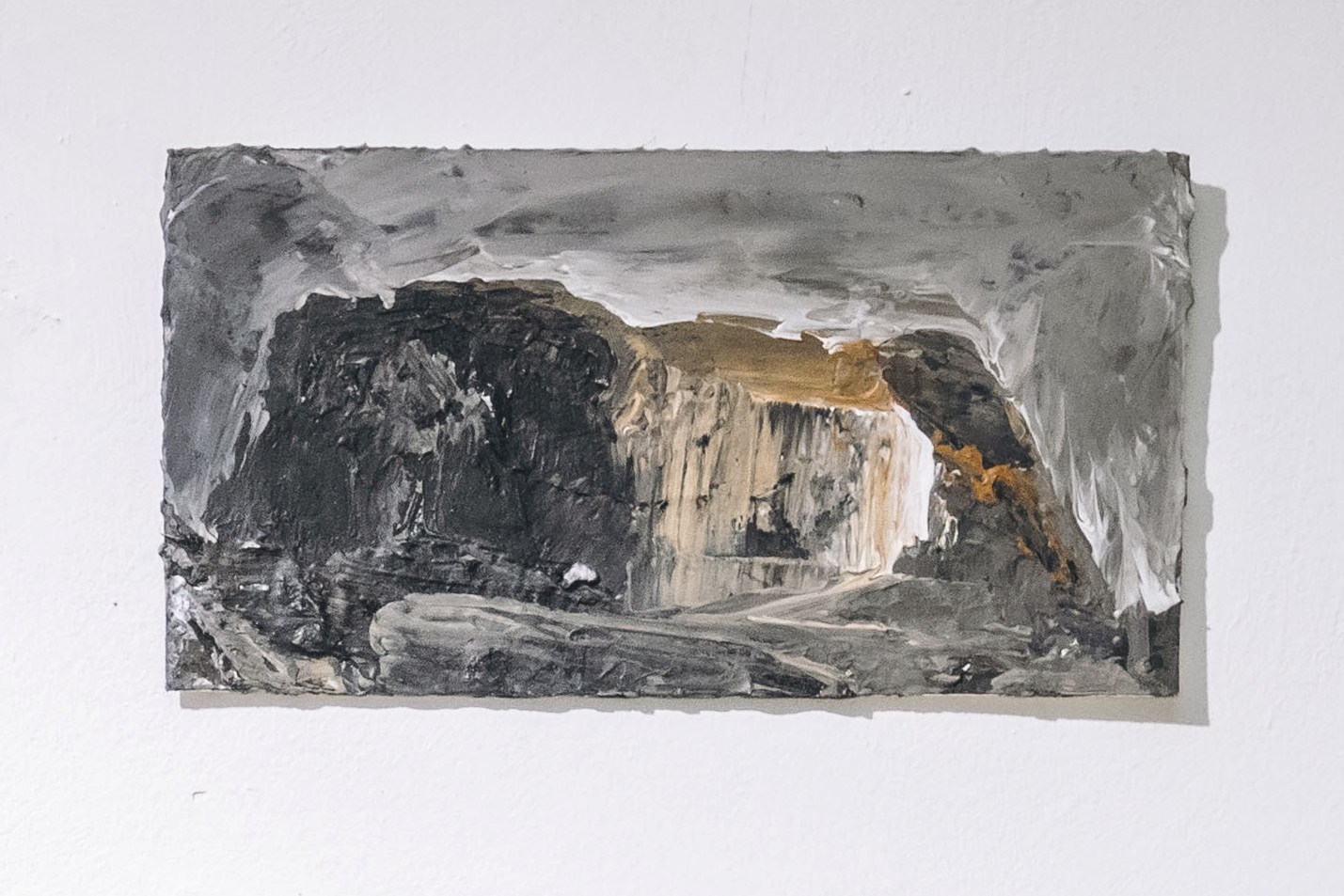 o.T. (Serie Bilder aus der Erinnerung) Acryl auf Pappe / Kunststoff, 13-18 x 16-27 cm Fotos: Paul Trienekens
German Expressionism was a significant movement shaped by the devastation of World War I and the turbulent atmosphere of the Weimar Republic. Neo-Expressionism, which emerged in the last quarter of the twentieth century, is regarded as a modern interpretation of this movement. During a period in which the global balance of power was undergoing rapid economic and social transformation, competition among nations rendered exploitation and war increasingly inevitable. The devastation caused by World War II resulted in both economic and social crises. The use of nuclear weapons was not only a catastrophe for Japan but also exposed, in the starkest terms, humanity’s destructive potential. Germany’s prolonged period of upheaval, coupled with the Holocaust, gave rise to profound and devastating consequences. Following the rise of the Nazi Party, Expressionist artists were labeled as “degenerate artists” (Entartete Künstler), and many were forced to flee the country. Despite this, the influence of the movement remained strong in postwar art, particularly in movements such as Abstract Expressionism and Neo-Expressionism. In the postwar period, artists increasingly sought to express personal and collective emotions and ideas with greater intensity. The trauma, social changes, and destruction brought about by World War II played a decisive role in the emergence of Neo-Expressionism in Germany, while also providing artists with the opportunity to explore their individual modes of expression and emotional depth. The representatives of this movement adopted a critical stance by addressing themes such as the destructiveness of war, the extremes to which struggles for power in human history can lead, and the collapse of social structures. Neo-Expressionism is characterized by figurative imagery, innovative forms, distortion, and powerful emotional expression. Artists of the period transformed pictorial surfaces through the use of vibrant contrasting colors, thick layers of paint, and vigorous brushstrokes. By frequently incorporating elements of irony and humor into their works, they articulated social and political critiques. Rejecting traditional conceptions of art in pursuit of the new, these artists championed the freedom of individual expression and maintained that art is not merely an aesthetic object but also a means of social expression.
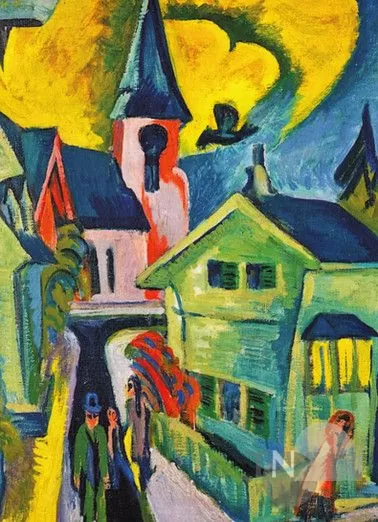
Königstein mit roter Kirche, in Öl auf Leinwand 63x80 cm
German Expressionists found themselves caught between idealism and individualism. One of the principal reasons for this was that they lived in a world suspended between British and Prussian ideologies. In their aspirations to redeem the world, they carried profound concerns about the future of humanity. They were shaped by a continuing debate over whether society should be transformed into the classless society envisioned by Marxism or renewed through Friedrich Nietzsche’s concept of the “Übermensch” (Overman). According to Bertolt Brecht’s analysis, however, the artist occupied a petty-bourgeois position within society; neither belonging to a clearly defined class nor possessing a fixed social identity. Within the framework of these debates, artists increasingly turned inward and began to regard art as a path to freedom, while simultaneously initiating a process of active engagement with society. In this context, Expressionism in Germany did not remain merely an individual mode of expression; it evolved into an organized movement through groups, journals, manifestos, posters, and graphic designs. To briefly address two of the most significant groups of this period:
Die Brücke [The Bridge] (1905, Dresden): Founded by four architecture students, Ernst Ludwig Kirchner, Fritz Bleyl, Erich Heckel, and Karl Schmidt-Rottluff, the group took inspiration from Nietzsche’s statement, “What matters is not the goal but the bridge.” They sought to function as a bridge between the old and the new. Rejecting traditional and academic approaches to art, they embraced a direct, instinctive, and emotionally charged mode of expression. By abandoning conventional perspective, they transformed perceptions of space and developed a visual language characterized by distorted figures and the intense, exaggerated use of color. They also disseminated their artistic ideas through printmaking techniques, particularly woodcuts.

Yellow-Red-Blue (1925) - Wassily Kandinsky
Der Blaue Reiter [The Blue Rider] (1911, Munich): Founded under the leadership of Kandinsky and Franz Marc, this group, unlike Die Brücke, pursued a more spiritual and abstract quest. They regarded art as a means of attaining spiritual reality beyond the material world through the principle of inner necessity. Kandinsky’s move toward abstraction became one of the group's most significant achievements. In opposition to the rapidly industrializing and increasingly materialistic world of the early twentieth century, German Expressionism emphasized the artist’s inner reality and spiritual search. For this reason, Impressionism, one of the most influential artistic movements of the nineteenth century, was subjected to intense criticism by the Expressionists: "The eyes of the Impressionists, however, do not speak; they merely observe. They hear the question but do not answer. The Impressionists possess another pair of ears rather than eyes. Yet they have no mouths, for the individual of the bourgeois age is nothing but an ear. He listens to the world but utters not a single word. He has no mouth; he is incapable of expressing himself, of forming judgments about the world, or of articulating the law of the spirit. The Expressionist, by contrast, tears away the lock fastened upon humanity’s mouth. The age of humanity’s silence has come to an end. Once again, humanity strives to give voice to its soul." (Bahr, p. 280)
In opposition to Impressionism’s depiction of outward appearances, Expressionists emphasized the urgency and subjectivity of inner reality, developing in Germany a distinctive visual language that was intense and often unsettling. At the core of Expressionism lies a rupture in the relationship between the artist and the world, with industrialization and alienation among the principal causes of this rupture. The rapid consumption and materialist outlook fostered by industrialization generated a persistent sense of anxiety and unease within the individual. Reflecting these conditions in their artistic practice, Expressionist artists distorted forms, fragmented images, and sought to share this inner impulse with all who were capable of experiencing it. In this context, it is appropriate to briefly examine the Düsseldorf Academy of Fine Arts (Kunstakademie Düsseldorf), which embodied the spirit of the period, occupied a prominent position within the art world, and became home to some of the most important representatives of this tradition.
The Cornerstones and Key Figures of the Düsseldorf School
Kunstakademie Düsseldorf (Düsseldorf Academy of Fine Arts) has been one of the world's most influential art academies, particularly since the second half of the twentieth century. To understand this school, it is necessary to focus on specific periods and key figures. The academy’s reputation was shaped by the distinguished artist-teachers it brought together and the generations of students they trained.
Joseph Beuys and the Expanded Concept of Art (1961-1972)
When the Düsseldorf School is mentioned, the first and perhaps most radical figure that comes to mind is Joseph Beuys. Beuys regarded art not merely as the production of objects but also as a social sculpture, a political act, and an intellectual process. He is best known for the phrase, “Everyone is an artist.” During his tenure, the academy became one of the most important centers of avant-garde art in the world. During this period, Anselm Kiefer gained prominence through his monumental paintings that explored history, mythology, and German identity using materials such as lead and straw; Jörg Immendorff through his politically engaged works addressing the division of Germany; Imi Knoebel through his minimalist and abstract works focused on investigations of color and form; and Katharina Sieverding through her large-scale photographic series in which she used her own image to question identity, gender, and social norms.
Gerhard Richter and the Enduring Power of Painting (1971-1993)
As a professor at the academy, Gerhard Richter carried the tradition of painting forward through an avant-garde approach. His multifaceted practice, ranging from photorealism to abstract expressionism and from glass sculptures to color charts, represented a powerful statement at a time when the death of painting was frequently proclaimed. Kunstakademie Düsseldorf became a center in which postwar German art reconstructed itself, where the boundaries of artistic practice expanded radically from painting and sculpture to photography and performance, and where countless influential figures who would shape the course of international art emerged. The artistic tradition fostered by the academy also had a significant influence on the development and modes of expression of Kurdish artists. The art of Gara Rasul, who lived in Germany and completed his education there, stands at the intersection of these two major currents that took shape during the second half of the twentieth century.
An Expressionist Memory: Kirkuk, Mountain, and Human in the Art of Gara Rasul

Kirkuk. 1998. Technique: Mixed media on canvas (acrylic and oil paint). Dimensions: 200 × 240 cm.
Gara Rasul’s painting centered on Kirkuk can be interpreted from multiple perspectives. The work may be read through the interconnected themes of place, memory, the city, and displacement. The first aspect that draws attention is its intense use of color and the impression of a compressed spatial field. Bridges, roads, and various architectural structures appear almost intertwined. Rather than presenting a calm and harmonious cityscape, the painting evokes a dynamic and complex urban environment. While yellow and green tones dominate the upper section, red, purple, blue, brown, and black become increasingly prominent in the lower areas, creating a powerful visual contrast. Rasul employs yellow as a source of light illuminating the city, while the lower section is shaped by fragmentation created through linear elements and dense patches of color. In his use of color, the influence of Wassily Kandinsky is clearly discernible. The architectural elements are not perceived as separate and independent structures; instead, they merge into one another, disrupting the conventions of classical perspective. The painting offers no fixed point of view; like the city itself, the viewer’s gaze remains in constant motion. By bringing together fragments of remembered places, Rasul transforms the city from a purely physical location into a personal and collective act of remembrance. In this way, the painting reveals how Kirkuk survives and is recalled within the artist’s memory. The act of remembering is closely tied to memory’s reconstructive nature, and through his intensive use of architectural forms and light, Rasul reconstructs the city through fragments of recollection. Filtering the external world through his own emotional experience, he adopts a distinctly Expressionist approach. The intense yellow light in the sky, the exaggerated reds and purples, and the patches of black are connected less to the city’s architectural reality than to the artist’s emotional relationship with it. The painting’s dynamic and restless structure stems from its deep connection to Rasul’s personal history. What emerges here is not so much a sense of alienation as the traces of a city he was forced to leave behind, a life shaped by exile, and a memory inseparable from Kurdish identity. The luminous and densely layered colors point toward a liminal space suspended between memory and reality.

Sansı, 2002. Oil on panel. Dimensions: 29 × 35 cm.
The first element that draws attention in this work by Gara Rasul is the use of thick layers of paint alongside mountainous and rocky forms. The painting is far removed from a conventional landscape depiction. Although the form of a mountain or rocky mass can be discerned, there is no clearly defined or recognizable structure. The balanced use of color prevents the composition from overwhelming the viewer. Darker tones extending downward from the lighter hues in the upper section firmly anchor the mass within the composition. The light tones in the atmosphere distance the work from a sense of emotional tension. While the painting possesses an inherent stillness, it simultaneously conveys a degree of movement. Dark patches embedded within the blue-grey tones of the atmosphere establish an emotional connection with the darker colors occupying the lower section of the composition. Here, color does not seek to reproduce the actual tones of nature; instead, it emerges through the artist’s inner and emotional experiences. The warmth conveyed by the yellow light evokes associations rooted in the artist’s memories, while the layers of black reflect the difficult experiences he has endured. Rasul avoids treating the surface as a flat and polished plane, emphasizing instead the expressive power of paint and color through vigorous brushwork. In this respect, he embraces a modernist understanding of painting, using paint itself as a means of expression. The viewer encounters not merely a mountain landscape but the artist’s interpretation and experience of that landscape. As noted above, Rasul draws the viewer into a space of reflection, encouraging them to question not what they see, but what it makes them feel.
The intense use of color, expressive brushwork, deformation, and departure from objective reality closely align with the pictorial language of German Expressionism. In the paintings of Ernst Ludwig Kirchner, for example, nature is not represented as a realistic landscape; rather, sharp contours, intense colors, the rejection of conventional perspective, and deliberate distortions convey traces of the artist’s inner world. Similarly, in Franz Marc’s depictions of nature and animals, color becomes a powerful expressive vehicle endowed with symbolic and profound meaning. For Wassily Kandinsky as well, painting represented an essentially spiritual realm. In this work, Rasul moves toward abstraction without entirely abandoning the mountain form. As in his Kirkuk painting, he represents the mountain not through its physical reality but through the emotions and memories it has left behind.

Human, 1993. Acrylic on canvas. Dimensions: 55 × 46 cm.
This painting by Gara Rasul differs from the previous works discussed. Here, we encounter the abstraction of a figurative image. There is no clear depiction of a city or a mountain; instead, what stands out is the gradual dissolution of form within layers of color. The dominance of white is the first element that draws attention, becoming one of the primary vehicles of abstraction. Yet white does not completely conceal the underlying layers, allowing traces of red, blue, green, and black to remain visible. The dense accumulation of color suggests that the work is the result of a prolonged and layered process. Rasul employs a painterly method based on repeated acts of revealing, concealing, and re-emerging. He uses white almost like a translucent veil. The concentrated colors in the lower sections gradually open up and become more transparent toward the upper parts of the composition. This approach introduces the intertwined dynamics of concealment, revelation, visibility, and contrast. Without entirely erasing the underlying colors, the artist leaves their traces on the surface. Through deformation, the figurative image gradually evolves into an abstract realm. The represented form remains ambiguous; Rasul fragments the image through his subjective approach while preserving visible traces of it rather than eliminating it completely. Here, too, he presents an image of memory through abstraction. The contrast between the dominant white and the presence of red offers viewers clues as to how the painting’s chromatic language may be interpreted. White evokes emptiness, abstraction, and an uncertain form of remembrance. Red and its tonal variations, by contrast, suggest power, energy, and intensity; when placed in dialogue with white, they create a palpable tension within the composition. It is precisely at this point that the work’s relationship to memory becomes evident. The partially erased forms that subsequently re-emerge lead the viewer toward the emotional intensity generated by the act of remembering itself.
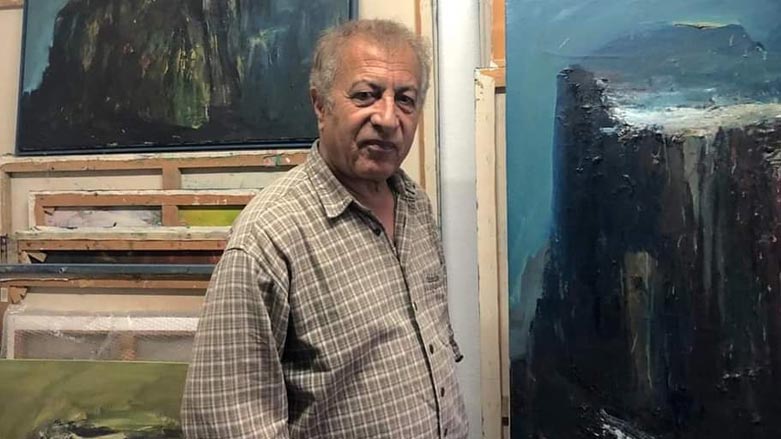
Gara Rasul (1955-2023) was a Kurdish painter, art critic, art theorist, and writer born in Kirkuk. Born in 1955, Rasul began his artistic education at the Baghdad Academy of Fine Arts. He later moved to Germany, where he completed a master's degree in Modern Art Aesthetics and Art History at the University of Cologne, spending a significant part of his life in Cologne. His life was closely intertwined with the political and social upheavals that shaped Kurdish history and geography. According to his own account, after his village was burned down, he was forced to flee to the mountains, where he established an art studio with two friends. Later, while living in a refugee camp in Iran, he continued to paint using whatever materials were available. After travelling through Turkey to Germany, Rasul settled in Cologne, where he continued both his artistic and intellectual work. The concepts of abstraction, color, layering, and surface occupy a central place in Rasul’s artistic practice. In particular, memory and place emerge as recurring themes in works created with acrylic paint and cardboard. His series Memories and Places represents one of the most significant manifestations of this approach. Rasul’s works were exhibited in numerous galleries and exhibitions across Germany and Kurdistan. In 1990, his works were shown alongside those of Daro, Rasul Faeq, and Nehroo Schauki in an exhibition of contemporary Kurdish painting at the Afro-Asian Institute in Vienna. In June 1991, he held a solo exhibition entitled Gara Rasul – Mensch in Schwarz at Kunstverein Röderhof in Germany. In 1992, he participated, together with Ola Daro, Jaza Farig, Ali Mazal, Nehro Schauki, and Talib, in the exhibition and catalogue Irakische Künstler im Exil (Iraqi Artists in Exile), organized by the Jesuitenkirche and Galerie der Stadt Aschaffenburg. In the years that followed, Rasul continued to exhibit throughout Germany and Kurdistan, and is reported to have participated in or organized hundreds of exhibitions during his career. In 2017, as part of the Cologne-based project Die Sprache der Bilder: Flucht in Kunst und Medien (The Language of Images: Flight in Art and Media), which explored artistic and media representations of refugees, a work from Rasul’s Menschenbild in Blau series was offered at auction. His works from the series Bilder aus der Erinnerung (Images from Memory) were also included in the exhibition Wie wir in den Wald hineinrufen at Atelierhaus in Aachen. In these works, the artist explored material elements associated with childhood memories, such as earth, clay, stone, ash, dust, and oil, through abstract landscape forms. In addition to his career as a painter, Rasul was also active as an art writer and critic, authoring books on art in Kurdish and Arabic. In 2004, he returned to Sulaymaniyah with a group of German specialists and conducted workshops with local artists and students. Gara Rasul passed away in Germany on 14 May 2023 at the age of sixty-eight. At a memorial event organized by the Ala Center for Cultural and Artistic Development in Erbil, a documentary dedicated to his life was screened, and a commemorative program was held through presentations of his work. Rasul’s artistic production was shaped by an abstract approach to painting grounded in memory, place, migration, identity, and historical experience. His exhibitions also became important platforms through which Kurdish art gained greater visibility in Germany and across Europe.
REFERENCES
artprice.com. (2026, September 12). artprice.com. Retrieved from https://www.artprice.com/artist/271908/gara-rasul/biography
Bahr, H. (2015). Dışavurumculuk [Expressionism]. In E. Batur (Ed.), Modernizm Serüveni [The Adventure of Modernism] (pp. 280-285). Istanbul: Sel Yayıncılık.
Cantürk, B. B.-A. (2015). Gerhard Richter ve Anselm Kiefer Örnekleminde İkinci Dünya Savaşı Sonrasında Almanya’da Plastik Sanatla [Plastic Arts in Germany After the Second World War: The Case of Gerhard Richter and Anselm Kiefer]. İnsan ve Toplum Bilimleri Araştırmaları Dergisi [Journal of Human and Social Sciences Research], Vol. 4, Issue 2, 468-481.
Erden, E. (2016). Modern Sanatın Kısa Tarihi [A Short History of Modern Art]. Istanbul: Hayalperest.
Fırıncı, M. (2006). Alman Ekspresyonizmi (Dışavurumculuk), Die Brücke (Köprü) Türk Resim Sanatına Etkileri [German Expressionism, Die Brücke (The Bridge) and Its Effects on Turkish Painting]. Dokuz Eylül Üniversitesi Buca Eğitim Fakültesi Dergisi [Dokuz Eylul University Buca Faculty of Education Journal], 19, 110-115.
Galalaye, D. (2026, September 11). Kurdistan 24. Retrieved from https://www.kurdistan24.net/en/story/391751/Candlelight-vigil-held-for-Kurdish-artist-Gara-Rasul
Işık, S. (2025). Ekspresyonist Sanat Anlayışında Bir Dışavurum Aracı Olarak İfade ve Soyutlama Eğilimleri [Expression and Abstraction Tendencies as a Means of Expression in Expressionist Art]. 10-12-20.
McFarlane, J. (2015). Modernizm ve Zihin [Modernism and Mind]. In E. Batur (Ed.), Modernizm Serüveni [The Adventure of Modernism] (pp. 267-279). Istanbul: Sel Yayıncılık.
Wikipedia. (2026, September 10). Expressionism. Retrieved from https://tr.wikipedia.org/wiki/D%C4%B1%C5%9Favurumculuk
Wikipedia. (2026, September 13). Düsseldorf School of Painting. Retrieved from https://en-wikipedia-org.translate.goog/wiki/D%C3%BCsseldorf_School_of_painting?_x_tr_sl=en&_x_tr_tl=tr&_x_tr_hl=tr&_x_tr_pto=tc
Wie wir in den Wald hineinrufen. (n.d.). Atelierhaus Aachen. Retrieved from https://www.atelierhausaachen.de/index.php/ausstellungen/261-wie-wir-in-den-wald-hineinrufen-3
